Prince William's Saudi Arabia Visit Confronts Epstein Scandal and Human Rights Questions
As Prince William, the Prince of Wales, arrived in Saudi Arabia for a three-day official visit, his diplomatic mission was immediately complicated by the lingering shadow of the Jeffrey Epstein scandal. The royal attempted to avoid questions about his uncle, Prince Andrew, who has faced intense scrutiny over his association with the convicted sex offender. However, fresh revelations have now directly connected Epstein to William's host, Crown Prince Mohammed bin Salman, known as MBS.
Epstein's Saudi Connection Revealed
A recent New York Times investigation titled 'A Look Inside Jeffrey Epstein's Lair' uncovered a framed photograph of MBS prominently displayed in Epstein's New York mansion. This discovery adds another layer of complexity to Prince William's visit, as he navigates diplomatic relations with a nation whose leadership has now been linked to the disgraced financier.
Further evidence emerged from a trove of emails, including one from December 2016 where Epstein wrote to billionaire Tom Pritzker: "Can you believe MBS sent me a TENT carpets and all." This correspondence suggests a personal connection between Epstein and the Saudi crown prince that extends beyond mere acquaintance.
Diplomatic Tightrope Walk
Prince William's visit represents a delicate balancing act for British diplomacy. While the royal family traditionally maintains political neutrality, this mission comes at a time when Saudi Arabia faces international criticism for its human rights record, particularly regarding women's rights and LGBTQ+ protections.
The Prince of Wales arrived without his wife, Catherine, Princess of Wales, with official sources citing her need to remain in the UK with their three school-age children. However, observers speculate this decision may reflect careful consideration by royal advisors, mindful of potential controversies surrounding high-profile visits to Saudi Arabia.
Women's Rights Progress and Persistent Challenges
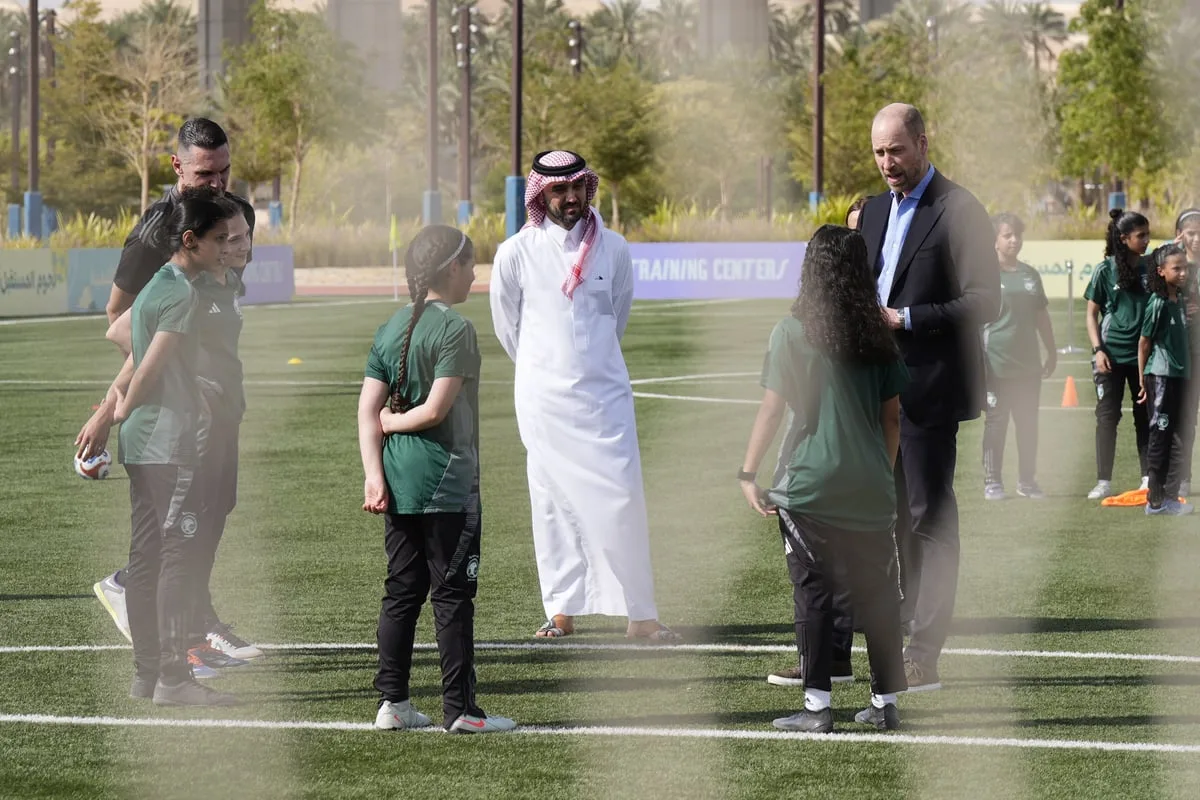
During his visit, Prince William met with young female footballers at MISK Sports City in Riyadh, highlighting what Saudi officials present as progress in women's rights. Recent reforms have allowed women to attend sports events in stadiums since 2018, introduced physical education for girls in 2017, and permitted women to drive since 2018.
Despite these advancements, Saudi Arabia ranks 132nd out of 148 countries in the World Economic Forum's 2025 Global Gender Gap Index, placing it near the bottom globally. In contrast, the United Kingdom improved its position from 14th to 4th in the same report, highlighting the significant disparity between the two nations on gender equality.
Guardianship System and Legal Limitations
The traditional guardianship system, known as 'wilaya,' has undergone some reform but continues to impose significant restrictions on Saudi women. Male guardians still maintain control over crucial life decisions, including marriage, divorce, and release from institutions such as prisons or domestic abuse shelters.
Marital rights also remain unequal under Saudi law. While husbands can no longer verbally divorce their wives, they retain the unilateral right to end marriages. Women seeking divorce must petition courts on limited grounds, facing substantial legal hurdles. Additionally, neither spouse can legally abstain from sexual relations without their partner's consent.
LGBTQ+ Rights Absent Despite Welcoming Statements
Following criticism of Saudi Arabia's successful bid to host the 2034 FIFA World Cup, the Saudi Tourism Authority updated its FAQ page to state that "everyone is welcome." However, this public relations move contrasts starkly with the country's legal reality, where homosexuality remains illegal and punishable by imprisonment, fines, whipping, torture, and even execution.
Pattern of Reputation Management
Saudi Arabia under MBS has demonstrated sophisticated reputation management strategies, employing what critics describe as "artswashing," "sportswashing," and "tourism-washing" to improve its international image. Prince William's visit represents what some observers characterize as "royal-washing," using high-profile diplomatic engagements to counter negative perceptions while human rights organizations continue to voice concerns from the sidelines.
The absence of Princess Catherine from this visit raises questions about whether royal advisors deliberately denied Saudi officials the opportunity for photographs featuring one of the world's most recognizable women interacting with female athletes, which could have been used to symbolize a more progressive image for the Gulf state.
As Prince William continues his diplomatic mission, he faces the dual challenge of advancing British interests while navigating the complex intersections of royal scandal, human rights concerns, and Saudi Arabia's ongoing efforts to reshape its global reputation through high-profile engagements and events.