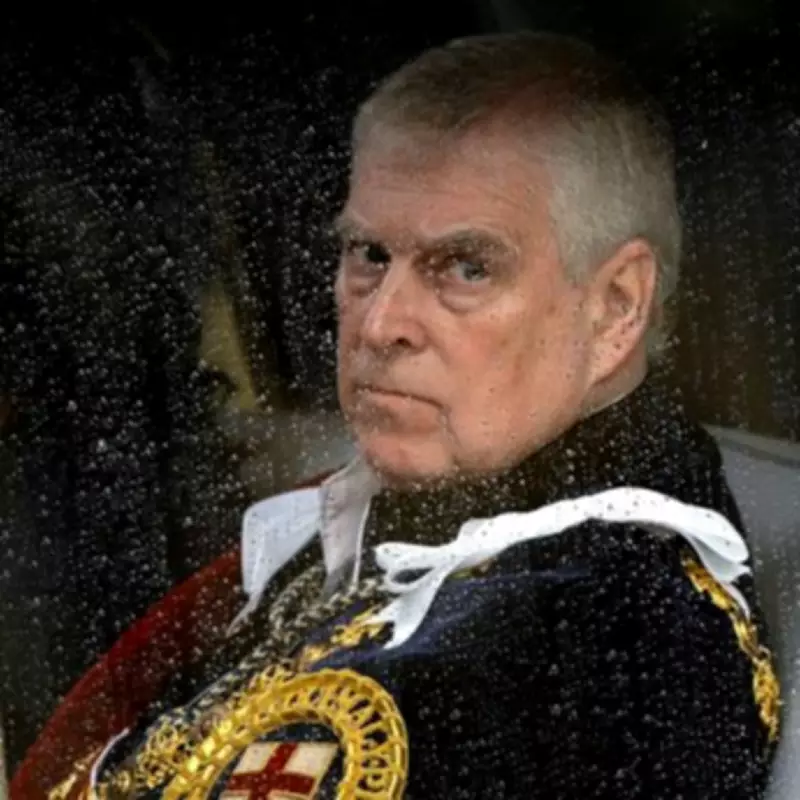
Should Andrew Mountbatten-Windsor Be Removed from the Line of Succession? Have Your Say
Months after the disgraced royal was stripped from his titles, the former prince still remains eighth in line for the throne, despite new revelations emerging about his association with Epstein.
Exile and Ongoing Allegations
In October last year, after years of scandals surrounding his association with Jeffrey Epstein, Andrew Mountbatten-Windsor was stripped of all his royal titles, including prince, and was forced to hand over his lease on the Royal Lodge in Windsor. Since the shocking announcement, Andrew has been living a life in exile, recently moving from Windsor to the King’s private Sandringham estate, and only being seen sporadically for his horse-riding lessons.
While Andrew has hidden away from the public eye, it seems the allegations against him have not. Over the last few months, more allegations have emerged about the former prince and his involvement with the late paedophile financier, all of which Andrew has strongly denied.

Persistent Position in Succession
Despite the disgraced royal being essentially banished from royal life and all but forced to live in exile, Andrew remains eighth in line to the throne, with his name still appearing on the official royal website’s line of succession page. He sits just behind Prince Archie and Princess Lilibet - the children of Prince Harry and Meghan Markle - with Prince William and his children still firmly and undisputedly at the top of the list.
When Andrew was born in 1960 as the second son of the late Queen, he was second in line to the throne, but has slowly slipped down the ranking as William and Harry have had children of their own.
Complex Legal Hurdles for Removal
Members of the Royal Family can be removed from the line of succession, but while the King is able to remove titles, as he has done with his younger brother, he alone cannot remove anyone from being in line to the throne. In order for Andrew to be removed, it would require an Act of Parliament, which would also have to get the consent of every realm in the Commonwealth, where the King is head of state.
It is understood there are no plans to do this - but one expert believes questions may start to be asked about why Andrew retains his place in the line of succession after his fall from grace. Majesty Magazine’s managing editor Joe Little said: "I’m sure at some point quite soon, somebody will ask, if they’ve not already done so, why he hasn’t been moved from the line of succession. Clearly it would take quite a catastrophe for him to become King given all those that are ahead of him. So might it not have been tidier to withdraw him from the line of succession?"
Public Outcry and Political Realities
As allegations against Andrew continue to emerge, many outraged royal fans and commentators alike have called for the former prince to be removed from the line of succession, given his long list of indiscretions. Royal author Robert Jobson explained to Hello! Magazine why removing Andrew from the line of succession is not an easy task.
He said: "It needs an Act of Parliament. Not just MPs at Westminster. Under the Statute of Westminster 1931, all 15 Commonwealth realms – countries where the British monarch still reigns – must agree and vote it through their parliaments. That means identical legislation passing through Canada, Australia, New Zealand, Jamaica, and eleven other independent parliaments. It is not unprecedented, but it needs the will of the MPs and the time for it to pass into law."
"With so much political upheaval around the world, Westminster's MPs have little appetite for making time to push this through. Opening succession law to parliamentary debate risks months of damaging headlines, hostile amendments, and worse, constitutional chaos."
Symbolism Versus Practicality
While many agree that it is highly unlikely for Andrew to ever sit on the throne, some have argued that removing him from the line of succession, despite it being such a mammoth task, is more about the principle and the symbolism of such a move. The debate continues as public opinion weighs the practical improbability against the moral and symbolic implications of his continued presence in the royal succession order.

What do you think? Should Andrew Mountbatten-Windsor be removed from the line of succession? The question remains open, highlighting the tension between tradition, legality, and public sentiment in modern monarchy affairs.