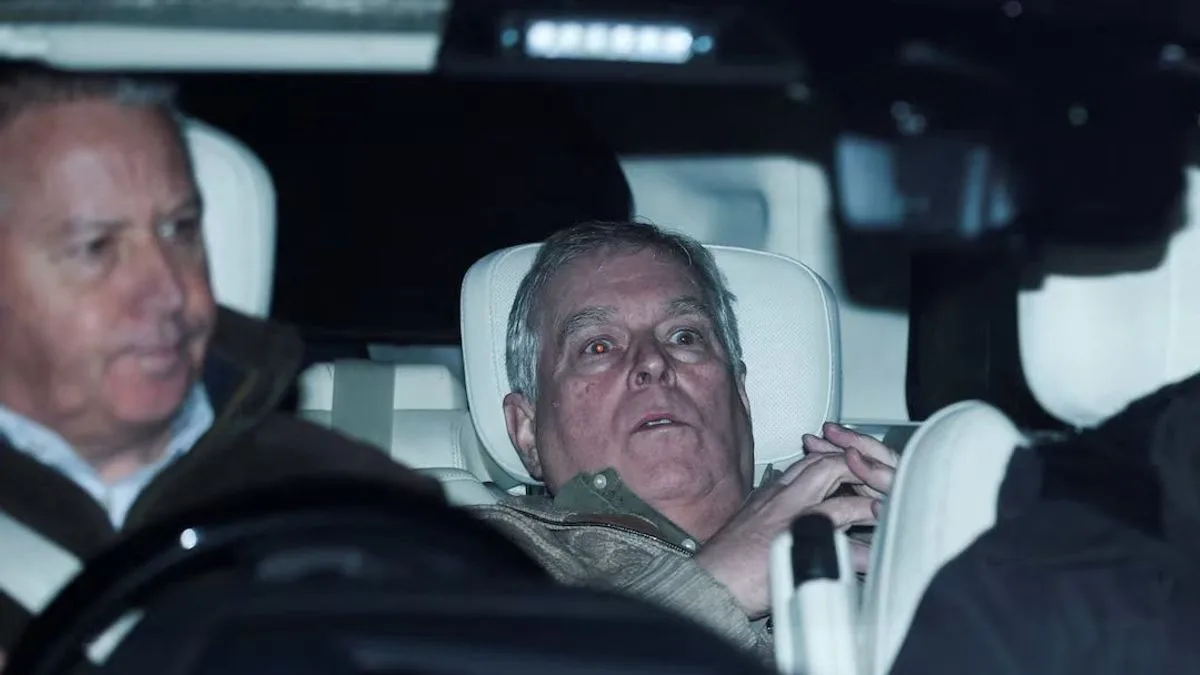
It has been one week since Prince Andrew, now referred to as Andrew Mountbatten-Windsor, was arrested on suspicion of misconduct in public office on his 66th birthday. The arrest, which took place at his temporary residence on the Sandringham estate, has sent shockwaves through the Royal Family, with sources indicating that Prince William is far from calm as the fallout continues.
Andrew was taken into custody at around 8am by plain-clothes officers and spent 11 hours at Aylsham Police Station in Norfolk. He was released at approximately 7pm the same day, with Thames Valley Police confirming he remains under investigation. Body language experts have analysed images of Andrew leaving the station, describing him as appearing 'wide-eyed and slumped' as he attempted to hide from photographers.
The investigation has involved extensive searches of Andrew's former home, Royal Lodge, which concluded on Tuesday night. Former Met Detective Chief Inspector David McKelvey explained that such searches often involve lifting floorboards and using fibre optic cameras to examine enclosed spaces. The searches on the Sandringham estate were completed by the time Andrew left custody.
King Charles III issued a statement expressing his 'deepest concern' and emphasising that 'the law must take its course.' The statement from Buckingham Palace affirmed the Royal Family's full support for the legal process. Meanwhile, the York family, including Andrew's ex-wife Sarah Ferguson and their daughters Princess Beatrice and Princess Eugenie, have remained out of the public eye.
Former BBC royal correspondent Jennie Bond described the situation as 'worse than their worst nightmare' for the Royal Family, noting that this is the first arrest of a royal in over 300 years. The fallout from the Epstein files continues to dominate headlines, with the Royal Family struggling to shift focus to the victims of Epstein's abuse.
As the investigation proceeds, the Royal Family faces unprecedented scrutiny. Prince William, in particular, is said to be deeply unsettled by the ongoing scandal, which threatens to overshadow the monarchy's public duties and charitable work.