On a sombre April day in 2021, the eyes of the world turned to Windsor's historic St George's Chapel. The Royal Family, clad in mourning black, gathered to bid a final farewell to Prince Philip, Duke of Edinburgh, who had died at the age of 99. Amidst the profound grief, one figure emerged not just as a mourner, but as a vital source of stability for the House of Windsor: the then-Duchess of Cambridge, Kate Middleton.
A Regal Presence in a Time of Grief
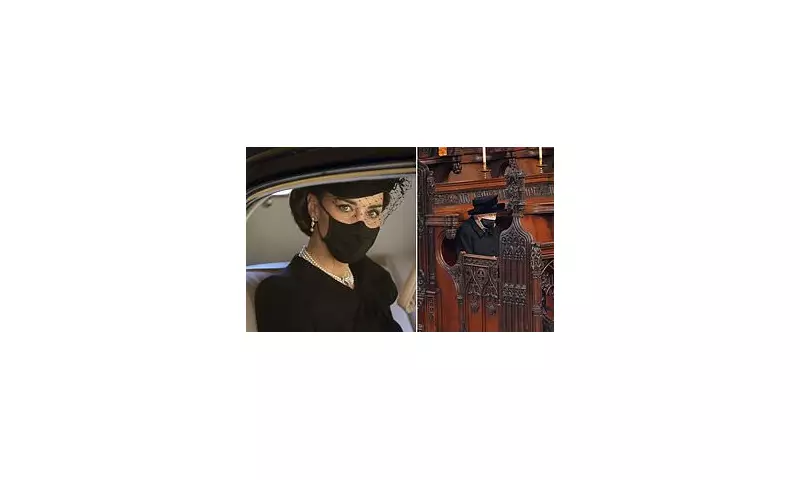
The image of a solitary Queen Elizabeth II, sitting alone due to pandemic restrictions just months after losing her husband of 73 years, resonated globally. Yet, as documented by royal biographer Robert Jobson, it was Princess Catherine whose dignified composure became a focal point. Dressed in a sleek black Roland Mouret dress and wearing jewellery loaned by the Queen herself, Kate "radiated a regal impregnability". Observers noted that after a decade as a senior royal, she looked as if she truly belonged at the heart of the institution.
Her role extended beyond mere appearance. Demonstrating deep empathy, she was seen offering a tender kiss and a comforting hand on the shoulder to her "inconsolable" father-in-law, then-Prince Charles. This moment, highlighted in the Channel 5 documentary Kate: Our Queen in Waiting, showcased her instinct to provide familial reassurance during the formal proceedings, signalling that the royals, too, were a family in grief.

The Expert Peacemaker Amidst Fraternal Tension
The funeral on April 17, 2021 was layered with personal tension, marking the first reunion of Prince William and Prince Harry since the latter's explosive interview with Oprah Winfrey. With Meghan Markle absent due to her pregnancy, all attention was on whether the brothers could bridge their chasm on such a sorrowful day.
Kate, once described by Harry as "the sister I've never had", assumed a critical role as an intermediary. As the family left the chapel, she was seen engaging Harry in conversation. In what Jobson describes as an expertly manoeuvred moment, she then adjusted her pace, allowing the brothers to walk side-by-side up the hill to Windsor Castle. "She then fell back, slowing enough to allow the brothers to walk next to each other and at least exchange a few words," Jobson wrote. This brief, private conversation, where William reportedly said, "Yes, it was great, wasn't it?" and Harry replied, "It was as he wanted," offered the public a glimpse of a fragile, but necessary, unity.
From Periphery to Pillar: Cementing a Future Role
The funeral served as a defining chapter in Kate's royal journey, propelling her from the "periphery" to the "heart" of the family's public identity. Commentators noted that the "middle-class girl... looked more royal than the blood royals that day". This display of steadfastness occurred as the monarchy faced the aftermath of the Sussexes' departure and the beginning of a transition to a new era.
Her significance has only grown since. Described by Vanity Fair's Katie Nicholl as the monarchy's "greatest asset" and "the glue," Kate's bond with King Charles has deepened, particularly following their shared experiences with cancer diagnoses in 2024. Alongside William, as Prince and Princess of Wales, they are now central to the "slimmed-down" monarchy, and are understood to have supported the King's difficult decisions, such as the removal of Prince Andrew's royal titles.
As the monarchy continues to evolve, the poise and strategic empathy Kate demonstrated at Prince Philip's funeral are now seen as hallmarks of her style. With Prince William stating that "change is on my agenda" for his future reign, Kate is positioned not just as a consort, but as an essential partner in guiding the ancient institution forward.