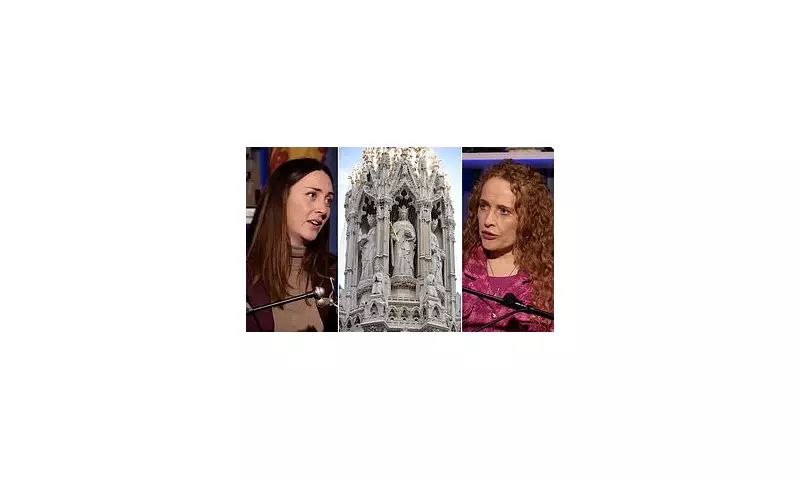
In a fascinating deep dive into Britain's royal past, historian and social media star Alice Loxton has joined Kate Williams on the Daily Mail's 'Queens, Kings and Dastardly Things' podcast. Their subject is a remarkable but often overlooked figure: Eleanor of Castile, the Spanish queen whose profound influence on England, and particularly London, endures over seven centuries later.
A Royal Partnership That Forged a Nation
Born in Castile, in what is now modern Spain, in 1241, Eleanor's destiny was sealed when, at just 12 years old, she was married to the future King Edward I of England. Edward, famed for his height and the nickname 'Longshanks', found in Eleanor a devoted partner. Their arranged union blossomed into a genuine partnership lasting 36 years.
As queen, Eleanor was no passive consort. She accompanied Edward on Crusades to the Holy Land and stood by him during brutal civil wars at home. She is also credited with introducing Spanish refinements to the English court, including forks, carpets, and elaborate garden designs, bringing a touch of Mediterranean luxury to medieval life.

The Crosses of Grief: A Route Etched in Stone
When Eleanor died from illness in 1290, a heartbroken King Edward I commissioned an extraordinary memorial. He ordered the construction of 12 elaborate stone monuments, known as the Eleanor Crosses, to mark each overnight stop of her funeral procession from Lincoln to her final resting place in Westminster Abbey.
These crosses served a dual purpose: as expressions of profound royal grief and as practical landmarks for travellers in an era before maps. Loxton, who has written a new book on the subject, retraced the 200-mile funeral route to uncover the fate of these poignant structures.
The Fate of the Crosses and the Birth of Charing Cross
The story of the crosses is one of destruction and survival. During the English Civil War (1642-1651), Parliamentarians, viewing them as potent symbols of the detested monarchy, tore down many. Only three original crosses survive today in the villages of Geddington, Hardingstone, and Waltham Cross.
The most significant cross, however, stood at what would become the very centre of London. The final monument, known as Charing Cross, was erected at the last stop before Westminster Abbey. Its location, just in front of where Trafalgar Square now lies, became the official centre of London from which all distances to the capital are measured.
'If you type in London on Google Maps,' Loxton explains, 'it will take you to the original site of the Eleanor Cross.' Its destruction during the Civil War caused public consternation, captured in a contemporary ballad lamenting that lawyers no longer knew the way to Westminster.
In a powerful historical irony, the site where the cross was destroyed later saw Charles I's death warrant signed. After the monarchy's restoration, a statue of the executed king was placed nearby, reinforcing the location's enduring political symbolism.
Alice Loxton's work, shared with her 1.8 million Instagram followers, continues to bring the vivid drama of medieval history to a modern audience, ensuring that the legacy of queens like Eleanor of Castile is not forgotten.