Prince Harry and Meghan Offer Emotional Support at Jordan Cancer Centre
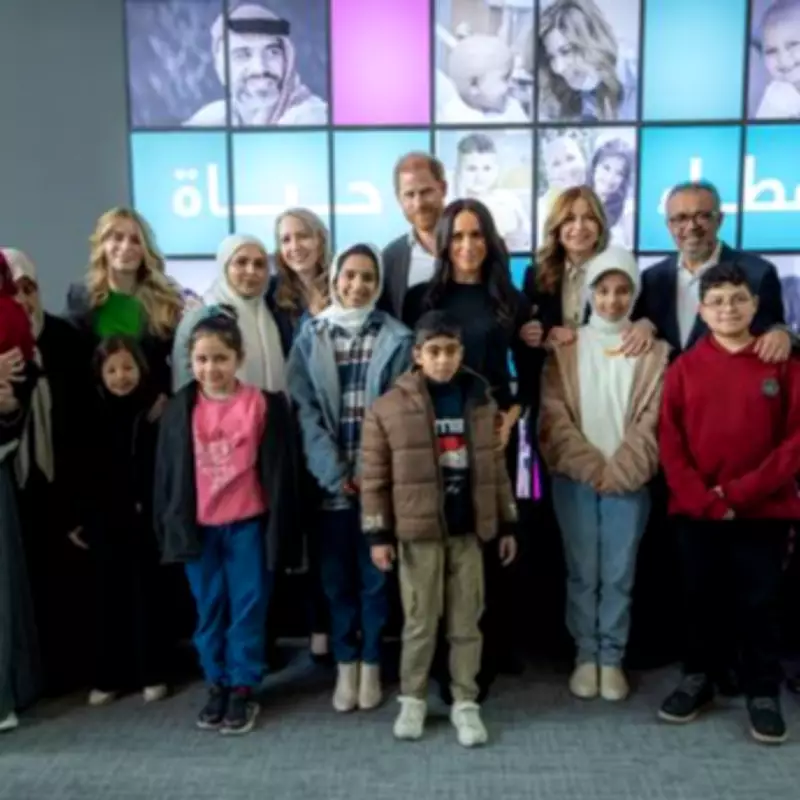
Prince Harry and Meghan Markle concluded their whirlwind two-day trip to Jordan with an emotionally charged visit to the King Hussein Cancer Centre, the country's leading cancer hospital. The royal couple spent time comforting young patients and their families, hearing firsthand about their battles against the devastating disease.
Comforting Families in Distress
The Duchess of Sussex was seen holding hands with Huda Ramadan Alrhawjara, a mother from Gaza whose son Mohammad is battling a recurrence of leukaemia. Meghan rubbed the woman's arm as she broke down while describing her son's treatment journey during the recent Israeli conflict in the Gaza Strip. Through tears, Mrs Alrhawjara expressed in Arabic: "It doesn't matter if it takes four years, what matters is to have him healthy."
The mother and son were among a group of young Palestinians from Gaza receiving treatment at the cancer centre who were invited to meet the royal visitors. Mrs Alrhawjara later shared her appreciation, stating: "I'm really happy that the prince and his wife are really on the side of the families, and that they came to hear our stories, it shows their humanity."

Connecting with Young Patients
The Sussexes began their tour in a play area designed to put young patients at ease before treatment. Prince Harry quickly bonded with Sham, a 13-year-old Syrian girl awaiting chemotherapy for leukaemia later that day. The pair connected over her impressive English skills, which she developed through watching movies and Peppa Pig cartoons with a relative.
Harry embraced the young girl after hearing about her experiences, demonstrating the personal connection the royal couple sought to establish with each individual they met during their visit.
Messages of Support and Recovery
Earlier in the day, Harry offered powerful words of encouragement to recovered addicts at Jordan's National Centre for Rehabilitation of Addicts. Speaking to a group of men who described the emotional toll of substance abuse, Harry emphasized: "I want you guys to know there's no shame in having an addiction, it stems from something else, which is an emotional pain – you're very, very brave to come here into hospital."
The Duke of Sussex urged the men to use their experiences to help others, stating: "Now what you need to do is use this experience and go back into your communities and help other people who are in a similar situation."
During the cancer centre visit, both Harry and Meghan wrote messages of support alongside a World Health Organisation delegation, including Director-General Dr Tedros Adhanom Ghebreyesu, who had invited the couple to Jordan. Harry's note read: "It's ok to not be ok. Trust each other. Congratulations on your recovery. Now share your courage and experience."
Humanitarian Focus of Jordan Trip
The visit to the cancer centre represented the final engagement in a busy itinerary focused on humanitarian efforts. The Sussexes traveled to Jordan specifically to learn more about supporting the health and well-being of Syrians and Palestinians who have sought sanctuary in the country.
Earlier on their final day, the couple heard about the World Central Kitchen's massive logistical operation to feed one million Palestinians in Gaza. They participated in a video call with a distribution leader at one of the organization's six field kitchens in Gaza, which produce daily hot meals for approximately 60 percent of the population.
Wadhah Hubaishi, the organization's response director for the Middle East and North Africa, explained their "food with smiles" mantra provided by Gazans for Gazans. He shared the poignant story of a three-year-old boy who had never seen a banana before, asking his father if he could eat the peel after tasting the fruit for the first time.
The emotional visit to the King Hussein Cancer Centre highlighted the Sussexes' commitment to humanitarian causes and their ability to connect personally with individuals facing profound challenges. Their interactions with patients, families, and recovery program participants demonstrated a genuine empathy that resonated throughout their Jordanian visit.