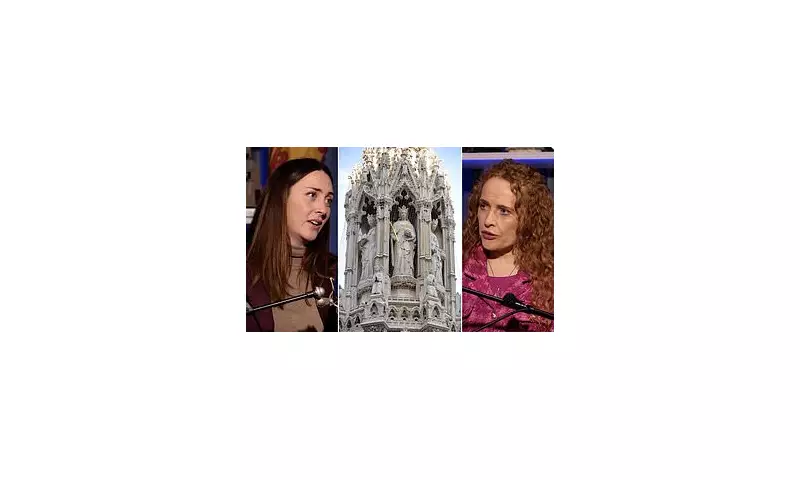
In a fascinating deep dive on the Daily Mail's Queens, Kings and Dastardly Things podcast, historian and author Alice Loxton joined Kate Williams to shed light on one of history's most influential yet overlooked figures: Eleanor of Castile. This 13th-century Spanish queen, through her marriage to England's King Edward I and her poignant death, left an indelible mark on the very map of London.
From Child Bride to King's Confidante
Eleanor was born in Castile, in what is now Spain, in 1241. At the tender age of 12, she was married to Prince Edward of England, later known as Edward I or 'Longshanks' due to his impressive height. What began as a political arrangement blossomed into a devoted partnership lasting 36 years.
As queen, Eleanor was no passive consort. She accompanied Edward on Crusade to the Holy Land and stood by him during fierce civil wars at home. She is also credited with introducing Spanish refinements to the English court, including forks, carpets, and elaborate garden designs.

A Legacy Cast in Stone: The Eleanor Crosses
When Eleanor died from illness in 1290, a grief-stricken King Edward commissioned an extraordinary tribute. He ordered the construction of 12 elaborate stone monuments, known as Eleanor Crosses, to mark each stopping point of her funeral procession from Lincoln to her final resting place in Westminster Abbey.
These crosses served as both memorials and practical waypoints for travellers in an era before maps. As Loxton explains in her new book, which retraces the 200-mile funeral route, the most famous cross was erected at the final stop before Westminster. This site, known as Charing Cross, became the official centre of London.
'The location of the original cross, which was just in front of Trafalgar Square, marked the point where all measurements to London are made,' Loxton told the podcast. 'If you type in London on Google Maps, it will take you to the original site of the Eleanor Cross.'
Destruction and Enduring Memory
The story of the crosses is also one of conflict and survival. During the English Civil War (1642-1651), Parliamentarians, viewing the monuments as potent symbols of the monarchy, destroyed many. The Charing Cross was among the first to be torn down due to its central significance.
Loxton recounts public dismay at its loss, illustrated by a contemporary ballad: 'Undone, undone - the lawyers cry... They know not the way to Westminster, now that Charing Cross was taken down.' In a poignant twist, it was near this same spot that King Charles I's death warrant was later signed. Following the Restoration, a statue of Charles I was erected where the cross once stood.
Today, only three original crosses survive in the villages of Geddington, Hardingstone, and Waltham Cross, though several towns have erected replicas. Loxton, who also brings history to life for over 1.8 million followers on Instagram, argues that Eleanor's story and these enduring monuments are crucial to understanding London's historical landscape.
To discover more about Eleanor of Castile, Edward I, and the dramatic history of the crosses, you can listen to the full episode of Queens, Kings and Dastardly Things wherever you get your podcasts or watch it on YouTube.