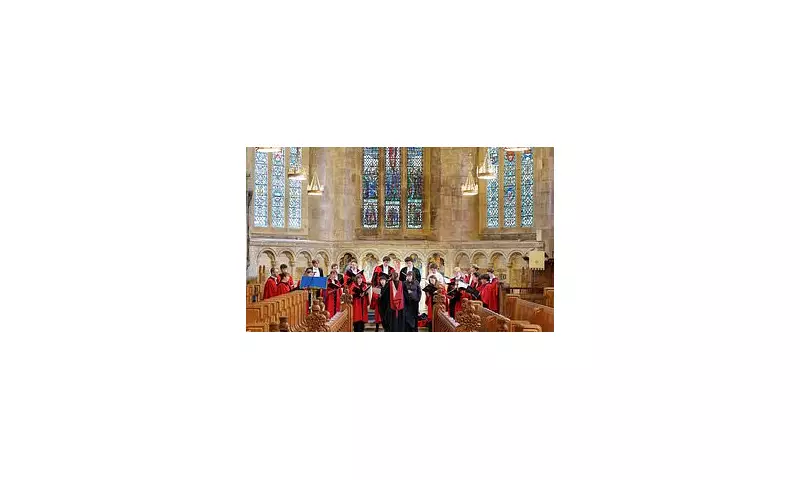
On Christmas Eve in 1818, within a modest parish church in Oberndorf, Austria, a timeless Christmas tradition was born. A young priest, Father Joseph Mohr, presented a poem he had written two years prior to his friend, schoolmaster Franz Xaver Gruber. The story goes that the church organ was broken – some say by flooding, others by mice damaging its bellows. More likely, the simple guitar accompaniment was a local Alpine custom for Midnight Mass carols. In just a few hours, Gruber composed a gentle, cradle-rocking melody to accompany Mohr's words.
The Humble Birth of a Global Anthem
This simple creation, first performed with guitar on 24 December 1818, would become one of the world's most beloved hymns. It was not until 1994 that Franz Xaver Gruber received full credit for the music – a melody so pure and elementary it remains one of the first tunes taught to novice guitarists. Neither man could have imagined how travelling folk singers would spread their carol across continents, nor how it would be recorded by legends from Bing Crosby and Frank Sinatra to Mariah Carey.
In Scotland, particularly within the Kirk, the carol is often known by the translation from Stopford Augustus Brooke: 'Still the night, holy the night…'. It embodies a certain Scottish approach to the season – done properly, with depth, amidst the unique stillness that descends on a Scottish Christmas Eve. As frantic last-minute shopping ceases, stores shutter, and public transport winds down, a palpable quiet emerges, mirroring the heavenly rest of the nativity story.
A Feast Amidst Modern Unease
Christmas Day itself is a whirlwind of tradition: the early morning excitement of children, the peculiar breakfasts of chocolate and satsumas, the careful preparation of the feast. It is a day where the wheels of capitalism briefly stop. Yet, as the author notes, this Christmas of 2025 feels uneasier for many. Financial pressures are tighter, global conflicts feel ominously close, and political turbulence lingers. The world outside is fraught, making the domestic peace and goodwill of the day feel both precious and fragile.
The narrative compellingly returns to the original, messy reality of the first Christmas. It asks us to consider Joseph's perspective – the scandal of his fiancée's pregnancy, the arduous journey to Bethlehem, the desperation of finding no room at the inn. The Saviour was born not in grandeur, but in a humble byre, first visited by marginalised shepherds. This origin story underscores a central theme of Christ's later ministry: his presence with those on the edges of society, the hated, the feared, and the outcast.
Enduring Light in a World of Shadows
Today, the message of that birth remains contentious. Public figures like Tim Farron and Kate Forbes have faced scrutiny for their Christian faith. The hymn's promise of peace contrasts sharply with a world witnessing war, atrocity, and a troubling resurgence of antisemitism. From the devastation in Ukraine to conflicts in Sudan and Yemen, darkness seems pervasive. Yet, the article argues, the core of Christmas persists: the gathering of families, the expression of love through gifts and food, the moments of quiet joy and shared laughter.
The carol 'Silent Night' itself became a beacon of hope in darker times. During the Second World War, the Service of Nine Lessons and Carols from King's College, Cambridge, continued its broadcast, even with broken chapel windows. In the final days of the Third Reich, German soldiers are said to have fought for pages of the Bible. Throughout Scottish history, persecuted Presbyterians gathered in the snow to worship, and martyrs died with Psalms on their lips.
Christmas does not erase pain. For those mourning a loss, grappling with addiction in the family, or facing loneliness, the day can be acutely painful. Tragedy does not pause for the holiday. Yet, the enduring ritual of gathering – in faith, puzzlement, or simple tradition – around a table because of a birth in Bethlehem two millennia ago, remains a powerful act. It is a testament to a hope that, amidst all chaos, love and grace entered the world. 'Strikes for us now the hour of grace,' as the hymn says – a quiet, persistent truth that continues to resonate from an Austrian stable to a Scottish home, on a still, holy night.