The Revolutionary Creation of The Beach Boys' 'Good Vibrations'
Amid the political unrest of the Vietnam War era and intense record label pressure, Brian Wilson embarked on an obsessive quest to create what would become one of pop music's most revolutionary recordings. Sixty years since its inception, the story of "Good Vibrations" reveals how The Beach Boys transformed label demands for another "California Girls" into a symphonic masterpiece that redefined popular music.
Label Pressure and Artistic Ambition Collide
Following the release of their critically acclaimed but commercially uncertain Pet Sounds album in 1966, Capitol Records executives expressed concern about the Beach Boys' artistic direction. "They had played the album to their promotional department, and they didn't know what to do with it, because it was such a departure," recalls Mike Love, one of the band's surviving original members. The label specifically requested something more akin to their previous hits like "California Girls" or "I Get Around."
Instead of complying, Brian Wilson became consumed by his ambition to create a song that distilled pure positivity during a turbulent period marked by student protests, draft concerns, and global uncertainty. "I wanted to accentuate the positive," Love explains. "I wanted to make it about peace and love and a girl who was into nature and love and positivity."

The Most Expensive Single in Recording History
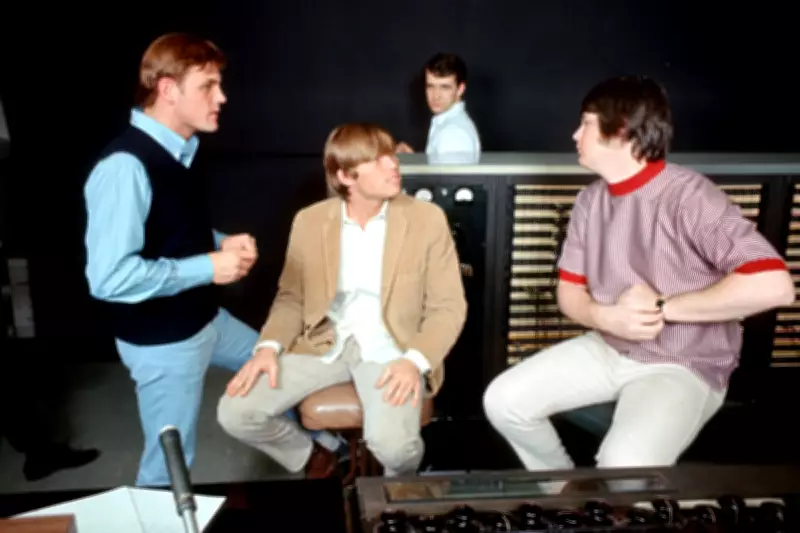
What emerged from this creative tension was nothing short of revolutionary. Over seven months, Wilson conducted approximately 20 sessions across four different studios, spending between $10,000 and $50,000—equivalent to half a million dollars today—making "Good Vibrations" the most expensive single ever recorded at that time.
Peter Doggett, author of the Brian Wilson biography Surf's Up: Brian Wilson and the Beach Boys, notes that "obsession was the name of the game for Brian Wilson by '66." Wilson later admitted the song was first written under the influence of marijuana and served as something of an ode to his experiments with LSD, seeking to capture an overwhelming feeling rather than just a particular song structure.
A Fragmentary Approach to Pop Composition
As Wilson worked with the legendary Wrecking Crew session musicians, he realized the song needed to be constructed in sections rather than as a single complete recording. "I wanted to write a song with more than one level," Wilson said midway through 1966, "so that the song can be more meaningful. A song can, for instance, have movements—in the same way as a classical concerto—only capsulised."
Doggett observes that Wilson's approach represented a groundbreaking application of modernist principles to popular music. "When Brian starts using the fragmentary process and the collage basis, he has fallen headlong, without realising it, into the tradition of modernism," Doggett explains. "He's using techniques and theories that had become standard in literature and in the visual arts and film as well. But he was really the first person to apply those particular high-art principles to pop."
Last-Minute Lyrical Inspiration
Mike Love's contribution came at the eleventh hour, with the lyrics being dictated to his then-wife Suzanne during the 20-minute drive from Burbank to Columbia Studios in Los Angeles in September 1966. The spontaneous creation included the now-iconic lines: "I love the colourful clothes she wears, the way the sunlight plays upon her hair..."
The chorus hook—"I'm picking up good vibrations, she's giving me excitations"—drew inspiration from Wilson's mother's observation that animals pick up vibrations humans cannot detect. "So I think the idea of a vibration just appealed to him," Love says. "It was kinda mystical, mystical and abstract. And Brian was very capable of getting extremely mystical when it came to music. That was what separated him from so many others."

Immediate Impact and Lasting Legacy
Despite initial concerns about cost and commercial viability, the finished product astonished the band. Dubbed a "pocket symphony" by publicist Derek Taylor, "Good Vibrations" became The Beach Boys' first million-selling Number One hit and had an immense impact on the 1960s pop landscape.
The song's revolutionary multi-part construction opened doors for progressive pop visionaries, influencing everything from The Beatles' "A Day in the Life" to Queen's "Bohemian Rhapsody" and Radiohead's "Paranoid Android." In 2023, music psychologist Dr. Michael Bonshor scientifically identified it as the happiest song ever recorded, surpassing even Billy Joel's "Uptown Girl" and The Village People's "YMCA."
A Creative Peak with Complex Consequences
For Wilson personally, the song represented both his artistic peak and a turning point that would challenge his future creativity. Doggett notes that "'Good Vibrations' marks the end of the moment when Brian Wilson knew exactly what he was doing in the studio and exactly how to achieve it." The subsequent abandoned Smile project and single "Heroes and Villains" revealed Wilson's loosening grip on his own genius amid psychological, health, and financial pressures.
Nevertheless, sixty years later, "Good Vibrations" endures as one of the most ambitious, influential, and uplifting pieces of music ever created. "It was a true collaboration," Love reflects proudly. "Brian's brilliance and my spontaneous lyrical offerings... resulted in probably one of the most successful recordings we ever made." The song stands as a testament to artistic vision triumphing over commercial expectations, creating a beacon of positivity that continues to resonate across generations.