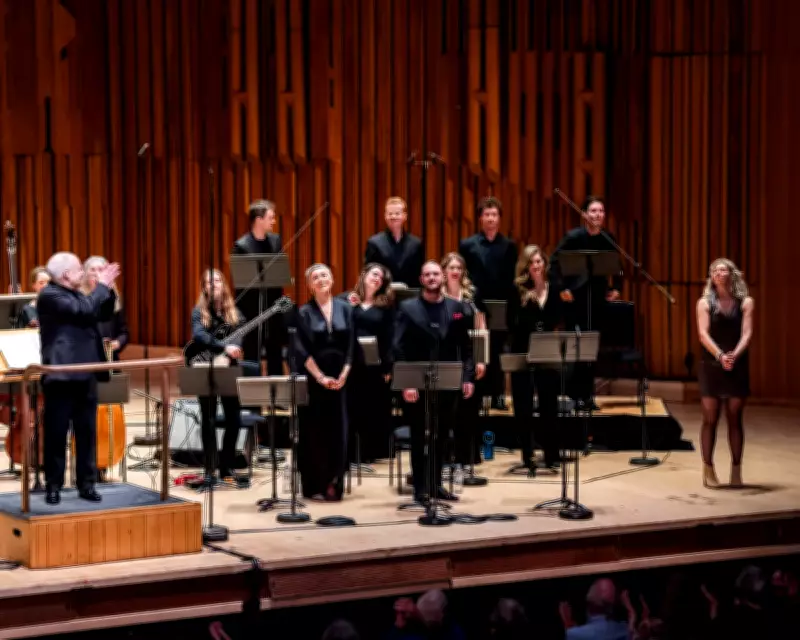
Tansy Davies's Mary Magdalene Passion Premieres at Barbican Hall
In a departure from traditional Lenten performances, the Dunedin Consort, under conductor John Butt, premiered a new Passion work at Barbican Hall in London. This piece, titled The Passion of Mary Magdalene, is composed by Tansy Davies and co-commissioned with the Edinburgh International Festival, where it will be presented in August.
A Fresh Take on a Biblical Figure
Davies's composition draws inspiration from her long-standing interest in Mary Magdalene, an enigmatic biblical character. The text incorporates sources such as the non-canonical Gospel of Mary from the second or third century, alongside poetry by Ruth Fainlight. Over 90 minutes, divided into seven episodes, the work unfolds through eight singers: four women and four men.
Anna Dennis delivers a radiant performance as Mary Magdalene, portraying her as a visionary with mystical, leaping melodies. The other three female singers form an Oracle, singing in chords, while Marcus Farnsworth, as Jesus, adds a dramatic touch with his first words being an angry "Shut up!" addressed to a demon sung by Tim Lilburn.

Musical Innovation and Structure
Davies's score is described as taut and intriguing, avoiding any new-age looseness. It begins with a low harpsichord note pulsing at a walking pace, a motif that recurs to enhance the ritualistic feel and connection to human movement. The composer has suggested the work could be staged, potentially as a dance piece, reminiscent of Stravinsky's Les Noces.
The instrumentation is a blend of baroque ensemble with a hidden electric guitar, providing subtle details and a fleeting rock riff during the crucifixion scene. This innovative mix supports the singers with intricate layering and cyclical phrases that evolve subtly, creating a cerebral yet rewarding auditory experience.
Upcoming Performance and Reception
The premiere at Barbican Hall has set the stage for its next appearance at the Edinburgh International Festival on August 8. Critics have praised the work for its sensual poetry and meditative quality, marking it as a significant addition to contemporary classical music.