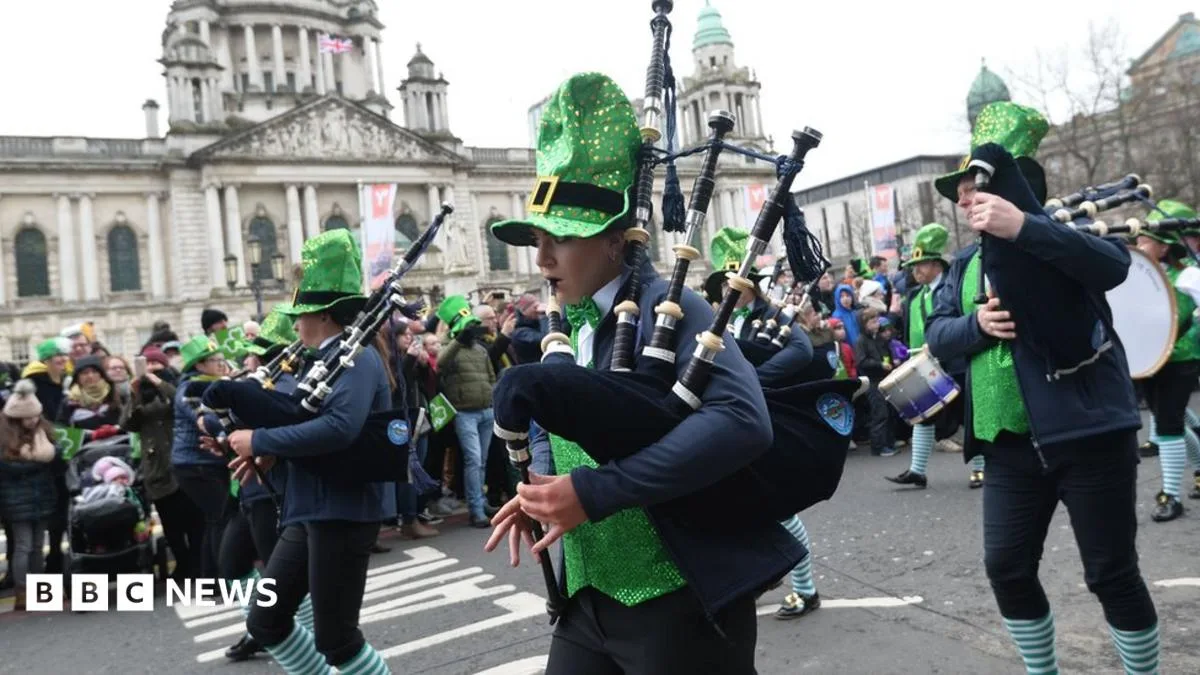
St Patrick's Day is celebrated worldwide by Irish people, their descendants, and anyone else who wishes to join in. The modern festivities are known for parades, turning things green, and drinking, which has occasionally led to excess. However, a little tipsiness has always been part of remembering the saint.
The 9th-century Book of Armagh stated that all Irish monasteries and churches were to celebrate Patrick with three days and nights of feasting. Folklorist Kevin Dannaher described St Patrick's Day 300 years ago, noting that in most parts of Ireland, men went to the local tavern after church to drink the 'pota Pádraig' or 'St Patrick's pot', and seldom did the drinking stop at one pot. He added that 'drowning the shamrock' did not necessarily imply getting drunk.
The association between St Patrick and alcohol may stem from folklore. Stiofán Ó Cadhla, a senior lecturer in folklore and ethnology at University College Cork, said folklore indicates St Patrick himself liked a drink. One narrative involves the 'sin of mismeasure', where St Patrick enters a pub and orders a pint. The publican gives him a short measure, and Patrick corrects him, saying that mismeasure is one of the worst sins.

Diarmuid Ó Giolláin, professor of anthropology at the University of Notre Dame, explained that St Patrick's Day has always been marked not only as a celebration of the patron saint but also because a dispensation allowed the Lenten fast to be broken, permitting meat and alcohol. Drinking was an important aspect of the religious festival and a break from Lenten rigours.
St Patrick's Day falls close to the Spring Equinox, tied to the return of growth. Traditional celebrations include 'drowning the shamrock' in a drink. John Carr wrote in the early 19th century that country people assembled, got tipsy, wore shamrocks in their hats, and drank whiskey in copious libations. After the potato famine, the Catholic Church clamped down on some practices, but traditional beliefs and Catholicism reached an accommodation, combining into folkloric behaviour.
Dr Ó Cadhla noted that there is a distinction between the saint of hagiographers and the saint beloved of Irish people, who is like one of themselves. The great public parades are a relatively recent addition to the celebrations.