Lagos Rave Revolution: Group Therapy Offers Affordable Nightlife Alternative
In Nigeria's bustling economic capital of Lagos, a new nightlife movement is rewriting the rules of evening entertainment. The traditional club scene, long dominated by an expensive table culture, faces competition from democratic raves that prioritize dancing over spending.
The Table Culture Problem
For decades, Lagos nightlife has operated on a multitier system where revelers are categorized by spending power. The table culture creates a competitive atmosphere with VVIP, VIP, and regular sections, compelling partygoers to purchase expensive drinks to secure prime seating.
A single bottle can cost between 100,000 naira ($72.34) to nearly one million naira, effectively pricing out most young residents navigating Nigeria's challenging economic landscape. This system has created what many describe as an exclusionary party environment where enjoyment becomes a performance of wealth.

Group Therapy's Democratic Approach
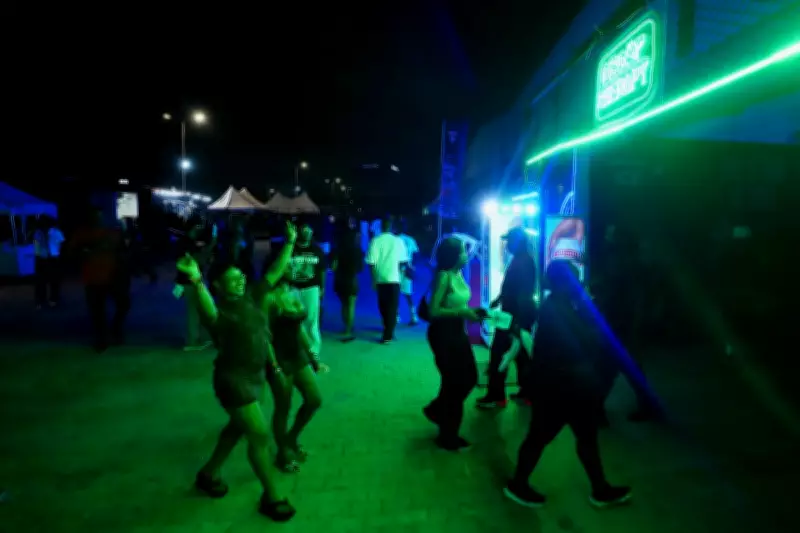
On a recent Friday night, thousands of mostly young people filled a large auditorium in Lekki, an upscale Lagos neighborhood. The venue was dark, illuminated only by flashing green strobe lights from the stage. This was Group Therapy, a popular rave offering a radically different experience.
"At raves, the dance floor is present. You go to a usual Lagos party, and there is no dance floor," explained DJ Aniko, founder of Group Therapy. "We barely have spaces to just dance, spaces you can just go to literally have a nice time. Most places you have to make a reservation, or book a table, it is a lot more complicated."
At Group Therapy, there are no tables. Revelers dance shoulder to shoulder in a single, unified space. Only one small bar serves drinks at significantly lower prices than typical Lagos nightclubs. A ticket costs just 21,000 naira ($15.19), with no pressure to purchase additional beverages.
Young Nigerians Embrace the Change
Yetunde Onikoyi, 28, discovered raves last year and has become a regular attendee. "Ever since then, I have been hooked by the neck; it is like a chokehold. I always want to be here," she confessed.
Dayo Williams, a consultant attending the party, appreciated the shift in focus: "Finding a place that still focuses on the human aspects of things, as against the materialism or need to amass as much as possible, is always a blessing."
Cultural Shift and Musical Evolution
Culture experts observe that raves have grown specifically in response to the exclusionary table culture at traditional clubs. "Raves are more democratic," said Oluwamayowa Idowu, founder of Culture Custodian, a leading Lagos culture publication. "What this says is that people don't have the purchasing power to sustain a club lifestyle. Clubs are still open and busy, but just generally in today's climate, there is more of a focus on you enjoying yourself as opposed to you performing enjoying yourself."
The musical choice is deliberate. Since around 2022, following the post-pandemic crossover of South African music genres, DJs have been infusing African sonic elements into house music. This electronic dance music subgenre has become the soundtrack for Lagos raves.
"House music evokes feelings," said Zia Yusuf, a content writer and creator who attended Group Therapy. "You just connect to the music, and you connect to the music with other people who connect to the music with you."
DJ Aniko maintains artistic control, resisting the mainstream industry influence common in larger clubs where musicians often preview unreleased songs or dictate audience choices. "Once you are reliant on the mainstream industry for the music, the mainstream creeps into the space," Aniko explained.
A New Nightlife Paradigm
Each DJ at Group Therapy works their decks from late night to early morning, creating an endless loop of high-tempo beats that electrically charge the hall. The music rises to pulsating crescendos before transitioning into new rhythms, while a sea of heads bops rhythmically and bodies sway wildly.

These raves, deemed more inclusive than traditional clubs, have gained prominence among younger generations who appreciate both the affordability and the authentic party experience. The movement represents a significant cultural shift in a city where nightlife had become increasingly commercialized and exclusive.
Despite requests from some patrons to create separate seating areas, Group Therapy organizers have consistently declined, maintaining their commitment to a unified, democratic dance floor experience. As Nigeria continues to export its musical talent globally while importing international genres, this homegrown rave culture offers young Lagosians an accessible space to connect through music and movement.