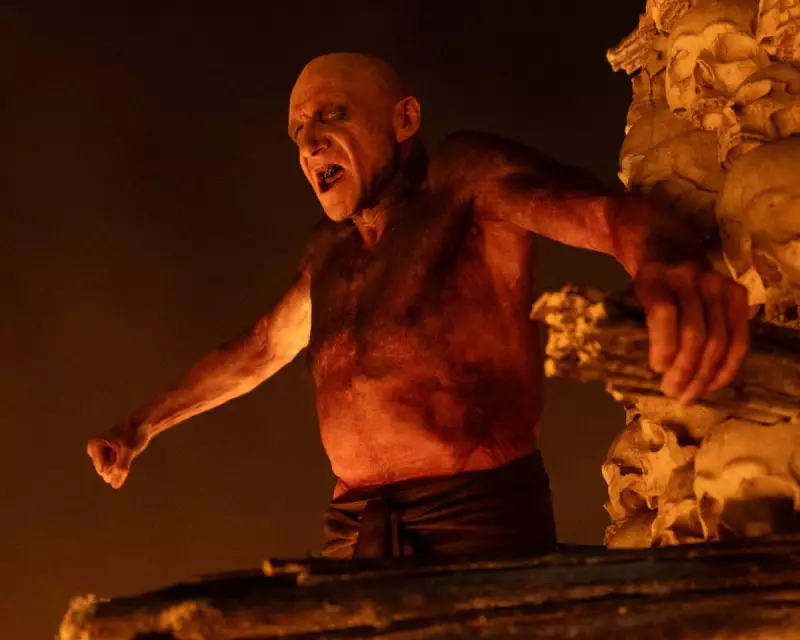
A scene featuring a semi-naked Ralph Fiennes whirling among human bones to the sound of Iron Maiden has become the unforgettable climax of the new horror film, 28 Years Later: The Bone Temple. The moment, which prompted surprised laughter and cheers from audiences, is powered by the band's 1982 classic, 'The Number of the Beast'.
Director Nia DaCosta revealed that the song was written into the script by writer Alex Garland. "You can't get better than that in a film about satanists," DaCosta stated, acknowledging the track's perfect thematic fit for a story involving a Satanist gang called the Jimmys.
The Anatomy of an Unforgettable Scene
The scene was crafted to starkly contrast the violent, erratic world of the Jimmys with the warm, humanist essence of Fiennes's character. Shot over three nights, DaCosta and her editor had a rough cut prepared within days. "In that moment I felt: Oh, we did it," the director recalled, though she admitted she hadn't predicted viewers would get out of their seats and dance.

DaCosta praised the song's structure, noting Clive Burr's juddering drum patterns and the track's multiple sections. "That makes it so fun, and gives you so many options in terms of when and how to cut," she explained. The final edit blends the track's inherent 'craziness' with the 'romance' of Fiennes's character, using fire and warm tones to visually complement the music.
Iron Maiden's Selective Licensing Strategy
The use of the song is a rare coup for the production. Iron Maiden, managed by Phantom Music Management, are notoriously selective about licensing their music for film and TV. "The biggest thing to consider is: are we going to be made fun of?" said Dave Shack of the band's management team, referencing popular culture's tendency to mock metal.
Shack expressed regret over one past licence for Hot Tub Time Machine, viewing it as a lesson. "We're not bloody Spinal Tap or Steel Panther," he emphasised. For 28 Years Later, however, the execution was flawless. After a BFI Imax screening, DaCosta asked Shack if he was happy. "Am I happy? Are you kidding me? People stood up in the cinema and clapped for it!" he responded.
A Cultural Moment for the Metal Legends
This marks the second major pop-culture moment for Iron Maiden in recent weeks, following the use of their 1983 song 'The Trooper' in the finale of Stranger Things. That placement saw the track's streaming numbers surge by 252% across all platforms in just seven days.
Shack noted that both projects were prestige, big-budget productions that treated music as integral to plot and character. He criticised the industry norm where "the music budget is usually the ass end of everything," explaining this is a key reason Maiden historically refuse many requests. "If you make a $10m film, why don't you put half a million aside for music and licensing?" he argued.
The timing is fortuitous, as the band is currently on its 50th-anniversary world tour. While both screen projects were in development long before the tour was announced, Shack sees them as validations. "Maybe they were vindications. But the big picture is that you're always looking for validation from a new audience. And Iron Maiden are no different in that," he concluded.
For director Nia DaCosta, the lesson is clear: "If you have a needle drop in a movie it had better be great... But when you use it right, it can be amazing." In the case of 28 Years Later: The Bone Temple, the fusion of Iron Maiden's satanic anthem with Ralph Fiennes's transformative performance has undoubtedly achieved exactly that.