Beauty's New Focus: Resilience Over Radiance in Skincare Trends
Welcome to Polished with Elise Wilson, where Daily Mail's qualified makeup artist and hair stylist answers your questions, shares expert advice, and trials the up-and-coming beauty and skincare trends so you don't have to. After seasons dominated by overzealous acids, peels, and aggressive 'glass skin' pursuits, our beauty focus has decisively shifted to something far less flashy but infinitely more important: resilience.
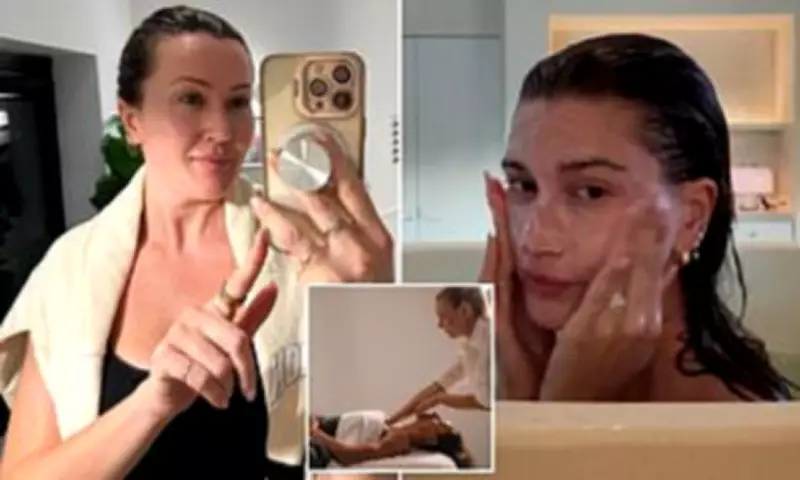
Yes, we can credit Hailey Bieber's glazed-donut complexion for accelerating the milky, barrier-first aesthetic now flooding our feeds and beauty shelves. However, from where I'm sitting, this movement runs deeper than a passing trend cycle. Those who know me understand I despise the term 'biohacking'—I truly can't stand it—yet even I can't deny that 'longevity' has quietly become beauty's buzziest word.
We're no longer chasing short-term radiance at the expense of long-term function. Instead, we're investing in skin cells that can defend, repair, and regenerate effectively for years to come. The goal isn't just an enviable glow, though that's certainly a welcome bonus for those aged 35 plus; it's durability. Skin that feels strong, hydrated, and calm today, and continues to behave that way a decade from now.

The Rise of Skin Milks and Barrier Protection
From the rise of silky skin milks designed to cocoon compromised barriers to science-backed ingredients like ectoin and next-generation peptides, the industry is pivoting towards smarter hydration and cellular protection. Just when you thought you'd mastered glass skin or cloud skin, along comes another dewy obsession. Enter: skin milks, which are like the toner-meets-essence-meets-moisturiser hybrids currently taking over feeds everywhere.
According to MECCA, skin milk has become 'the step everyone's adding to their routine to achieve soft, supple, incredibly sheeny skin.' Despite the name, there's no dairy involved. However, most formulas deliver humectants and soothing ingredients without the weight of a traditional cream and skincare heavyweights. Sasha Plavic, founder of ILIA skincare, described the brand's cult The Base Face Milk as having soothing properties and redness reduction on application, perfect 'if you have any rosacea or kind of skin concerns, it will immediately soothe and smooth the skin and reduce redness.'
New Ingredient Alert: Ectoin's Hydration Shield
If there's one ingredient set to dominate skincare in 2026, it's ectoin. Google searches are already up 60 per cent this year alone, and after diving into the research, I can see why. Ectoin is a natural amino acid derivative that protects and strengthens the skin by forming a hydration shield around skin cells. Skin therapist and Fresh Face Skin founder Amelia Goff explained it to me as a 'natural stress-protection molecule.'
'It was first discovered in microorganisms that survive extreme environments, and it works in a similar way on our skin—by shielding cells from stress.' She described it as a 'bodyguard' ingredient that doesn't force change but protects what's already there so the skin can function properly. Unlike traditional humectants such as hyaluronic acid, which primarily attract water, Amelia said ectoin 'forms a protective hydration shell around skin cells and proteins, stabilising them under stress… and reduces transepidermal water loss.' In other words, it's smarter hydration and especially helpful for sensitive, reactive, or over-exfoliated skin.
Powerful Peptides on the Rise
Peptides aren't new, but the way we're using them absolutely is. Head chemist at Q+A Skincare, Faye Purcell, said the shift is already happening with the anti-ageing ingredient stepping into younger routines, often replacing actives such as acids and retinol. 'We are now seeing a much wider variety of efficacies associated with peptides, no longer just anti-wrinkle claims but also brightening and anti-blemish benefits too.'

'Newer peptides have been designed to take on a much broader set of concerns, from brightening dull skin and reducing hyperpigmentation to targeting blemishes, breakouts, and excess oil,' she added. From a formulation perspective, just remember that not all peptides are created equal and concentration is key—as some formulas include only 'tip-in' levels according to Faye, so the active appears on the ingredient list, but it may not be at active level. Her advice is to look beyond the buzzwords: 'In vivo' testing—meaning studies carried out on humans—is widely considered the gold standard.
Facial of the Week: The 'Face Up' Method
In the spirit of results you can actually see, I also put one of the most talked-about sculpting facials to the test—a treatment that promises to take five years off your face in just 30 minutes. Surprisingly, it may be one of the most convincing longevity tools yet. Facial stretching isn't exactly a mainstream beauty category yet, but after trying an intense sculpting massage designed to physically lengthen and release facial muscles, I can see why it's gaining traction.
I recently trialled the 'Face Up Method' treatment, which has been pioneered by founder Olga Newman and focuses on deep, methodical stretching of the face, jaw, neck, and shoulders to relieve the chronic tension that can blunt our facial definition over time. By manually working and elongating overworked muscles—particularly around the stressed-out jawline, cheeks, and temples—the goal is to encourage a more lifted, sculpted appearance without needles or devices.
From what Olga explained to me, the treatment still features deep relaxation but is a lot more focused on structural 'somatic' release, as she calls it, with improved circulation and lymphatic drainage as a welcome side effect. Olga described fascia—the delicate collagen network that encases our muscles, bones, and organs—as the body’s internal scaffolding. When it’s soft and mobile, everything remains lifted and supported; however, when it tightens, tension travels through the system and features can begin to subtly drop.
Interestingly, she noted that the areas with the fastest visible impact on the face aren’t always the face itself, but the surrounding structures like the neck, upper back, ribcage, and shoulders. 'If you take the forehead for example,' she said. 'People see lines and instantly think about surgery or reach for injections. But forehead wrinkles usually have very little to do with ageing. They’re most often signs of tension along a fascial chain, commonly starting in the back of the neck and the occipital area.'
Certain movements were very intense in the way a proper stretch should be, but never painful, and I could feel areas I didn't even realise were tight gradually soften. Immediately afterwards, my face felt less compressed with noticeably less puffiness and a subtle but visible sharpening through my jaw and cheekbones. Just one session delivered a gentle refresh rather than a dramatic overhaul, but like any stretching-based practice, the real sculpting benefits build with consistency.
I loved the results so much that I signed up for Olga's app called the Face Up Club to continue my sculpting journey at home for the next three months. It offers simple, easy-to-follow techniques for women to practise at home, and having seen some of the most profound transformations myself, that was all the motivation I needed to stick with it consistently. Professional treatments like this typically start from around the mid-$200s depending on duration, making it a considered but compelling option for anyone curious about the new wave of hands-on, tension-releasing skincare.
Disclaimer: The views and opinions expressed in this article are solely my own and do not reflect those of any brands or companies mentioned. This content is not sponsored or endorsed.