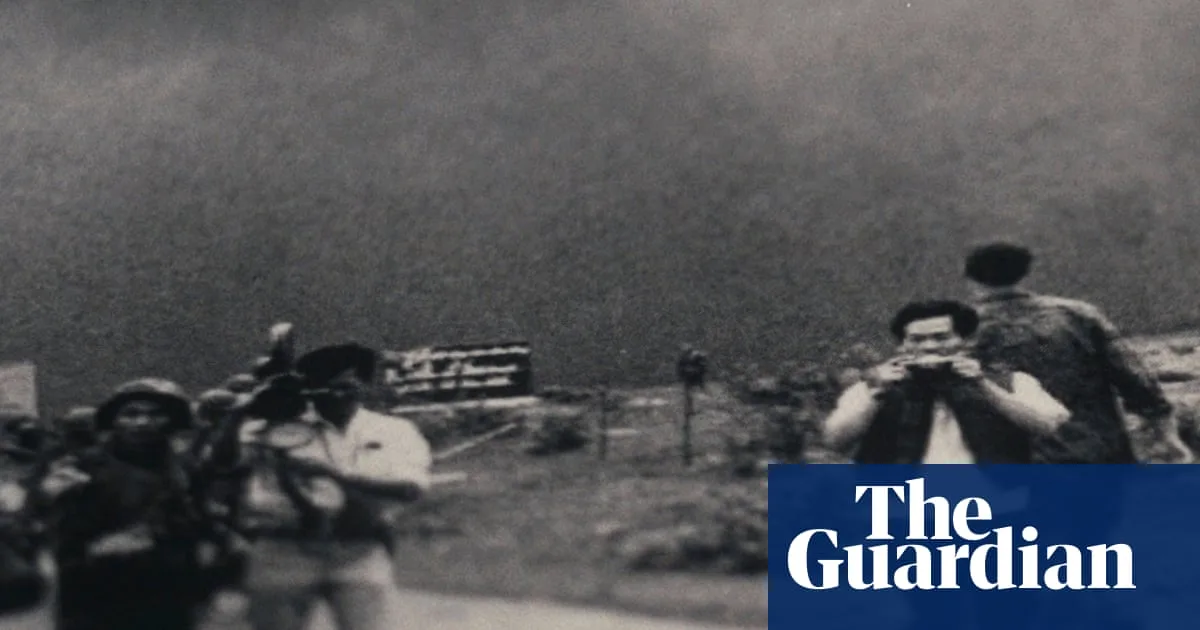
A new Netflix documentary, The Stringer, has reignited debate over the authorship of one of the most famous war photographs ever taken: the 1972 image of a naked Vietnamese girl fleeing a napalm attack, known as Napalm Girl. For over five decades, the photo has been credited to Associated Press photographer Huynh Cong 'Nick' Út, who won a Pulitzer Prize for it. However, the film argues that the image was actually captured by an unnamed freelance 'stringer' whose credit was allegedly reassigned to Út.
The documentary, directed by Bao Nguyen and narrated by British photojournalist Gary Knight, centres on an investigation prompted by Carl Robinson, a former AP photo editor in Saigon. Robinson, now in his 80s, claims that Horst Faas, the AP bureau chief, ordered him to change the photo's credit from the stringer to Út, the only staff photographer present. Robinson reached out to Knight in 2022, seeking help to find the unknown photographer and offer an apology.
Knight, who has worked with freelance photojournalists through his non-profit the VII Foundation, said the case highlights the vulnerability of stringers, who often work without insurance, pensions, or proper equipment. He questioned what it would feel like for the true photographer to see his work credited to someone else. Nguyen, whose parents emigrated from Vietnam during the war, initially hesitated to take on the project, fearing disruption to a cherished community narrative.

The film follows Knight, journalists Fiona Turner, Terri Lichstein, and Lê Vân as they conduct interviews, issue public appeals in Ho Chi Minh City, and review archival footage from the day of the attack. Their investigation points to Nguyễn Thành Nghệ, an NBC driver who occasionally sold photos to the AP, as the likely photographer. The AP has not granted the filmmakers access to its archives.
Knight emphasised the importance of self-scrutiny in journalism: 'If journalists are going to hold everybody else in the world to account, we have to be able to ask difficult questions of ourselves.' The documentary challenges a long-held assumption about a photograph that Susan Sontag said 'probably did more to increase the public revulsion against the war than a hundred hours of televised barbarities.'