Royal Ballet's Pierrot Lunaire Revival: A Creepy Dance of Desire
The revival of Glen Tetley's landmark 1962 ballet, Pierrot Lunaire, at the Linbury theatre in London presents a fascinating dichotomy. On one hand, it revitalises a pivotal work in dance history with its stark, strange, and psychologically charged atmosphere. On the other, it remains anchored in the past, evoking a sense of historical curiosity with its antiquated Freudian themes.
A Bold Fusion of Styles
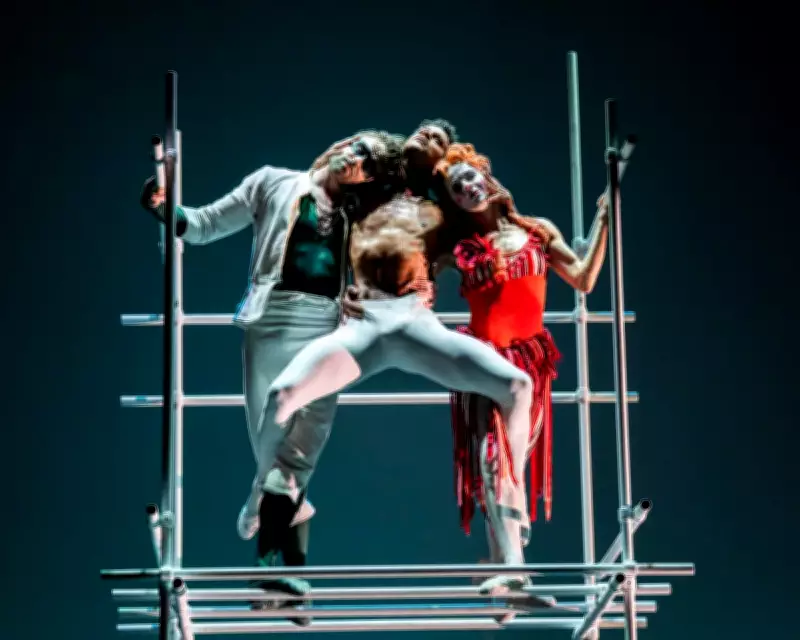
Set to Arnold Schoenberg's atonal score, the ballet draws from commedia dell'arte iconography to tell the stylised story of Pierrot, played by Marcelino Sambé. As a moonstruck innocent, Pierrot experiences an awakening of desire through his encounter with the many-faced Columbine, portrayed by Mayara Magri. The intervention of the dominant, manipulative Brighella, performed by Matthew Ball, adds a layer of tension to the narrative.
The production features a sparse set, centred around a simple scaffold, and employs a bold, efficient dance style. This style merges the long, lean lines of classical ballet with the gravitational pull, tensed angles, and visceral gesticulations characteristic of Martha Graham's technique. The choreography is clear, finely wrought, and purposeful, with abundant lunar imagery—such as crescent shapes and upward tugs mimicking moonbeams—permeating the performance.

Superb Performances and Psychological Depth
All three dancers embody their roles superbly, their inscrutable face makeup enhancing the enigmatic mood. They inhabit the psychological landscape set by Schoenberg's composed yet highly strung score, which oscillates between atonal anxiety and sliding hysteria. A key example of the choreography's intricacy is the highly constructed duet between Pierrot and Columbine, where they constantly look outwards, upwards, and around, but never directly at each other, reflecting their emotional disconnect.
Retrogressive Themes and Creepy Undertones
However, the ballet's drama is driven by somewhat hysterical and certainly antiquated Freudian iconography. A pivotal moment involves Pierrot awkwardly interacting with Columbine's breasts, leading to her slapping him and flouncing off. This scene gradually reveals the characters' archetypal roles: Pierrot as the shamed Boy punished for his burgeoning desires, Columbine as Woman—alternately a living doll, bow-wrapped bride, and scarlet harlot—and Brighella as Man or Daddy, wielding a wooden sword with sadistic undertones.
The combination of this retrogressive crudeness and sadistic tone with the high style, refined design, and powerful performances creates a strange and creepy atmosphere. It leaves audiences pondering whether the work speaks to the present or remains a museum piece, a relic of its time.
Pierrot Lunaire continues at the Linbury theatre, Royal Opera House, London, until 20 February, offering a unique opportunity to witness a piece that challenges and unsettles in equal measure.