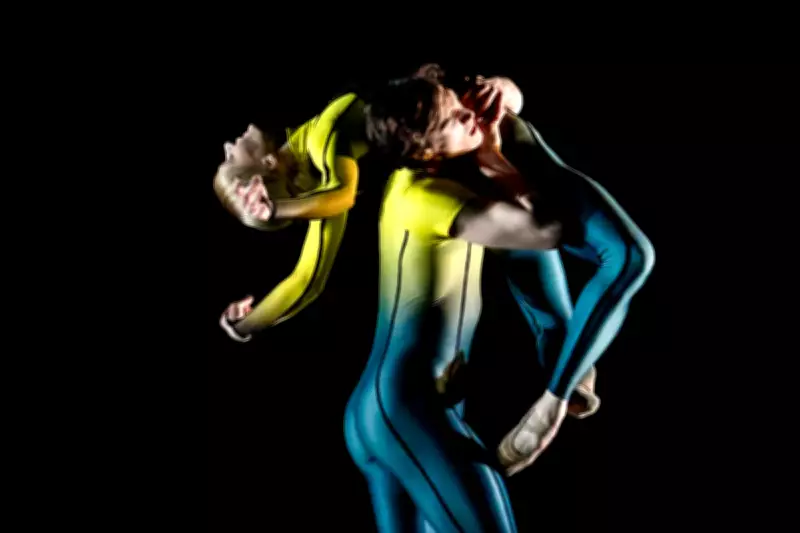
The world premiere of Quantum Souls, Wayne McGregor's latest creation for The Royal Ballet, has arrived at a pivotal moment in the celebrated choreographer's career. This new work serves as the finale to Alchemies, an all-McGregor bill featuring contrasting abstract pieces, and debuts amidst a flurry of significant milestones. McGregor recently secured an Olivier award for his outstanding contribution to dance, while 2026 commemorates two decades since he assumed the role of resident choreographer at The Royal Ballet.
A Collaborative Vision with Mixed Results
Renowned for his collaborative ethos, McGregor has consistently engaged with leading figures across diverse fields, from architecture to neuroscience. In Quantum Souls, this approach places composer Bushra El-Turk's new score prominently at the forefront. Virtuoso percussionist Beibei Wang performs on a raised platform on stage, seamlessly transitioning between traditional Chinese and western classical percussion instruments in dialogue with El-Turk's astringent orchestral arrangements.
The twelve dancers occasionally observe from the sidelines before diving into dynamic sequences. The ballet's most compelling moments thrive on this sense of interaction. Liam Boswell and Joseph Sissens execute movements with palms nearly touching or maintain intense eye contact as they descend to the floor. In an energetic quartet, Marianna Tsembehoi is passed between Sissens and Boswell, while tapping Viola Pantuso's raised leg to propel her from a static pose back into motion. Wang even descends from her platform, bow in hand, to join the fray, with William Bracewell's twisting solo evoking the image of a genie she has conjured.

Endurance Test or Artistic Exploration?
Despite the fierce and polished dancing on display, Quantum Souls struggles with its extended runtime of forty minutes. Critics argue that the energy dissipates over time, transforming what could be a vibrant conversation into a circular endurance test. The work is packed with ideas, but McGregor's prolonged exploration risks diminishing their impact, leaving audiences fatigued rather than enthralled.
Contrasting Works in the Alchemies Bill
The Alchemies program also features Untitled, 2023, a tauter and more abstract piece that nods to the influence of Merce Cunningham. Dancers clad in Burberry unitards of white and deep green mirror the geometric precision of Carmen Herrera's stage design, while Anna Thorvaldsdottir's resonant score provides a sonic backdrop of vrooms and chimes. Fumi Kaneko delivers a lucid and spontaneous stop-start solo, and Joseph Sissens alongside Luca Acri exude sharp charisma in the opening duet.
In contrast, the 2018 work Yugen reveals the inspiration of former Royal Ballet choreographer Kenneth MacMillan. Set to Leonard Bernstein's Chichester Psalms, McGregor crafts solos and trios that evoke deep contemplation and compassion. Sarah Lamb, Matthew Ball, and Marco Masciari perform with heartfelt sincerity as the leading trio, showcasing McGregor's ability to blend emotional depth with abstract movement.
Overall, while Quantum Souls highlights McGregor's innovative spirit and collaborative ventures, its excessive length may detract from the otherwise polished and thought-provoking production, underscoring the challenges of balancing ambition with audience engagement in contemporary dance.