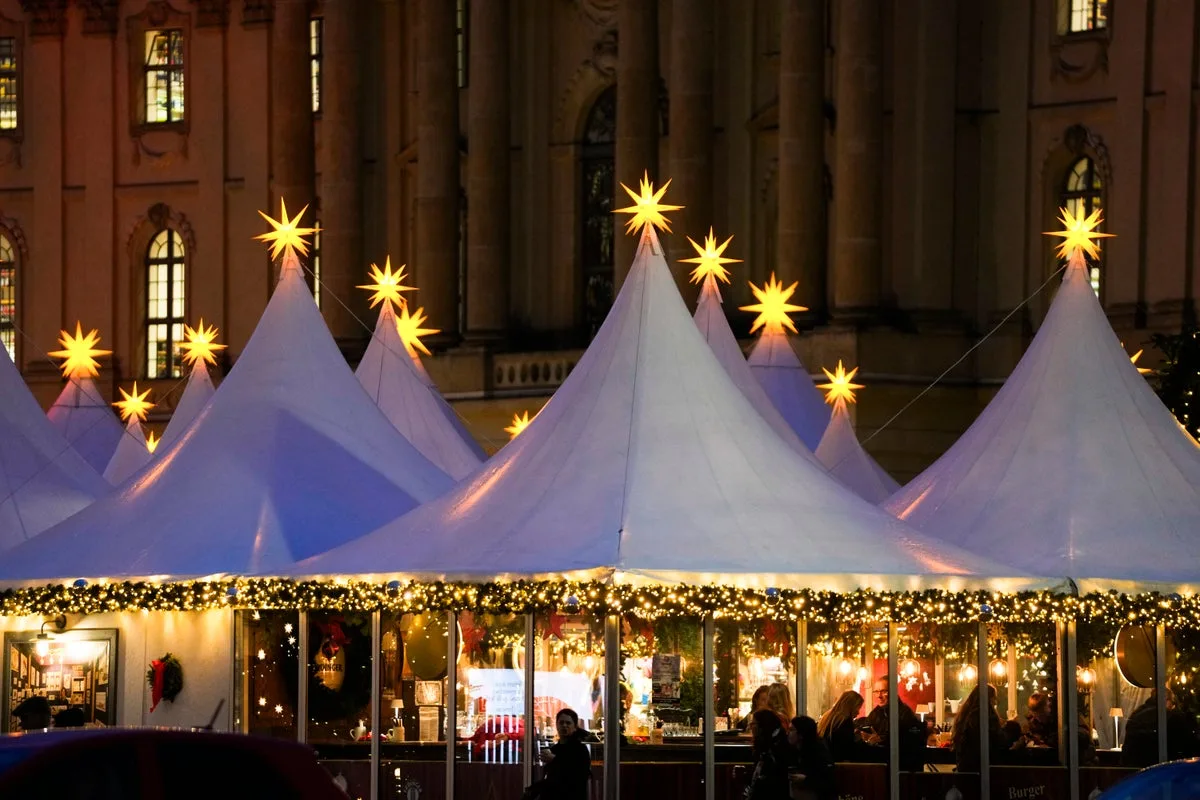
For over 180 years, the Moravian star has been a beloved Christmas symbol in Germany, particularly in the eastern village of Herrnhut where it originated. These intricate illuminations, available in various sizes and colours, adorn everything from church steeples to the Berlin chancellery during Advent.
The star represents the Star of Bethlehem, which guided the three wise men to the Christ child, according to Katja Ruppert, managing director of the Herrnhuter Sterne manufacturing company. The tradition began when a math teacher at a Moravian Church school asked students to create a geometric shape known as a truncated cuboctahedron.
Herrnhut was founded in 1722 by members of the Moravian Church, one of the oldest Protestant denominations, who fled persecution from Bohemia and Moravia (now part of the Czech Republic). Count Nikolaus von Zinzendorf granted them asylum, and the village's name translates to 'Under the Protection of the Lord'.

The stars were originally white and red, symbolising purity and the blood of Jesus Christ. Today, they are made from paper or plastic in a wide range of colours and patterns, including 'literary stars' made from old book pages. The company produces over 820,000 stars annually, with prices ranging from €19 for the smallest (8 cm) to €205 for the largest standard size (130 cm).
While the star's popularity has grown within Germany over the past 20 years, exports remain limited. However, other Moravian Church communities, such as those in Bethlehem, Pennsylvania, and Christiansfeld, Denmark, also display the star as a symbol of their faith. The company recently opened a workshop in Herrnhut where visitors can make their own stars, attracting over 60,000 people annually.