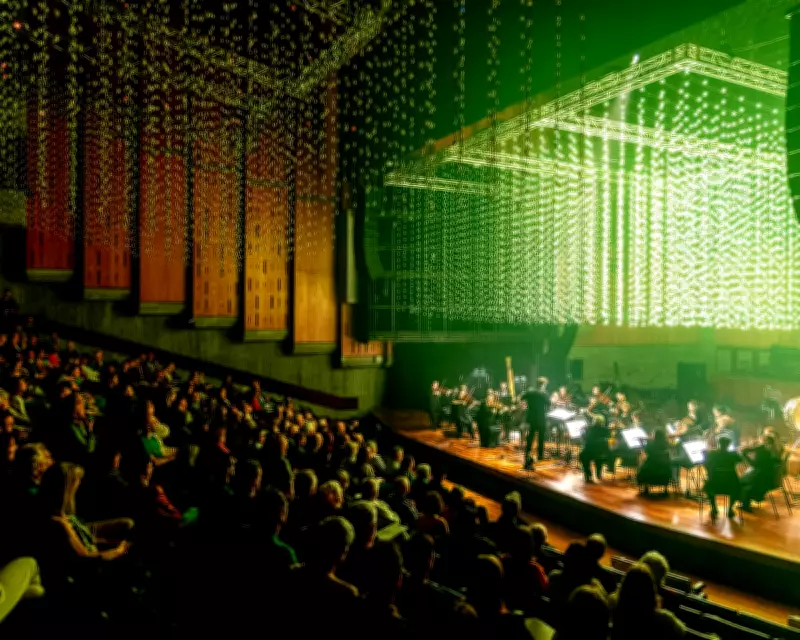
The Queen Elizabeth Hall foyer was filled with birdsong, but inside the auditorium, an extraordinary sight awaited. Hanging from the ceiling were ropes adorned with thousands of walnut-sized LEDs, arranged in massive blocks above the musicians and the front half of the audience. The hall promised to glow like Harrods in December. This was Echoes of Hill and Horizon, a delightful fusion of technology and English pastoral music at this year's Multitudes festival.
A Unique Collaboration
The Orchestra of the Age of Enlightenment, typically known for earlier repertoire, delved into music by Vaughan Williams, Warlock, and Elgar. Their agile, lean yet sonorous playing was enhanced by the Queen Elizabeth Hall's hidden surround-sound system, comprising dozens of speakers. While occasionally blunting the orchestral blend, the system allowed for intriguing spatial effects and cathedral-like reverb.
The Lightshow
The intricate lightshow by Squidsoup stole the show. In Vaughan Williams's The Lark Ascending, Kati Debretzeni's solo violin was represented by a cluster of ice-blue lights with a red aura, swooping above the audience. As she moved around the stage, the lights shifted to colours of sunlight and harvest: yellow, ochre, russet, leaf-green, and deep sky-blue. The other pieces offered a feast of synaesthesia. Peter Warlock's Capriol Suite featured indigo shapes moving in stately dance steps, red explosions like fireworks, and a turquoise ribbon. The leading colour in Vaughan Williams's Fantasia on Greensleeves was obvious, while Elgar's Serenade for Strings brought poster-paint shades, and Vaughan Williams's Fantasia on a Theme by Thomas Tallis showered stained-glass blues and reds.

Immersive Experience
Under Evan Rogister's brisk conducting, the vitality of the playing and the pace of the lightshow combined to create an immersive audiovisual experience that felt weightless and enchanting. The Multitudes festival continues at the Southbank Centre, London, until 30 April.