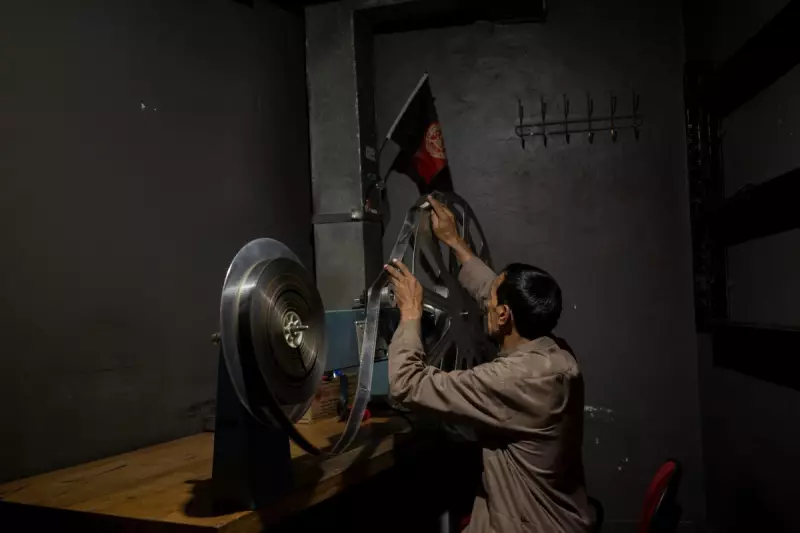
One of Afghanistan's most storied cultural landmarks, the Ariana Cinema in downtown Kabul, has been completely razed to the ground, making way for a new commercial shopping complex. The demolition, which began on 16 December, marks the erasure of a site that for over six decades served as a vital hub for entertainment and community, surviving revolutions and warfare only to fall to redevelopment.
An Enduring Symbol Falls to the Wrecking Ball
Through the 1960s, Soviet invasion, civil war, and the Taliban's first regime, the Ariana Cinema stood as a battered but resilient fixture in the heart of Kabul. First opening its doors in 1963, its sleek, modern architecture symbolised a nation's aspirations. It finally met its end in late December 2025, with the site cleared within a week. For Afghan film director and actor Amir Shah Talash, the loss is profound. "It's not just a building made of bricks and cement that is being destroyed," he told the Associated Press, "but the Afghan cinema lovers who resisted and continued their art despite the hardships."
The cinema's fate was sealed following the Taliban's return to power in 2021. The government, enforcing a strict interpretation of Islamic law, banned most forms of entertainment, ordering all cinemas to close. The state-run Afghan Film Administration was dissolved in May 2025. Kabul municipal authorities subsequently decided the prime city-centre land, owned by the municipality, should be used for a commercial venture. Niamatullah Barakzai, a spokesman for Kabul Municipality, stated the area had "the potential for a good market" and that developing the land would "generate good income."

A Rollercoaster History of Ruin and Revival
The Ariana's history mirrored Afghanistan's turbulent 20th and 21st centuries. It suffered heavy damage during the civil wars of the 1990s and was shuttered when the Taliban initially captured Kabul in 1996. Following the US-led invasion in 2001, it was given a new lease of life with help from the French government, reopening in 2004.
It became a beloved venue, screening popular Bollywood films, American action movies, and new works from a revived domestic film industry. For Talash, whose childhood visits sparked his career, the cinema was a sanctuary. "It was from this cinema that I fell in love with film," he said, noting that screening his own work there remained "one of the unforgettable memories for me."
A Personal and Cross-Border Cultural Loss
The cinema's significance extended beyond Afghanistan's borders. During periods when Pakistan banned Indian films, Pakistani Bollywood enthusiasts would travel to Kabul to watch the latest releases at the Ariana. Sohaib Romi, a Pakistani film lover, recalled watching the Indian film "Samjhauta" there with his uncle in 1974. "My memories are buried in the rubble of the Ariana Cinema," he lamented.
For the Afghan artistic community, the demolition is a potent symbol of regression. Talash, now living in France, described it as "very painful and sad news," stating that "a very important part of Kabul has been taken away." Yet, he holds onto a thread of hope, asserting that "buildings may collapse, but art lives on in the minds and hearts of people."
The empty plot where the Ariana once stood now awaits its future as a shopping centre, while the memories of the stories it told and the community it housed persist in the minds of those who once passed through its doors.