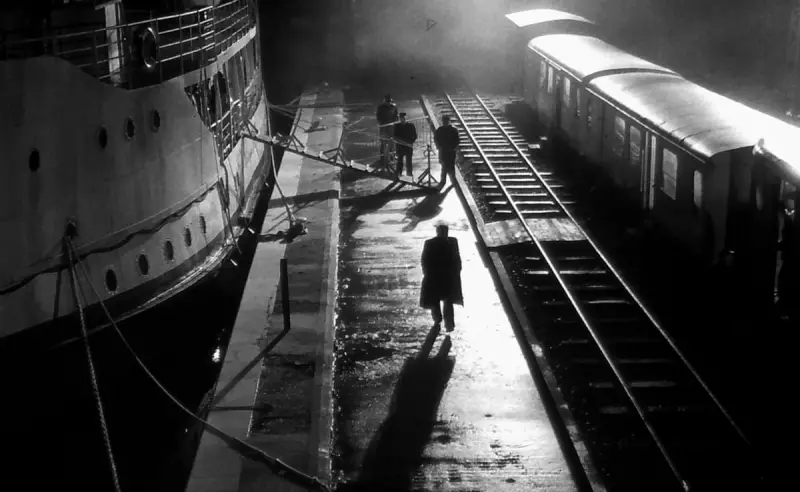
In a significant revelation for the world of cinema, the revered Hungarian auteur Béla Tarr has confirmed he is working on what will be his final film. The project, shrouded in his characteristic mystery, is described as an epic endeavour that has already consumed a decade of his life.
The Pursuit of an Uncompromising Vision
Béla Tarr, the 70-year-old maestro behind seminal works like Satantango and The Turin Horse, has never been a filmmaker to rush. His new, concluding work continues this tradition of meticulous, deliberate creation. While specific plot details remain closely guarded, the director has hinted at the monumental scale of the undertaking, suggesting it represents the culmination of his artistic journey.
This announcement comes as Tarr prepares for a major retrospective of his work at the Institute of Contemporary Arts (ICA) in London. The season, aptly named Béla Tarr: Till the End of the World, will showcase his influential filmography, allowing audiences to trace the evolution of his stark, hypnotic, and profoundly humanist style.

Mentorship and the Future of Film
A key part of Tarr's enduring legacy is his role as a mentor. He famously taught and profoundly influenced László Nemes, the director who later won an Oscar for the harrowing Holocaust drama Son of Saul. Tarr's pedagogical philosophy was brutally honest; he reportedly told his students that making films was "stupid" and "impossible," a challenge meant to weed out all but the most passionately committed.
Reflecting on Nemes's success, Tarr expresses a deep, paternal pride. He views Son of Saul not as a continuation of his own aesthetic, but as a powerful and original work that successfully forged its own path—the greatest compliment a mentor can give.
Defining Cinematic Perfection
For Tarr, the concept of "cinematic perfection" is not about flawless execution in a technical sense. He articulates a far more profound definition. Perfection, he argues, is achieved when every element of a film—the images, the sound, the performances, the rhythm—coalesces into a singular, unified, and overwhelming experience. It is the moment when form and content become indivisible, transporting the viewer completely into the world on screen.
He cites the example of Satantango's famous drunken dance scene, a sequence of mesmerising repetition that stretches time and immerses the audience in the tavern's despair and fleeting joy. This, to Tarr, is perfect cinema: an audiovisual phenomenon that cannot be described with words alone.
As he works towards the endpoint of his own directorial career, Béla Tarr leaves behind a formidable body of work and a clear, uncompromising standard for artistic integrity. His final decade-long project promises to be a testament to a lifetime spent staring into the rain-swept, wind-buffeted soul of humanity, and his influence, through protégés like Nemes, will resonate for generations to come.