Eight decades after its release, the 1945 film 'I Know Where I'm Going' continues to cast a powerful spell. Directed by the legendary partnership of Michael Powell and Emeric Pressburger, this timeless romance, set against the wild beauty of the Scottish Hebrides, remains one of Britain's most cherished cinematic treasures.
A Film of Firsts and Lasting Legacy
Released in December 1945, the film holds a unique place in cinema history. It was shot primarily on location in the Hebrides, though its leading man, Roger Livesey, never set foot there due to prior theatre commitments. It boasts the distinction of being the first feature film to include unapologetic, untranslated Gaelic conversation. Its cultural impact was so profound that a telephone box on the Isle of Mull, featured prominently in the story, was later granted listed building status.
The film marked one of the final entries in a remarkable run of masterpieces from Powell and Pressburger, a series that included 'One of Our Aircraft Is Missing' (1942) and 'A Matter of Life and Death' (1946). Critics and directors have long sung its praises. Barry Norman ranked it in his top 49 greatest films, while Martin Scorsese, who first saw it in 1993, hailed it as a masterpiece. Upon its release, it was a hit with both audiences and critics on both sides of the Atlantic.

Plot, Performance and Social Subtext
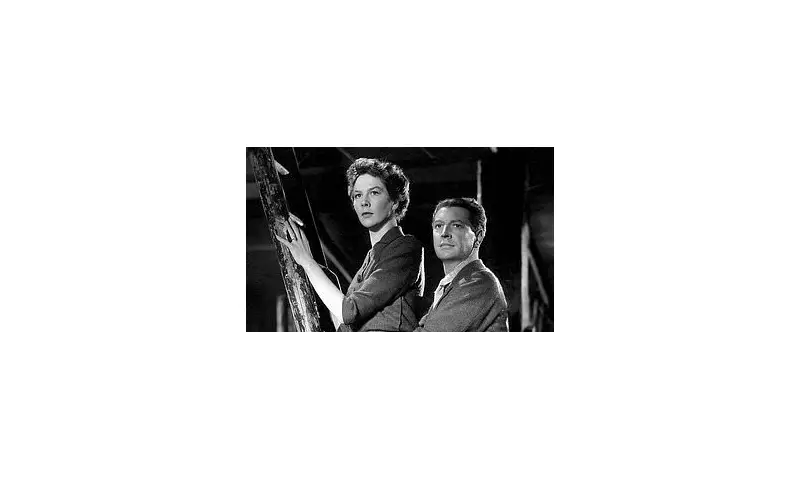
The story follows Joan Webster, a fiercely ambitious and modern young woman played with captivating stillness by Wendy Hiller. She is en route to the remote Scottish island of Kiloran to marry her much older, unseen fiancé, Sir Robert Bellinger, one of England's wealthiest industrialists. Her journey is a calculated ascent into high society, but fate intervenes.
Fog and a fierce storm strand her on Mull, where she meets Torquil MacNeil (Roger Livesey), the charming, Gaelic-speaking naval officer who is the true laird of Kiloran. As her meticulously planned schedule unravels, so does her resolve, and she finds herself falling helplessly in love with a man and a way of life she never anticipated.
The film is notable for its subtle but sharp commentary on post-war social mores. Joan is a strikingly independent figure for 1945, a regular at a nightclub who orders her own gin and Dubonnet—a bold contrast to the constrained lives of women like Princess Margaret. Yet, the narrative cleverly reveals that her entire journey, from London to the islands, is orchestrated and supervised by men. Her rebellion, therefore, becomes a complex shift from one form of control to another, driven by love and the untameable forces of nature.
Production Challenges and Iconic Craft
The production overcame significant hurdles. Denied Technicolor film stock by the Ministry of Information, the filmmakers created stunning visuals in black and white, with cinematographer Erwin Hillier employing bold, backlit photography. After Deborah Kerr and James Mason became unavailable, Roger Livesey campaigned for the lead role. Powell initially dismissed him as too old and portly, but Livesey swiftly lost weight, lightened his hair, and won the part.
His theatre contract, however, meant all his scenes were shot in a London studio using deep-focus and back-projection. A body double was used for the Hebridean location shots. Despite this, the film possesses an extraordinary and authentic sense of place. As novelist Raymond Chandler noted in 1950, "I've never seen a picture which smelled of the wind and rain in quite this way."
The supporting cast is a gallery of future stars, including a young Petula Clark, who was reportedly too terrified of the volatile Michael Powell to ask for a bathroom break. The heart of the film also lies with Pamela Brown's portrayal of Catriona, a poor but morally astute aristocrat who acts as the story's guiding conscience.
Today, 'I Know Where I'm Going' retains a devoted global following. It is celebrated for its taut screenplay, breathtaking scenery, and its poignant exploration of love, destiny, and the forces beyond our control. As film historian Pamela Hutchinson reflected, it is a story about "navigating a world we cannot control... We are all at the mercy of forces beyond our ken. Love is one of them, and magic another." Eighty years on, its magic remains undimmed.