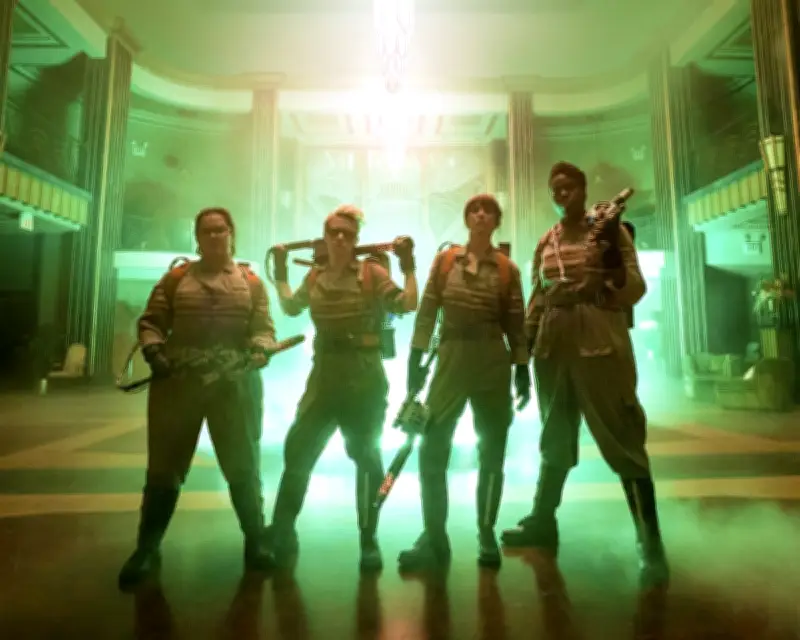
Criticism of Paul Feig's Ghostbusters reboot began more than two years before its release. Specifically, it started the moment that the director of Bridesmaids and The Heat announced, in 2014, that he and writer Katie Dippold were to cast four women as paranormal exterminators. The fate of their film was all but sealed.
A year later, the first trailer for the film swiftly became the most disliked film trailer on YouTube – and then the most disliked YouTube video ever. Such a concerted campaign of vitriol did not lessen with the film's release. It was in many ways the cinematic sensation of the year: a firestorm of rage and revulsion, all over a family supernatural comedy that Sony launched into a landscape already drowning in profitable franchises.
The film came and went. The cast moved on, and while the backlash remained a touchstone – in 2018, Sandra Bullock called it 'unfair on a level that I can't even not be mad about talking about' – the fury was redirected towards the likes of Daisy Ridley and Kelly Marie Tran in The Last Jedi, and then Brie Larson for Captain Marvel. The precedent had been set, and online male superfans were free to lead the discourse over what was acceptable for women to achieve in their favourite fantasy sandbox. The ebb and flow of this anger mostly manifested itself through rage-baiting YouTube videos. Feig's Ghostbusters became the bloodiest casualty of the IP wars of the 2010s.
The film's legacy to date has been forged in this hatred. But 10 years on, I find myself – as a self-confessed Ghostbusters superfan – revisiting it more and more, not as a grim war artefact but simply as a piece of art. Its upbeat vibe is something lacking from a lot of modern blockbuster fodder. Its warmth and inclusivity means you seek out the company of the characters again and again. Kristen Wiig, Melissa McCarthy, Leslie Jones and especially Kate McKinnon (whose Bugs Bunny-esque mad scientist adds a nitro boost to every scene she's able to steal) all seem to be thoroughly enjoying their time together, and the bond they form over the course of the adventure feels real and earned.
That makes it very distinct from the brittle, brilliant original, much as I loved it. Ivan Reitman's 1984 film was absorbed early into my DNA, and became a creative compass for me growing up. While I thought the 1989 sequel was a bit of a damp squib, I too was canonically sceptical when I first learned of Feig's plans. But watching the movie today, it's plain that what was billed as a reboot was actually a reinvention. Feig was just doing in 2016 what Reitman had done in 1984: taking the top comedy talent of the time and putting them into a high concept movie experience. The roots go further back still: Feig was making a big Hollywood comedy horror romp in the same way Bob Hope or Abbott and Costello had decades before. He also paid homage to those big bold 80s summer blockbusters in crafting a colourful, energetic, paranormal playhouse for his cast.
But it's also a less emotionally cartoonish beast than the original. Particularly touching – and prescient – is the way all four women are derided and underappreciated for the vast majority of the picture. In the original, Bill Murray's troupe are New York sensations by the midway point; by contrast, Feig's team are only thanked by the city in that film's closing moments. A greater acknowledgment of fallibility flows all the way through it: these women must overcome their personal demons before they tackle the more apocalyptic ones. It's a story of real people and their world, not fireworks and iconography.
The film's peripheral characters, too, are more generously handled – in particular, chief foe Rowan (Neil Casey), a dark mirror of our heroine's paranormal fandom, who has channelled the ridicule he endured as a child into world exploding, rather than world saving. On first release, Feig's film was hijacked by the ghosts of the first film, the fans circling their sacred text, ready to pounce. But it wasn't made for them; it was made for a new, young audience unencumbered by nostalgic baggage. And film itself resembles the latter, not the old veterans from 30 years before.
It's fresh, it's funny and – rewatched today – pretty dazzling. The sequence in which McKinnon obliterates a Times Square-ful of spectres to Theodore Shapiro's orchestral version of Ray Parker Jr's theme, is possibly the greatest ghostbusting scene ever. Five years after Feig's film was released, the keepers of the flame finally admitted defeat and released Ghostbusters: Afterlife: an aggressively unoriginal rehash of the safest moments from the original, sequel and cartoon spin-off. The fans loved it. They finally got what they wanted: the same old story, the same old cast, a continuity that could continue the franchise in the original's image. No death threats were issued to its new recruits for deigning to take part.
Yet 2016's Ghostbusters may yet have the last laugh. Its Netflix debut earlier this year was a notable success, both in terms of viewing figures and a social media reception much more in sync with the concept of empowered women, concerned with female friendship, portrayed in a positive manner. Was Ghostbusters: Answer the Call just ahead of its time? Post-Barbie, it's hard not to regret that Sony didn't defer the film for a few years, as well as their decision not to make a sequel (the film made $230m; Feig said the studio were looking for $300m). But for the film's belated fans, its lasting message isn't about injustice of gender politics in 21st-century Hollywood. Its legacy lies in its moral that being a good person takes precedence over all else. Does that need saying more today than it did 10 years ago? One thing is certain: we all owe the cast a huge apology.