Meghan Markle's Instagram Post Sparks Debate on Celebrity Parenting and Privacy
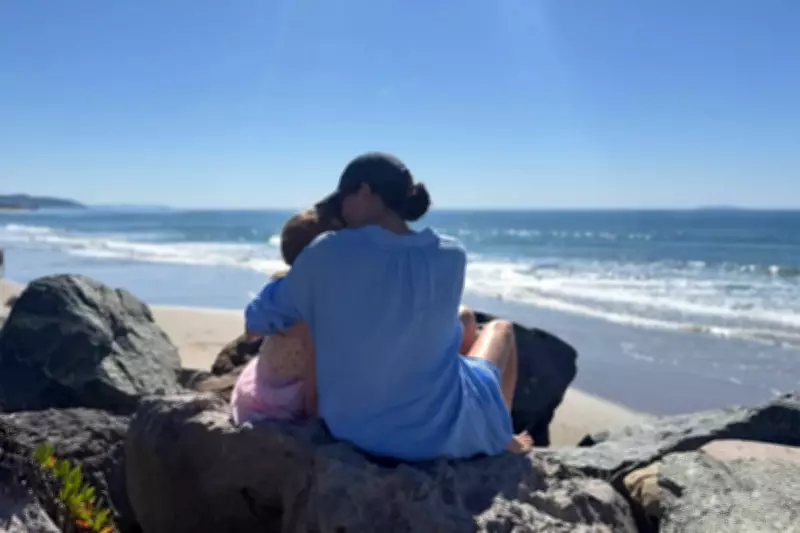
The Duchess of Sussex recently shared a photograph on Instagram for International Women's Day, featuring her hugging her daughter, Princess Lilibet, aged four. The image shows the pair sitting together on a rock by the sea, with the caption: "For the women she will one day be…Happy International Women's Day." Prince Harry is credited as the photographer. However, the photo follows a pattern where Lilibet's face is not fully visible, showing only the back or side of her head.
The Pattern of Obscured Faces in Social Media Posts
This approach, often termed "sharenting with caution," aims to protect children from identity theft, online exploitation, deepfakes, and other security risks. Meghan has previously posted images with Lilibet's face hidden, such as during Thanksgiving in November, where Lilibet wore a reversed baseball cap, and in December, with her hair covering her face. In October, a photo showed her enjoying pumpkin picking, pulled in a cart by Meghan, with Prince Archie, six, also visible only from behind.
However, this consistency was disrupted when Meghan shared a Valentine's Day post featuring Lilibet's face clearly visible, as Prince Harry carried her in a pink ballet outfit holding red balloons. The post caused a frenzy online, with fans noting Lilibet's resemblance to Harry. Meghan captioned it: "These two + Archie = my forever Valentines." Additionally, a relaxed family photo from 2021 showed both Archie and Lilibet's faces when Lilibet was a baby.

Criticism of Performative Privacy Among Celebrities
The inconsistency has led to criticism, with some labeling it as "performative privacy." Critics argue that Meghan seems eager to showcase her royal children while maintaining an appearance of concern for their privacy, despite Prince Harry's public pleas for discretion. This trend is not unique to Meghan; other celebrities like Carrie Johnson, Priyanka Chopra, Blake Lively, and Gigi Hadid have also obscured their children's faces in social media posts using emojis or clever angles.
For instance, Carrie Johnson shares idyllic images of her children—Wilfred, five, Romy, four, Frank, two, and Poppy, nearly one—but never shows their faces, using emojis instead. Similarly, Gigi Hadid and Zayn Malik used a Hulk emoji to hide their daughter Khai's face in a Halloween post in 2020. Critics question the effectiveness of these measures, noting that even with faces obscured, posts can reveal identifiable data like locations, ages, and daily routines.
The Ineffectiveness of Partial Privacy Measures
Experts warn that placing emojis over children's faces does not provide complete privacy protection. Such photos can still train facial recognition algorithms and build digital profiles of the children. There are concerns about AI tools potentially bypassing these obscurations. The article argues that if privacy is a genuine concern, parents should avoid posting photos of their children altogether or use private groups rather than public platforms.
Some celebrities, like Eva Mendes and Ryan Gosling, Cameron Diaz and Benjo Madden, and Amal and George Clooney, have adopted a strict no-show policy for their children online, which is seen as more consistent and effective. The growing #NoKidPolicy trend advocates against sharing children's faces or personal data online, a position that garners admiration for its clarity.
Impact on Ordinary Parents and Social Media Culture
The article highlights how this performative privacy can make ordinary parents feel inadequate for openly sharing photos of their children. It suggests that celebrities are trying to "have their cake and eat it" by appearing responsible while still engaging with social media. For example, Carrie Johnson recently posted a photo showing baby Poppy's face in a restaurant, contradicting her usual privacy stance.
Ultimately, the debate underscores a broader issue in celebrity culture: the desire for both publicity and privacy. While Meghan and others may have valid reasons for protecting their children, the mixed messages can come across as disingenuous. The article concludes that the best protection is to avoid posting photos of children entirely, urging celebrities to either show the whole picture or none at all, rather than occupying a muddled middle ground.