Kelly Osbourne's Grief Overshadowed by Body Shaming at Brit Awards Tribute
A celebration of the late Ozzy Osbourne at the weekend quickly descended into a public post-mortem about his daughter Kelly's weight loss, reigniting decades of body shaming. Katie Rosseinsky examines how, in her darkest moments, Kelly Osbourne is finding the strength to push back against cruel scrutiny.
Grammy Tribute Marred by Criticism
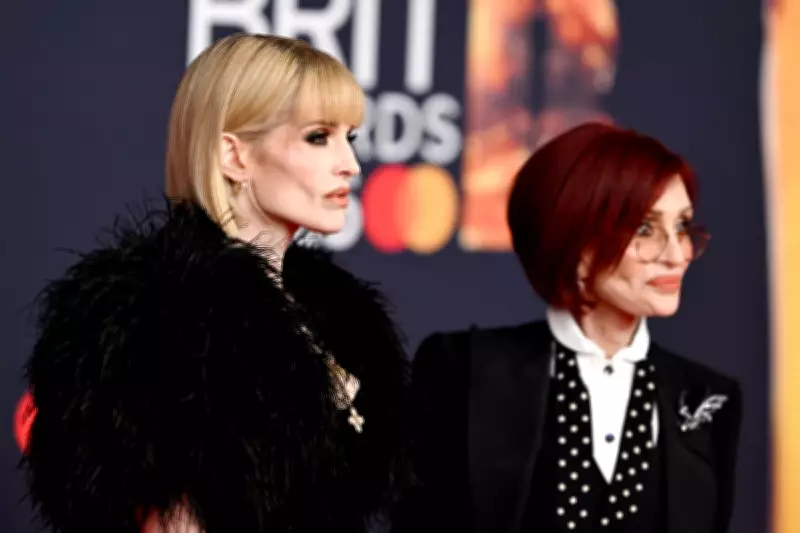
Kelly Osbourne admits she's 'not doing so great' as the Grammys honored her late father Ozzy with an emotional tribute. It should have been a celebratory night for the Osbourne family, or at least a brief respite from their grief. On Saturday 28 February, Ozzy's beloved daughter Kelly and his wife Sharon took to the stage of Manchester's Co-Op Live arena to accept a posthumous lifetime achievement Brit award for the Black Sabbath frontman and heavy metal pioneer, who died in July at the age of 76, following years of ill health.
But the award, and the tribute performance that followed it, ended up being overshadowed by criticism and speculation focusing on Kelly's appearance. The 41-year-old DJ, presenter and singer undoubtedly looked frail, holding on to her mother's hand on the red carpet and on stage. The outspoken figure who Rolling Stone once hailed as 'a wickedly funny, brutally honest, pint-size potty mouthed spitfire' seemed uncharacteristically subdued, leaving most of the talking to 73-year-old Sharon.

Social Media Cruelty and Kelly's Response
Over on social media, never the most empathetic of forums when it comes to probing a celebrity's weight, there was a mix of genuine concern and snide jibes speculating about Ozempic. Kelly has always denied using weight loss jabs, while her mother has been vocal about her own stint using the injections.
After the show, Kelly, never one to mince her words, posted an Instagram story calling out her detractors. 'There is a special kind of cruelty in harming someone who is clearly going through something,' she wrote, before railing against those who are 'kicking me while I'm down, doubting my pain, spreading my struggles as gossip, and turning your back when I need support and love most.'
The closing sentences of her statement were perhaps the most searingly honest and the most poignant. 'I'm currently going through the hardest time in my life,' she concluded. 'I should not even have to defend myself. But I won't sit here and allow myself to be dehumanised in such a way.'
Decades of Body Shaming
It is far from the first time that the former teenage reality star has felt the need to provide a counter-narrative to cruel trolls. Only a few days before the Brits, Kelly had to defend her appearance at London Fashion Week after receiving similarly critical comments. 'No one deserves this sort of abuse,' she wrote in another social media post. And in December, in a since-deleted Instagram video, she railed against those scrutinising changes to her body in the wake of her father's death. 'What do you expect me to look like right now?' she asked. 'The fact I'm getting out of bed, facing my life and trying should be more than enough.'
Amid all the speculation, what seems all too clear is that Kelly is still in the throes of grief and that, at a time when she could probably do with public sympathy, she is being treated as some kind of spectacle to gawk at. Weight loss is a very common side effect of grief; appetite sometimes seems to melt away when you are dealing with loss, and there are countless other physical side effects that can compound this.
The Reality of Grief and Public Scrutiny
So often, we are expected to bounce back from the death of a loved one in a matter of weeks, if not days; in our emotionally guarded culture, it's more acceptable to metabolise loss into a more palatable narrative of personal growth over adversity than actually talk about how painful bereavement can be. 'People usually say, 'I'm great,' [but] I'm not doing so great,' Kelly said at the Grammys last month, which she and her family attended to watch another tribute to Ozzy.

It can't be easy to have to keep performing your grief albeit an acceptable version in the public eye like this. The loss of a parent can be one of the most destabilising events that humans must go through, especially when that bond runs as deep as Kelly's close relationship with her dad. 'If I've got a favourite kid, it's Kelly,' the rocker told Rolling Stone in 2023, adding that they were 'like two peas in a pod'; Kelly, meanwhile, hailed her father as her 'best friend.'
Early Fame and Body Image Struggles
Born in London in 1984, Kelly is Ozzy and Sharon's youngest daughter. On screen on The Osbournes, their fly-on-the-wall MTV show, the father-daughter duo seemed to share an offbeat sense of humour along with a fondness for expletives. Kelly's sharp, sarcastic takedowns provided a counterpoint to her dad's eccentricities, while Ozzy brought a certain 'been there, done that' tolerance to his daughter's teenage rebellions.
The show, which aired between 2002 and 2005, painted a portrait of a chaotic but loving clan, transplanted from the UK to LA, and set a reality TV template that would later be picked up by the likes of the Kardashians. It also ensured that Kelly's adolescence was beamed into millions of houses around the world, exposing her to then-unprecedented levels of scrutiny. She went 'from no one knowing who I was' to 'suddenly being one of the most famous 16-year-olds in the world and not understanding why, everybody wanting something from you and everybody having an opinion on you,' she later said in an interview with Sky.
Historical Body Shaming Incidents
This was the early Noughties, a time when size zero was practically the standard for young female celebrities and any deviation from this would be cruelly mocked. Kelly looked like an ordinary teenage girl, but was criticised not just by the gossip magazines, but, she later claimed, by entertainment industry executives too. During an episode of The Osbournes podcast from 2024, she recalled how she was pulled into the office of a high-ranking film executive, who 'gave me a whole speech about how I was too fat for TV and I needed to lose weight, and that if I lost weight, I would look better.'
And during a 2005 appearance on Friday Night With Jonathan Ross, while promoting her second album, Kelly claimed that the presenter told her that the CD cover had been 'airbrushed.' 'He took a picture of me from my album cover and then another picture of me and goes, 'That's not you, you're fat!'' she told The Guardian in 2009. His words, she told the paper, 'destroyed me for two years.'
Recurring Theme of Body Shaming
Body shaming has, it seems, been a recurring theme for a woman who has been ridiculed for being 'too fat', then castigated for being 'too thin'. And despite her spiky, outspoken public persona, these past experiences clearly had an impact. In 2018, Kelly underwent surgery to have a gastric sleeve fitted. When she was expecting Sidney, the son she shares with her musician fiancé Sid Wilson, she 'hid' at her parents' house because she was so wary of being mocked for her weight gain while dealing with gestational diabetes. 'Long story short, I saw what they did to Jessica Simpson, and I thought it was disgusting,' she said.
Finding Solace in Family and Falconry
Kelly's family, she has said, have been a steadfast source of support throughout her grief; she has been spending time on her farm in Iowa with her fiancé and son, as well as looking after Sharon and reuniting with her half-brother Louis. She's also found an unexpected source of solace: falconry. 'In all my sadness and grief, I have found something that truly makes me happy!' she wrote on Instagram last autumn. 'I never thought I would find my smile again through falconry, but I did. I absolutely love being with the birds.'
Grief, Kelly has said, has the power to change you. 'I will never be the same,' she told the Daily Mirror last year. 'The person I was before [Ozzy] died does not exist any more.' To scrutinise the effects of that grief rather than offering understanding seems unnecessarily cruel and highlights a persistent societal failure to respect personal boundaries during times of profound loss.