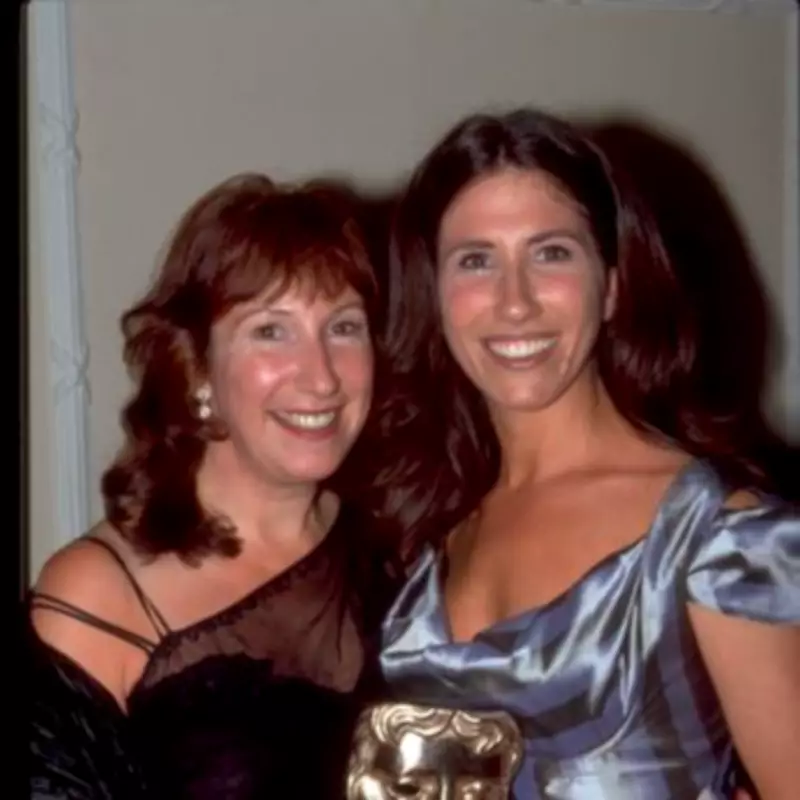
Gaynor Faye understands the weight of legacy better than most. The 54-year-old actress and scriptwriter not only boasts an impressive career of her own but has also taken the helm of Rollem Productions, the company founded by her late mother Kay Mellor, following her unexpected death in 2022 at age 71. Since then, she has been championing the acclaimed screenwriter's work.
"I'm just carrying on with getting my mum's work out there," Gaynor shares warmly. In 2000, Kay's comedy drama Fat Friends made its television debut. The series chronicled a diverse group of slimming club attendees, featuring stars including James Corden, Ruth Jones, Alison Steadman, and Gaynor herself, as they navigated life's ups and downs while learning self-acceptance.
The programme became a massive success, resonating with viewers across multiple generations. Gaynor expresses how "so chuffed" she feels that her mother's creation has touched so many lives. With the current popularity of weight-loss injections and the return of "heroin chic" aesthetics, the show's message remains strikingly pertinent two decades on.

Still grieving her mum "terribly," Gaynor reflects: "Mum wrote something because people were obsessed with weight, and they still are. Too big, too small, too fat, too thin, too this, too that – why can't we just be who we are, as long as we're healthy? Let's just accept ourselves and get rid of all this." Prior to Kay's untimely passing, she penned a Fat Friends musical, which Gaynor is trying to get produced – not simply as a tribute to her mum's legacy, but because she firmly believes in the show's fundamental values.
"There's only one you. I am me, and I'm never going to be somebody else, and I love who I am. I think that's the biggest message my mum wanted to get out there, and I still want to get out there – love who you are, whatever your shape or size."
For Gaynor, alongside countless Fat Friends devotees, the programme holds an enduring special place. The actress, mother to son Oliver and daughter Lily Mae with long-term partner Mark Pickering, has heard suggestions that a series centred around a slimming club wouldn't fly in today's climate, but she firmly rejects this view.
"People go, 'Oh, Fat Friends – you won't be able to put that on now.' Well, actually, it's amazing, and it's pro 'love who you are, be yourself'. The show was actually an attack on the diet industry, not anything other than that. We want people to feel that whoever they are, whatever shape or size they are, they're beautiful."
The characters were undeniably beautiful both inside and out. Gaynor describes James Corden's Jamie as someone "everyone fell in love with," while Ruth Jones' Kelly wasn't just stunning but embodied "everything that people wanted to be," thanks to her vivacity and joie de vivre. "These are all multifaceted characters, and my mum was brilliant at writing those," Gaynor reminisces. Fat Friends wasn't merely a platform where Gaynor and her mother could showcase how gorgeous individuals are, regardless of their size – it also served as a launchpad Kay utilised to nurture emerging talent, eventually paving the way for another beloved programme, the iconic sitcom Gavin & Stacey.
"Ruth, James, and Alison all met while working on Fat Friends, and Ruth and James started to write Gavin & Stacey because they saw how much viewers loved authentic characters," Gaynor says. "Real people in real situations, that's what audiences want to see."
According to Gaynor, it was during the latter stages of Fat Friends that Ruth and James initially began discussing writing Gavin & Stacey, in which they would both feature alongside Alison. In subsequent years, James and Ruth's collaboration would produce one of Britain's most triumphant comedy programmes. However, prior to that success, James and fellow cast member Lisa Riley were the pair performing sketches together.
"I've never laughed more than when I was on set with James and Lisa," Gaynor recalls. "It was hysterical. James is very funny and very talented."

And what about Ruth, who would go on to become Vanessa Shanessa Jenkins? "The thing is, Ruth is just gorgeous with it. She's a beautiful person and can turn her hand to anything. Ruth asked my mum if she could write on the show, and if my mum would mentor her, which she did. Ruth learned how to structure, how to write, and then she teamed up with James and they started talking about this great idea. My mum put them together," Gaynor says with pride.
Gaynor has since appeared in numerous notable productions. She has established herself as a soap stalwart, with roles in Emmerdale and Coronation Street, alongside dramas Playing The Field and The Syndicate. Her latest project is Hot Flash, a film exploring women navigating menopause.
"I'm going through the menopause myself," Gaynor reveals about her personal connection to the film. "My group of friends are, too. I'm of an age where my friends are all in it. A lot of people can find menopause debilitating and scary, especially due to symptoms like brain fog, which can feel like a kind of early dementia. But you know what? There are parts of it that are actually wonderful."
Particularly, Gaynor embraces the newfound sense of liberation. "For a total people-pleaser like me, it's great to have the ability to go, 'Do you know what? I'm going to do this for myself. I'm not going to worry about that any more.'"
"Menopause used to be a real taboo," she continues – although she has never understood why. "Every woman is going to go through this, and every man is going to experience their mother, wife, daughter, or sister going through it. Everybody will be affected by menopause at some point in their life, so why don't we talk about it more? It's crazy."
Gaynor believes it is fantastic that high-profile celebrities like Davina McCall and Lisa Snowdon are so candid about their own journeys through menopause – and that there is now a dedicated Menopause Awareness Month to shine a light on the issue. "Everybody needs to know about it," she says. "Not that we should ram it down people's throats, but as you would talk about anything that affects that number of people in that kind of way. Let's get the resources out there – the tools women need to get through it."
Having sought private medical help when her own menopause symptoms began, Gaynor acknowledges her fortunate position, while recognising that such an option is simply out of reach financially for many women. "We should normalise menopause and get help out there – not help that you have to sneakily go and find," she says. "Support should be accessible for everybody, because half the population will go through it. I'm very passionate about it."