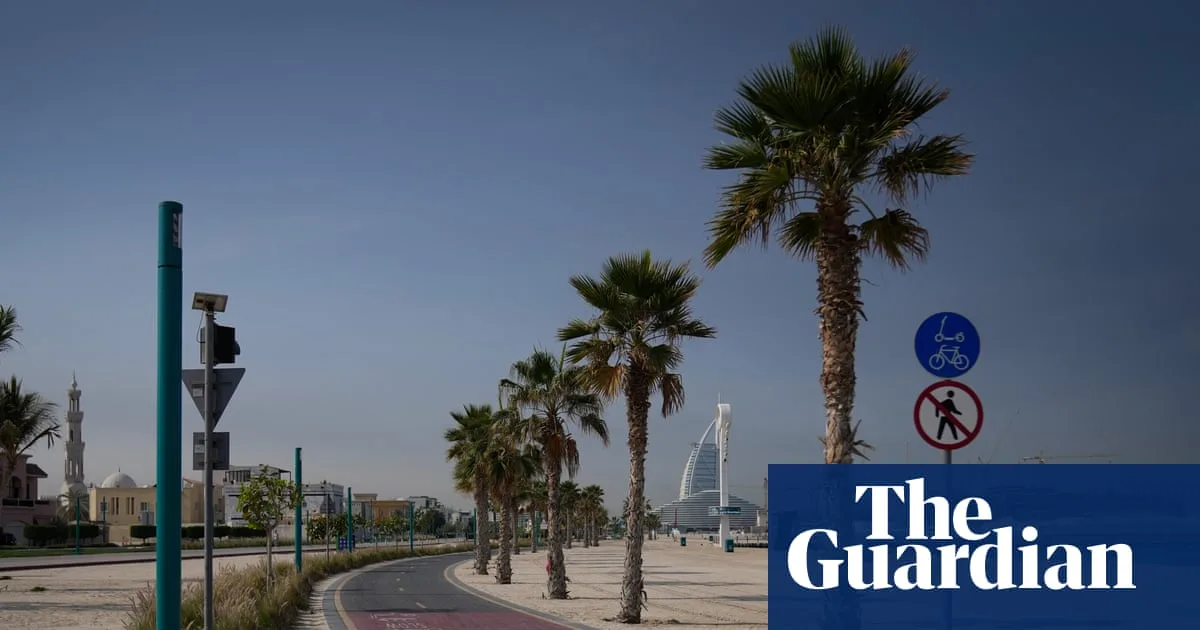
Tens of thousands of residents and tourists have left Dubai since the US and Israel began bombing Iran two weeks ago, leaving beach bars, malls and hotels eerily empty. The city, long seen as a sanctuary of consumerism, now faces an existential threat as the conflict shakes the foundations of the 'Dubai dream' that attracted so many foreigners.
The UAE has borne the brunt of more than two-thirds of Iran's strikes, targeted in part for its military and intelligence partnerships with Western powers. Daily alerts warn of 'potential missile threats', and over 90% of Iranian projectiles have been intercepted, but some have hit significant targets, including military bases, industrial complexes and Dubai airport, briefly shutting down one of the world's busiest aviation hubs.
John Trudinger, a British headteacher at an Emirati school in Dubai, said most of his UK-based teachers have left, deeply traumatised by the sudden arrival of war. 'The shine has definitely been taken off,' he said. Zain Anwar, a taxi driver from Pakistan, saw his car destroyed in a strike on the Fairmont hotel. 'I don't want to be in Dubai any more,' he said. 'Everybody knows that Dubai is finished.'
The economic consequences are significant: tourism generates around $30bn annually in Dubai, and over 90% of residents are foreigners. Unlike other Gulf emirates, Dubai lacks vast oil reserves. Analysts warn that financial losses will be stark if the war drags on, eroding the city's reputation as a haven for tourism and business. Citibank and Standard Chartered have already evacuated employees due to 'heightened security concerns'.
Dubai's rulers have tried to control the narrative, threatening to jail social media influencers who share content that 'contradicts official announcements'. Officials reassure residents that the 'big booms' are 'the sound of safety'. However, with beach bars and hotels empty, the city's future hangs in the balance.