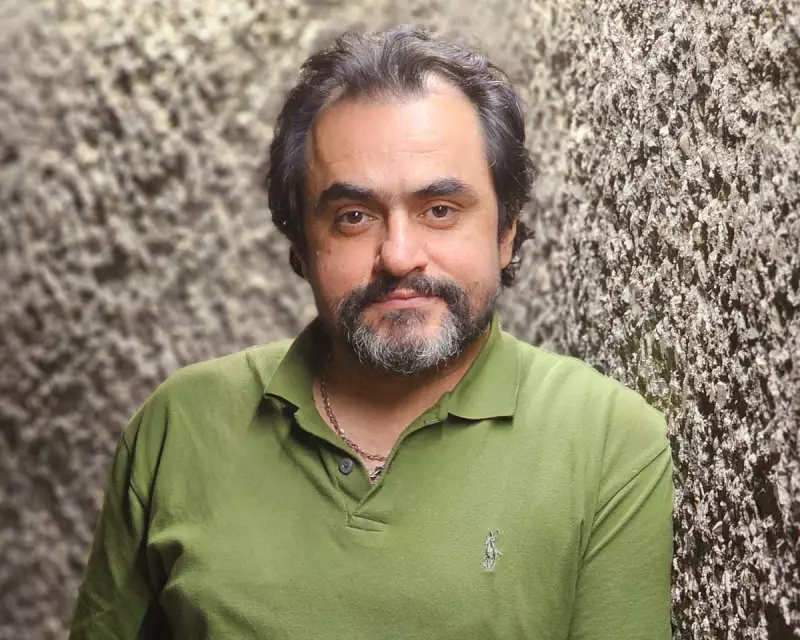
In the shattered remains of a Tehran apartment block, a single, scarred object spoke of survival. It was a book, translated from English to Persian by Amir Mehdi Haghighat, lying half-buried in dust and ash. Its pages were singed, its cover torn, yet the words within remained legible—a quiet testament to endurance amidst devastation.
A City Under Fire and a Translator's Vigil
The crisis began abruptly on 13 June 2025, when missiles from Israel struck the Iranian capital. Without warning sirens, violent blasts rocked the city. The internet was severed completely. Haghighat was in his apartment, immersed in translating Jhumpa Lahiri’s Translating Myself and Others, a meta-text on the very act of moving words between languages. As buildings fell around him, he worked on a manuscript arguing for the persistence of meaning.
His professional life ground to a halt. A book ready for press was stranded at a shuttered printing house. Bookstores closed. During one terrifying night of close bombardments, Haghighat and his family fled to a basement garage. His mind, however, stayed with his personal library—a lifework of dictionaries, rare volumes, and every book he had ever translated. He did not know if he, or his collection, would survive until morning.

Fragments of Life in the Rubble
The attack scattered his loved ones. His partner left for towns later also hit; his daughter departed by train, sending a photo of a distant factory burning. The city’s mood shifted like weather: fear, outrage, then numbness. Practically, the bombardment dismantled the translator’s tools: no electricity or internet meant no instant searches or references.
Outside, destruction was visceral. Blast waves shattered windows; at his cousin’s house, every pane was broken. Amidst this, a woman sat painting at an easel before the ruins, refusing to let silence win. Tragedy was personal: a photograph circulated of 23-year-old poet Parnia Abbasi, killed in the strikes, her viral poem speaking of an extinguished star. On a street once frequented for dictionaries, an elderly woman with Alzheimer’s, who had lost a son in the Iran-Iraq war decades prior, ran calling a name—the bombs awakening a buried grief.
The Political Act of Translation as Resistance
A week into the attacks, Haghighat translated James Thurber’s children’s tale Many Moons, finding profound resonance in its story of reaching for the impossible. He began to see translation as more than craft; it was an act of staying put, of holding on.
This conviction deepened while translating Lahiri’s passages about Antonio Gramsci, the Italian communist leader who, from his prison cell, demanded more dictionaries. For Gramsci, translation was "a reality, aspiration, discipline, anchor, and metaphor." He famously stated he would study Chinese the night before his execution.
Then, Haghighat saw the photograph. On a news site, amidst the ruins of another apartment block, lay one of his old translations. It was scarred but intact, his name on the cover. For a translator, often invisible, this was his work made starkly visible—and surviving. Staring at the image, he felt the full weight of Lahiri’s words: "all translation is a political act." To translate under bombardment was to assert that a voice mattered and would not be erased.
In that moment, Haghighat understood his life’s work with crystalline clarity. Translation is not merely carrying stories across languages. It is the quiet, stubborn mechanism that helps them remain when everything else—concrete, steel, and normalcy—falls away. It is a refusal to disappear.