The Shadow of Greatness: When Siblings Live in Famous Shadows
Essayist Max Beerbohm once described Oscar Wilde's dishevelled elder brother Willie Wilde with cutting precision: "Willie has Oscar's coy, carnal smile and fatuous giggle and not a little of Oscar's spirit. But he is awful – a veritable tragedy of family likeness." This poignant observation captures the eternal dilemma of being the less famous sibling – riding the wave of a relative's success while constantly being measured against them and found wanting.
Willie Wilde: The Brother Who Could Have Been
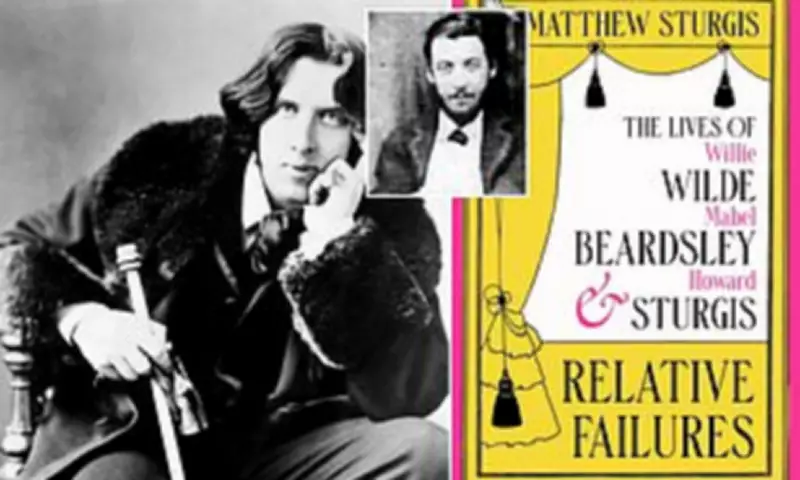
In his elegant and deeply moving book about three unsung siblings, Matthew Sturgis illuminates this challenging familial role through the lives of Willie Wilde (brother of Oscar), Mabel Beardsley (sister of artist Aubrey), and his own great-great uncle Howard Sturgis (brother of novelist Julian). The narrative reveals how these individuals navigated lives perpetually overshadowed by their more celebrated relatives.
Both Oscar and Willie Wilde demonstrated remarkable academic promise during their youth in Dublin. However, while Oscar embraced workaholism and abstinence, his older brother Willie succumbed to alcoholism. Though called to the bar as a lawyer, Willie's career never flourished, hampered significantly by his own indolence and lack of professional dedication.

When Willie relocated to London in 1872 to pursue work as a drama critic and freelance writer, this move created opportunities for both brothers. Oscar desperately wanted recognition as a published poet and playwright, and Willie could now actively promote him. Willie played a crucial role in crafting the myth of Oscar as the embodiment of new aestheticism, though privately he entertained friends with hilarious imitations of his brother's affected aesthetic persona.
Reversed Fortunes and Family Tensions
Initially, Willie appeared the more successful playwright. While Oscar's first theatrical effort, Vera, failed spectacularly, Willie's The Tinted Venus achieved genuine triumph. Yet his subsequent play was withdrawn at the last moment, and Willie soon found himself facing bankruptcy proceedings.
Oscar's marriage to wealthy Constance Lloyd provoked envy in Willie, though this union was later revealed as partially fraudulent when Oscar's parallel life of affairs with men came to light. Not to be outdone in marital pursuits, despite his declining health, Willie married Mrs. Leslie, a twice-divorced American woman who headed a New York magazine publishing empire.
This marriage proved disastrous. Willie's domineering wife viewed him as "a semi-invalid who refused to work, came home drunk in the early hours, and left false teeth on the bedside table." She famously declared, "He is of no use to me either by day or night," and after a transatlantic journey from New York to London, she abandoned him there before securing a divorce. Deprived of access to her wealth, Willie was forced to move in with his mother.
Brotherly Estrangement and Final Acts
As Oscar's star ascended with successes like Lady Windermere's Fan and The Importance of Being Earnest, Willie descended into alcoholism and financial desperation, with hosts catching him pocketing their cigars. The brothers became estranged after Willie published a less-than-glowing review of Lady Windermere's Fan, offending Oscar deeply.
Oscar's catastrophic downfall came in 1895 with his conviction following the failed libel case against the Marquess of Queensberry, who had left a card at Oscar's club accusing him of being "a somdomite" (misspelling "sodomite") for his affair with Queensberry's son. Willie was dismayed by his brother's arrest and the scandalous revelations, though Sturgis suggests there might have been "a small bit of satisfaction in finding his ever-more-successful brother suddenly immersed in scandal."
Willie attempted to defend his brother publicly, but Oscar despaired at this prospect, knowing Willie's ineptitude, remarking: "My poor brother writes that he is defending me all over London; my poor, dear brother, he could compromise a steam engine."

When Oscar was released on bail and found all hotels closed to him, he arrived at the Chelsea house where Willie and their mother lived, pleading: "Give me shelter, Willie. Let me lie on the floor, or I shall die in the streets." Willie welcomed him inside, where Oscar collapsed "like a wounded stag" over the threshold.
Willie launched a campaign against the Marquess of Queensberry but undermined his own efforts with ill-advised statements like "Thank God my vices were decent." The estrangement persisted even after Oscar's two-year prison sentence ended. Oscar departed for continental Europe, while Willie wandered Chelsea's streets, broken and bent. He died from influenza and what newspapers euphemistically termed "Bohemianism" in 1899 at age 46. Oscar died eighteen months later at the same age.
Mabel Beardsley: The Sister Behind the Artist
Mabel Beardsley played a pivotal role in her younger brother Aubrey's artistic development. The siblings visited artist Edward Burne-Jones together, and Burne-Jones, captivated by Mabel's willowy, Titian-haired appearance, invited them in. After reviewing Aubrey's work, Burne-Jones advised: "Give up whatever you may be doing for art." This recommendation proved transformative for Aubrey, who despised his insurance office job arranged by his father.
Aubrey received a commission to illustrate a new edition of Thomas Malory's Morte d'Arthur, and his daringly erotic style sparked "the Beardsley Cult." However, the "Beardsley Boom" collapsed following Oscar Wilde's downfall, as Aubrey became associated with Wilde's now-discredited attitudes. Having illustrated Wilde's play Salome with works "both hailed and condemned as the acme of fin-de-siècle decadence," Aubrey was dismissed from his position at The Yellow Book magazine and died from tuberculosis in France at just twenty-five.
Mabel, reflecting on her beloved brother's posthumously revived glory, pursued acting but never achieved significant success. Grieving deeply for her brother, she suffered from fainting spells and general frailty. Poet W.B. Yeats visited her deathbed and composed poems about her.
Howard Sturgis: The Eccentric Embroiderer
Howard Sturgis existed as the less successful brother of novelist Julian Sturgis, though today Howard enjoys greater recognition. Julian's novels have faded into obscurity, while Howard's Belchamber has been reprinted in the United States.
Sturgis paints a vivid portrait of his eccentric bachelor great-great uncle, who developed an unusual addiction to embroidery. Howard explained this peculiar hobby by stating he "did not smoke" and needed occupation for his hands. Inheriting substantial wealth, he resided in a large Windsor house with his younger male companion nicknamed "Babe," entertaining literary friends including novelist Henry James.
Howard possessed brilliant conversational skills, described as "as composed as a dowager, yet at the same time audacious as a street boy." As "Babe" waited patiently by his bedside during his final hours, Howard remarked with characteristic wit: "A watched pot never has boiled." Then he died.
A Lost Age Revealed
These three biographical miniatures resurrect a vanished era when Victorian England's repressive social structures began to loosen. Each story concludes with death, yet collectively they illuminate the complex dynamics of sibling relationships, artistic circles, and personal struggles against larger-than-life family legacies. The narratives reveal how talent, circumstance, and personal demons conspired to create vastly different trajectories for individuals sharing bloodlines and backgrounds but not destinies.