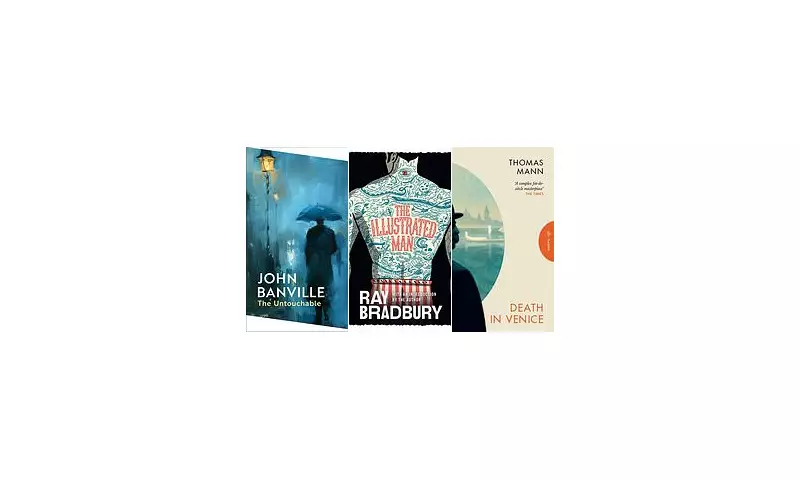
Three seminal works of twentieth-century literature have been reissued in new paperback editions, offering readers fresh access to their enduring and provocative themes. The titles span espionage, science fiction, and tragic obsession, each a landmark in its genre.
The Untouchable: A Spy's Ironic Memoir
John Banville's 'The Untouchable' presents the fictional memoir of Sir Victor Maskell, a 72-year-old, disgraced art historian and former Surveyor of the Queen's Pictures. As he writes, he recounts his years as a Soviet spy deeply embedded within the British establishment.
The novel is a thinly disguised portrait of the real-life double agent Anthony Blunt, who was exposed in 1979. Banville skilfully blends historical figures like Guy Burgess, Kim Philby, and Donald Maclean (under pseudonyms) with fictionalised wives and colleagues. The narrative offers an intriguing glimpse into the secretive world of the often homosexual, Cambridge-educated elite.

Written in a detached and ironic style, the book raises compelling questions about the reliability of any memoir, especially one penned by a master of deception. Readers may also wonder how the vast quantities of alcohol consumed by these characters allowed any coherent espionage to occur. The result is a scalpel-sharp character study underpinned by a surprising humanity.
The Illustrated Man: Prescient Sci-Fi Warnings
First published in 1952, Ray Bradbury's 'The Illustrated Man' remains a cornerstone of science fiction. The collection begins in rural Wisconsin, where a traveller meets a traumatised stranger whose beautiful body tattoos mysteriously come alive at night, foretelling grim futures.
The traveller witnesses a series of often terrifying tales unfold on the man's skin. These include 'The Veldt', where a technology-controlled house becomes a deadly trap, and 'The Other Foot', a story in which Black people who have escaped lynching and prejudice by settling on Mars dread the arrival of white refugees from a ruined Earth. Another, 'The Playground', explores the inherent brutality of childhood.
While its warnings about artificial intelligence and immersive technology seem remarkably prescient today, the collection's timeless power lies in its exploration of class, racism, and sexism. This superb collection builds to a chilling final twist that continues to resonate.
Death in Venice: A Descent into Obsession
Thomas Mann's masterful novella 'Death in Venice', in a translation by Lesley Chamberlain, is a profound study of obsession and decay. The story follows Gustav von Aschenbach, a long-widowed, renowned author in his fifties who travels to Venice as the First World War looms.
There, he becomes fixated on Tadzio, a classically beautiful teenage Polish boy. This sight awakens a paedophilic desire unfamiliar to the disciplined scholar. Abandoning all caution, Aschenbach descends into a passion-fuelled obsession, following the youth daily through the city's canals.
Despite a cholera outbreak sweeping Venice, he ignores advice to leave. Instead, in a pitiable attempt to recapture youth, he dyes his hair and rouges his cheeks. His inevitable downfall and death, as his intellectual rigour battles ungovernable physical passion, reflects the contemporary interest in Freudian psychoanalysis. Mann intersperses this psychological drama with potent Greek mythology and symbolism, achieving an immense depth in just 112 pages.
All three books—The Untouchable by John Banville (Picador, £9.99, 405pp), The Illustrated Man by Ray Bradbury (Harper Voyager, £9.99, 296pp), and Death in Venice by Thomas Mann (Pushkin Classic, £9.99, 112pp)—are available now.