V&A East Collection Review: A Wealth of Inspiration for Future Geniuses
From showstopping fabrics to mind-expanding photographs and an inaugural exhibition celebrating Black British music, London's new V&A East museum promises to fire up the creative minds of tomorrow. The real value of this ambitious cultural institution will undoubtedly lie in the art it inspires through its diverse and thought-provoking collections.
A Profound Influence on Postwar Britain
Outside the V&A's new east London outpost, a five-metre-tall sculpture by Thomas J Price presents a generic amalgamation of local residents, designed to engage with the area's diverse communities. While this monumental work captures the essence of east London youth at Michelangelo's David scale, it smooths out individual differences, potentially sending a confusing message about algorithmic aggregation.
Thankfully, upon entering the building, visitors discover a far richer, more heterogeneous vision of cultural creation and interaction. The first of two permanent collection galleries delivers pure delight, featuring a zinging constructivist rug by Eileen Gray that rhymes beautifully with Derek Jarman's punk set designs and costumes by fashion icons Vivienne Westwood and Rei Kawakubo.

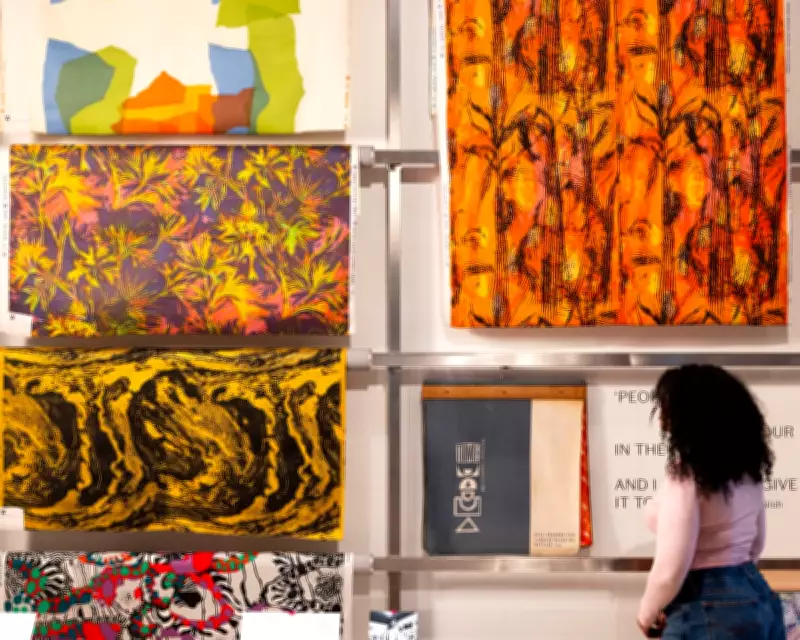
Yet these remarkable pieces are upstaged by Althea McNish's glorious printed fabrics, which demonstrate how a designer working within mass production infrastructures exerted more profound influence on postwar Britain's visual landscape than any number of haute couturiers. McNish, who speaks in an accompanying video about bringing the vibrant colours of her native Trinidad to her new home, provides a salient example of how cultural difference not only enriches but comes to define a society.
Themes of Colonial History and Everyday Integration
Several compelling themes emerge throughout the collection. The placement of a painted Japanese screen documenting European sailors' arrival alongside a textile recording the 2011 Egyptian revolution signals attention to colonial expansion and imperial violence - historical forces that haunt the V&A's broader collection. Another display exploring William Morris's connection to nearby Walthamstow establishes that objects will consistently be contextualized within their production locations.
Like McNish, who created fabric patterns for British Rail alongside Liberty prints, Morris demonstrated how integrating art into everyday experience could improve living conditions across society. This principle manifests in various forms throughout the galleries, from a sinuous wooden armchair designed by Alvar Aalto for a sanatorium to an extraordinary talismanic shirt inscribed with the entire Qur'an text, both showing how everyday items can possess restorative properties.
A Toolbox for Aspiring Artists
The museum positions itself not as bringing culture to an area already rich with creativity, but rather as a shared toolbox or kitty of precedents and models for aspiring artists and designers to raid. Visitors can easily imagine how a shirt woven entirely from salmon skins by a Nivkh craftsperson might inspire sustainable material innovation, or how Claude Cahun's photomontages could empower those constrained by societal identity assignments.
The most valuable resource for those seeking to change the future remains, ultimately, the past. A bamboo house by Indonesian architecture practice Ibuku exemplifies how contemporary designers are returning to traditions suppressed during modernity to renegotiate humanity's relationship with nature and each other.
Black British Music Exhibition
The inaugural temporary exhibition, "The Music Is Black: A British Story," provides visitors with sensor-equipped headphones guiding them through a labyrinth of videos, costumes, sculptures and photographs accompanied by the songs they chronicle. This ambitious attempt to trace musical cultures emerging from the violent displacement of African people during the slave trade inevitably struggles with its vast scope, yet contains seeds for numerous future exhibitions.

From media hysteria surrounding grime's emergence at the century's turn to 2 Tone and anti-racist coalitions of the late 1970s, this synoptic history establishes an exhibition model well-suited to the institution. The show tells a story pertinent to the V&A's colonial history through the culture that both emerged from and contests it, combining powerful music with contextual information to create intellectual and sensory complexity.
Rather than attempting to reconcile the horrors of the slave trade or racism experienced by Black Britons with the resulting music, the exhibition asks visitors to hold both realities simultaneously in mind and body, reflecting on music's capacity to express suffering while provoking joy. V&A East opens to the public on 18 April, offering London a new cultural destination dedicated to inspiration, diversity and artistic dialogue.