UK Museums Hold Vast Collections of Human Remains, Investigation Finds
A comprehensive investigation by the Guardian has revealed that 241 museums, universities, and local authorities across the United Kingdom hold more than 263,228 items of human remains. Due to complex cataloguing systems and significant gaps in institutional records, the actual figure is likely to be substantially higher, highlighting a profound ethical and historical issue.
Scale and Composition of the Collections
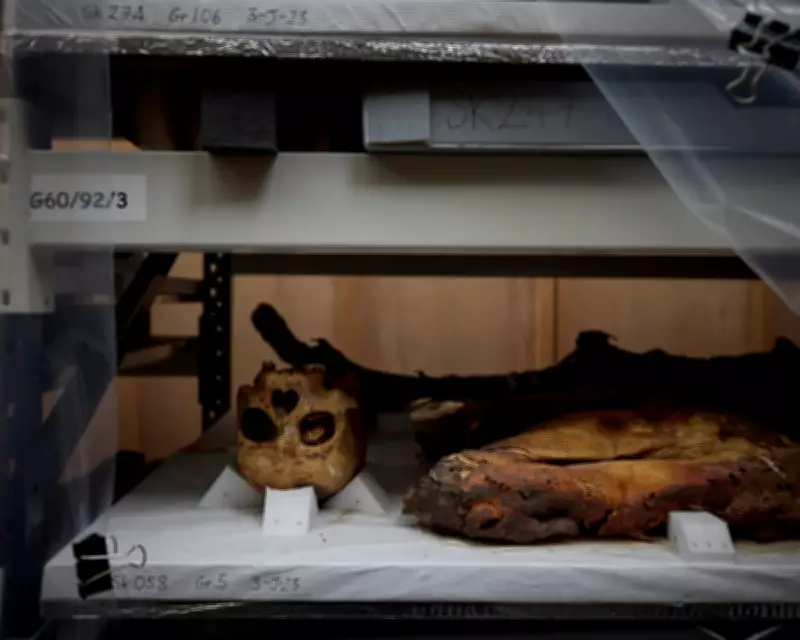
The remains encompass a wide array of forms, including complete skeletons, body parts, and preserved bodies such as Egyptian mummies. Additionally, collections contain bones, bone fragments, hair, teeth, nails, and human remains integrated into cultural artefacts. Only 100 institutions provided exact or estimated numbers of individuals represented, totalling approximately 79,334 people.
Notably, the University of Cambridge did not disclose a specific count, citing difficulties with commingled and fragmented remains. However, a 2003 report indicated that its Duckworth Laboratory held around 18,000 individuals, which would increase the recorded total to about 97,334. A spokesperson for Cambridge University acknowledged the grief and uncertainty expressed by families and descendants, assuring that the Duckworth Collection does not contain remains of first Chimurenga heroes.

Leading Institutions and Their Holdings
The Natural History Museum in London appears to have the largest collection, with an estimated 27,500 individuals represented across 27,864 catalogue records. Each record may correspond to more than one individual, ranging from a single tooth to thousands of bone fragments.
Other significant holders include the University of Cambridge's Duckworth Laboratory, which possesses about 20,110 items, with 9,399 originating from outside the UK. The University of Bristol estimates it holds well over 20,000 items, representing around 2,000 individuals, while the University of Winchester has 30,488 items from 150 UK-excavated skeletons.
Origins of the Human Remains
The investigation found that 166,124 items, or 63% of the known total, are recorded as originating from the UK, with 122,747 from archaeological excavations. The University of Winchester holds a quarter of these UK-excavated remains.
Regarding overseas remains, 37,996 items are recorded as originating from outside the UK, with the continent of origin unknown for another 16,236 items. Ninety-seven institutions hold 28,914 items from Africa, Asia, North and South America, and Oceania. Notably, 75 institutions possess 11,856 items from Africa, with 52% housed in the University of Cambridge's Duckworth Laboratory.
Acquisition and Ethical Concerns
A 2003 government working group report detailed that human remains were acquired under a wide range of circumstances, often unethically. This included purchases, exchanges, and items taken from Indigenous peoples, such as tsantsas (shrunken heads). Many remains were obtained through duress, deceit, unlawful removal, or even murder, with colonised peoples frequently unable to prevent such actions due to power imbalances during colonial eras.
Legal Framework for Repatriation
Section 47 of the Human Tissue Act permits nine national museums, including the British Museum and the Natural History Museum, to remove human remains from their collections if they are believed to belong to individuals who died less than 1,000 years before the law's enactment. However, legal restrictions often prevent deaccessioning unless items are duplicates or unfit for retention. These limitations do not apply to local authorities and universities, which have more flexibility in handling repatriation requests.
This investigation underscores ongoing debates about colonial legacies, ethical stewardship, and the urgent need for transparent policies regarding the repatriation of human remains to descendant communities worldwide.