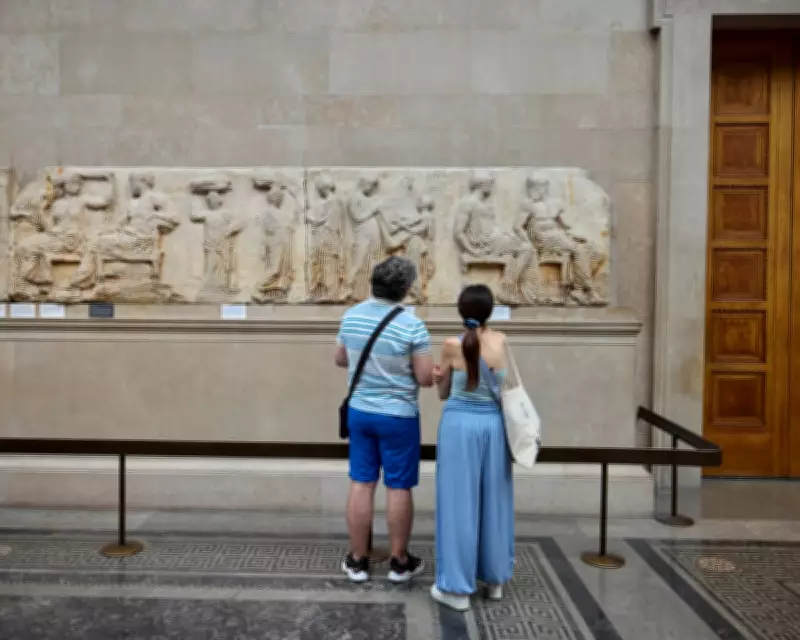
UK Government Considers Tourist Charges for National Museum Collections
Ministers are actively evaluating proposals to impose fees on international tourists for entry to permanent collections at national museums across the United Kingdom. This initiative forms part of a broader strategy to enhance arts funding, as the government seeks sustainable solutions for the financially strained cultural sector.
Background and Policy Context
Since 2001, national museums and galleries in the UK have offered free admission to all visitors, a policy widely credited with significantly increasing visitor numbers and boosting tourism. However, in its response to a review of Arts Council England, the government highlighted the necessity for long-term funding options. The Treasury had previously contemplated ending free entry as part of spending cuts in the November 2025 budget, but this idea was abandoned following resistance from culture ministers.
The proposals were detailed in the government's reply to recommendations made by Margaret Hodge in December, following her Arts Council England review. Hodge urged ministers to safeguard funding from political interference and reduce bureaucratic hurdles in application processes. The government has committed to exploring all recommendations, including increased funding for creative careers among underrepresented groups and a nationwide plan to develop the creative sector.

Alternative Funding Proposals
Among the options under consideration is a hotel levy, which is currently being consulted on. Alison Cole, director of the Cultural Policy Unit thinktank, argued that charging international tourists would be a "very bad idea." She advocated for a hotel levy as a superior method to preserve civic museums and cultural infrastructure across the country.
Separate research from Art Fund revealed that 72% of the public supports a tourist levy to subsidise free entry to national museums, indicating public backing for alternative funding mechanisms.
Government Commitments and Reforms
The government agreed with Hodge that the Arts Council should remain "strong, politically impartial and independent," promoting "diversity of ideas" and freedom of expression. It has allocated £8 million to simplify application processes, enabling creators to devote less time to funding applications and moving away from a "one size fits all" approach.
Hodge's critique of political interference was partly motivated by Arts Council England's decision to relocate the English National Opera from London to Manchester as part of its levelling up strategy, described by those involved as a "raw experience."
Regional and Community Focus
The government's response also outlined plans for a new fund targeting creatives with "fewer opportunities," alongside efforts to improve access to arts education in schools. It endorsed Hodge's call for "closer engagement with communities," particularly in areas with limited arts access, citing a £2 million investment in regional arts scenes and the reintroduction of regional arts boards.
Darren Henley, chief executive of Arts Council England, acknowledged the need for the organisation to become "simpler and easier to deal with," pledging to streamline monitoring and funding processes over the next six months. He highlighted Bradford's newfound "artistic confidence" as an example of how long-term regional cultural investment can transform a community's self-perception and behaviour.
Future Directions and Sector Vision
Henley added that the Arts Council would explore new funding generation methods, such as investments akin to commercial producers with profits reinvested into the sector, alongside tax breaks and philanthropy drives. The organisation plans to engage more closely with citizens to understand their desires for local arts scenes.
Culture Secretary Lisa Nandy emphasised the need for equitable distribution of cultural benefits, stating, "For far too long, the benefits of culture have not been equally distributed. I refuse to sit back while communities are forgotten in our national story." She envisions a reformed and independent Arts Council at the core of efforts to inspire and nurture young people from diverse backgrounds, fostering creative careers and inclusive storytelling.