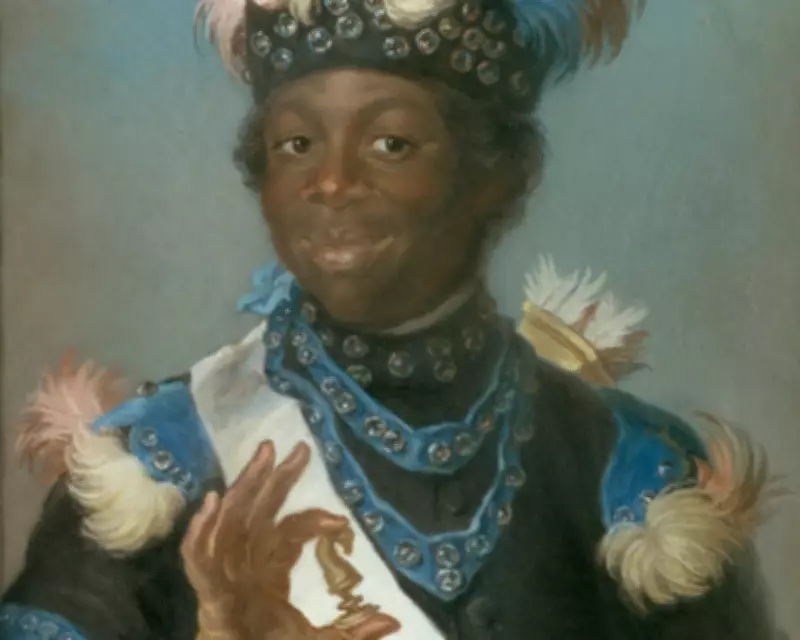
Swedish Exhibition Illuminates Life of 18th-Century Black Courtier Badin
A groundbreaking exhibition at the National Museum in Stockholm is shedding new light on the remarkable life of Adolf Ludvig Gustav Fredrik Albrecht Couschi, better known as Badin, an 18th-century Black diarist whose journey from slavery to the Swedish royal court has long been overlooked.
From Slavery to Royal Courtier
Born into slavery between 1747 and 1750 in the former Danish colony of St Croix, now part of the US Virgin Islands, Badin was initially owned by Christian Lebrecht von Pröck before being taken to Denmark. In 1760, as a child of about ten years old, he arrived at the Swedish royal court as a gift to Queen Louisa Ulrika, presented by Swedish councillor of commerce Gustaf de Brunck.
Despite his humble beginnings, Badin rose through the ranks of Swedish society, eventually holding prestigious titles including chamberlain, court secretary, ballet master, and civil servant. His nickname, Badin, derived from the French word for joker or prankster, possibly reflecting a survival strategy in the complex social hierarchy of the time.

A Rich Written Legacy
What makes Badin particularly significant in Swedish history is the extensive written record he left behind. Upon his death, he bequeathed diaries, a vast book collection, private letters, and an autobiography that offers a unique window into life in 18th- and 19th-century Stockholm.
According to Swedish population records, there were only about twenty people of African origin in Sweden between the early 18th and early 19th centuries, and Badin represents a rare exception with documented experiences, though his privileged position in the royal court means his story may not be representative of others.
Rediscovering Badin's Voice
The exhibition, titled Badin – Beyond Surface and Mask, marks the first time Badin's writings have been displayed together publicly. Curator Åsa Bharathi Larsson, an art and media historian at Södertörn University, notes that Badin occupied an unusual position in Swedish society.
"He has an in-between position in the court," Larsson explains. "He is free but he isn't part of the royal family. We don't know anything about his real family, but he has a status and a different relationship with the royal family than perhaps other court servants had."
Artistic Interpretation and Recognition
A central component of the exhibition is a specially commissioned film by artist Salad Hilowle, who has dedicated much of his career to exploring Badin's legacy. Titled Maroonen (The Marooned), the film imagines Badin giving a lecture to current students at Uppsala University, reflecting on his life and how he has been portrayed over time.
Hilowle, an African-Swedish artist, expressed that the commission represents a significant moment for Swedish art history. "I'm always talking about how he was an image and he was the other and now the other is also an artist," he said. "Time has changed in Sweden. It's a super strong moment."
The artist's frustration with how Badin has been historically represented inspired the film. "He pops up everywhere, from August Strindberg plays about Gustav III and then also other projects," Hilowle noted. "The image of him is everywhere but no one seems to hear or read his own voice."
Educational Background and Survival Strategies
Queen Louisa Ulrika raised Badin according to the educational ideals of philosopher Jean-Jacques Rousseau, who believed boys should develop freely and think independently. This unusual upbringing included a Christian education and literacy training—remarkable achievements for the time—which later enabled his involvement in dance and theatre.
Hilowle suggests that Badin's nickname and reputation as a trickster may have been a deliberate survival strategy. "Meaning that he couldn't manifest how well-educated he was because then he would be a threat to people and therefore he is playing the trickster," he explained. "But at the same time he writes his own diary."

Through his meticulous diary-keeping, Badin essentially wrote himself into history, creating a personal record that has survived centuries. Hilowle's film attempts to capture both the dignity and vulnerability of this historical figure, presenting him as "very sensitive and fragile" in contrast to typical representations of Black subjects in Swedish cultural history.
Cultural Significance and Ongoing Exploration
Despite appearing in fictionalized forms in various works—including a racist depiction in August Strindberg's 1902 play Gustav III and more recently in a ballet at the Royal Swedish Opera—Badin remains under-researched and largely unknown to the Swedish public.
The National Museum exhibition aims to correct this historical oversight by providing a more comprehensive understanding of Badin's life and his role in Swedish society. For Hilowle, who has already made one film about Badin and plans another, many questions remain unanswered about how this remarkable individual navigated the complexities of his time and position.
"I am very curious about—how did you survive? What ways did you survive?" Hilowle wonders. "Because there is also a lot of grief. It's very interesting because it had to cost him a lot. And being in those spaces and being almost like a cameo, shapeshifting."
The exhibition represents not just a recovery of historical memory but a contemporary reckoning with Sweden's multicultural past, offering visitors a chance to encounter Badin through his own words and contemporary artistic interpretation.