In a groundbreaking revelation, the long-standing enigma surrounding William Shakespeare's London residence has been conclusively resolved, shedding new light on the Bard's later years. Professor Lucy Munro from King's College London has meticulously identified the exact site of Shakespeare's Blackfriars property, putting an end to a mystery that has puzzled historians for over two centuries.
Unearthing Historical Clues
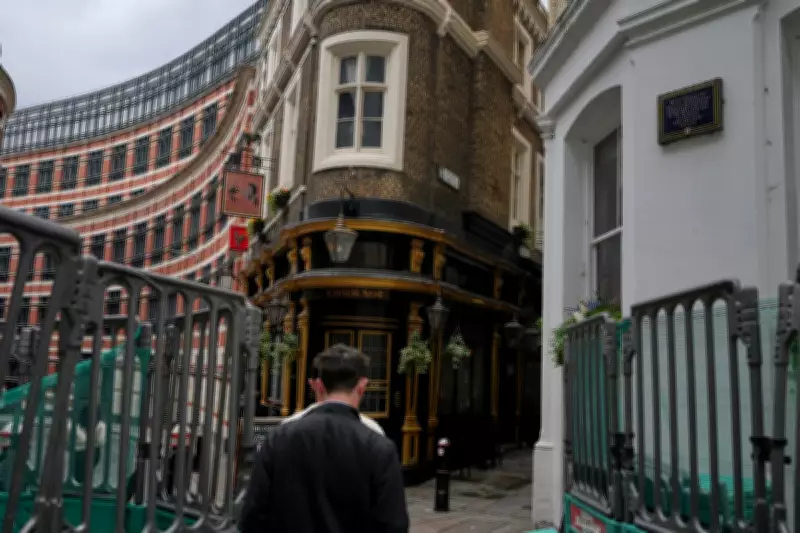
The discovery was achieved through the analysis of three pivotal historical documents sourced from the London and National Archives. Among these records is a detailed floorplan of the building, which provided crucial insights into its structure and layout. This evidence has allowed researchers to confirm that the property was situated in what is now known as Ireland Yard, Burgon Street, and extends into parts of 5 Burgon Street and 5 St Andrew's Hill.
Validating Existing Memorials
This finding corroborates an existing plaque that marks the location, lending official credence to long-held local assertions. The property, which Shakespeare acquired in 1613, was a substantial dwelling, indicating his significant presence and investment in London during his later career.

Challenging Traditional Narratives
The revelation challenges the conventional belief that Shakespeare retired exclusively to Stratford-upon-Avon. Instead, it suggests he may have spent considerable time in London, potentially composing some of his later plays in this very residence. This insight opens up new avenues for understanding his creative process and lifestyle in the final years of his life.
Historical Context and Destruction
After Shakespeare's ownership, the property was sold by his granddaughter in 1665, only to be tragically destroyed the following year in the Great Fire of London in 1666. This catastrophic event had long obscured the precise details of the building's location, until now.
Professor Munro's research not only solves a persistent historical puzzle but also enriches our comprehension of Shakespeare's enduring legacy in London's cultural landscape.