Shakespeare's Complete Plays Ranked: From Henry IV to Two Gentlemen
Shakespeare's Complete Plays Ranked by Guardian Critic

In celebration of William Shakespeare's birthday, a former theatre critic for the Guardian has undertaken the monumental task of ranking every single one of the Bard's plays. This comprehensive assessment draws on decades of theatrical observation, from landmark productions to modern reinterpretations, offering a unique perspective on Shakespeare's enduring canon.

The Bottom Tier: Early Works and Collaborations

Starting at number 35, The Two Gentlemen of Verona earns its place as "no one's favourite comedy" despite containing hints of Shakespeare's later genius. With its improbable plot and problematic resolution involving attempted rape, the play nonetheless features memorable lines like "The uncertain glory of an April day" and has proven stage-worthy in productions such as Greg Doran's Oxford student version.

Cymbeline at number 34 has been called "stagey trash" by George Bernard Shaw, yet contains one of Shakespeare's most celebrated heroines in Imogen, beautifully portrayed over the years by Peggy Ashcroft, Vanessa Redgrave, and Judi Dench.

Wide Pickt banner — collaborative shopping lists app for Telegram, phone mockup with grocery list

Collaborative Efforts and Problem Plays

The ranking includes several collaborative works, with The Two Noble Kinsmen (number 33) now accepted as Shakespeare's final play, written with John Fletcher. Similarly, Henry VIII (number 32), co-authored with Fletcher, famously caused the original Globe Theatre to burn down in 1613 due to cannon fire during performance.

Several "problem plays" occupy the middle ranks, including The Taming of the Shrew (number 27) with its "barbaric idea of female subjugation" that continues to challenge modern audiences, and The Merchant of Venice (number 26), which becomes particularly resonant when given strong social contexts like Trevor Nunn's 1930s Germany setting or Rupert Goold's modern Los Angeles production.

The Middle Ground: Popular Works with Flaws

Some of Shakespeare's most beloved plays fall in the middle rankings due to structural or thematic issues. The Tempest (number 25) is described as "an extraordinarily obliging work of art" but suffers from minimal tension since Prospero "holds all the cards."

Romeo and Juliet (number 23) features a "terrific first half" followed by "manufactured tragedy more dependent on bad luck than on character," while Richard III (number 21) presents a hero who has been "a gift for actors from Richard Burbage onwards," though the part often proves greater than the whole play.

Comedies and Histories of Note

Much Ado About Nothing (number 20) stands out as a rare comedy where the subplot outshines the main plot, with memorable pairings including Judi Dench and Donald Sinden in colonial India and Emma Thompson and Kenneth Branagh in sunlit Tuscany.

The Henry VI trilogy (number 18) has seen landmark productions including Peter Hall and John Barton's 1960s Wars of the Roses adaptation and Michael Boyd's complete 2006 resurrection, proving Part Two to be "a harbinger of things to come."

Approaching the Summit: The Great Works

As we reach the top fifteen, Titus Andronicus (number 16) has "rightly swung back into fashion" since Peter Brook's landmark 1955 production, with female directors particularly drawn to its "wit, learning and rich humanity."

Troilus and Cressida (number 15) serves as "this cynic's Iliad" that "speaks to our own time," while Richard II (number 14) remains "the most lyrical of histories" with memorable performances from Ian Richardson, Alan Howard, and Samuel West.

The Top Ten Contenders

Antony and Cleopatra (number 11) contains "the most heart-searching poetry that Shakespeare ever wrote" but can prove "exhausting to watch," working best when the leads are seen as "victims of a self-intoxicating fantasy."

Henry V (number 10) earns its place through "ambivalence," able to be seen simultaneously as "a heroic play about 'a mirror of all Christian kings' or a cynical play about a ruthless and hypocritical Machiavellian tyrant."

Pickt after-article banner — collaborative shopping lists app with family illustration

The Winter's Tale (number 9) represents "the finest of the late plays" with its combination of "psychological realism" and "potent strangeness," functioning as a powerful "resurrection myth" in performance.

The Final Five: Shakespeare's Masterpieces

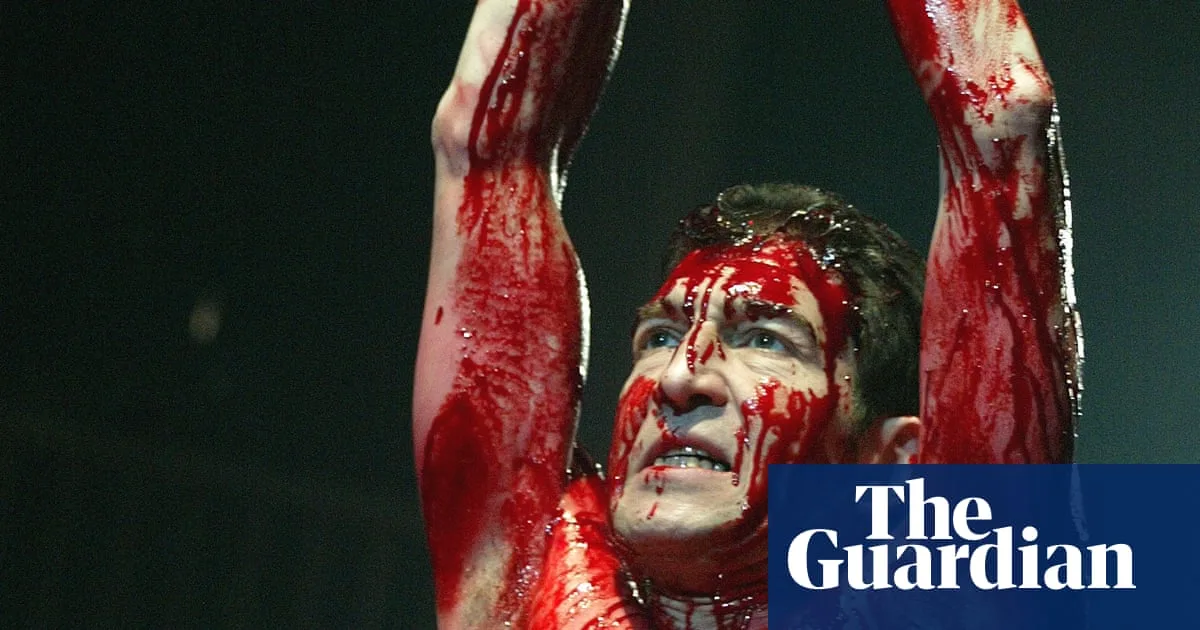
At number 8, Coriolanus stands as "Shakespeare's greatest Roman play" due to its "political, moral and emotional ambivalence" that has been "claimed by both the left and right." The title character's contradictions have yielded terrific performances from Laurence Olivier, Ian McKellen, Greg Hicks, and Ralph Fiennes.

Love's Labour's Lost (number 7) shows "the first full flowering of Shakespeare's genius," where "verbal exuberance and high spirits are shadowed by transience, time and death." John Barton's 1978 production achieved a perfect "Chekhovian blend of zest and melancholy."

The Tragic Peaks

King Lear (number 6) represents for many "the great Shakespearean peak" though the ranking critic finds it "magnificent but flawed" with improbabilities that "far surpass those of the other great tragedies." Memorable Lears include Paul Scofield's testy patriarch, John Wood's contradictory interpretation, Ian McKellen's intellectually curious approach, and Glenda Jackson's "gender-transcending humanity."

Macbeth (number 5) stands as "simultaneously a great poem and play" that is "compact, relentless and intensely musical in its thematic use of language." The play has been given new life through intimate stagings from Trevor Nunn, Greg Doran, Rupert Goold, and Kenneth Branagh that "make us complicit in the action."

The Top Three: Shakespeare's Supreme Achievements

A Midsummer Night's Dream (number 4) has enchanted audiences for centuries despite Samuel Pepys calling it "the most insipid, ridiculous play that I ever saw in my life." Its endless variety includes Beerbohm Tree's 1900 production with live rabbits, Peter Brook's 1970 white cube setting, and Tim Supple's innovative 2007 version deploying seven south Asian languages.

Hamlet (number 3) possesses a vitality that "resides in its plurality," taking on "different colours depending on the time and place where it is seen." As Oscar Wilde observed, "There are as many Hamlets as there are melancholies," with the part proving "limitless in its variations" from Michael Redgrave's tortured sensibility to Maxine Peake's ferocious moral disgust.

Twelfth Night (number 2) confirms that in Shakespeare "the categories of comedy and tragedy are no more mutually exclusive than they are in real life" through its "interweaving of mirth and melancholy, joy and cruelty, reality and dream." The play ends with "a song about the transience of human life and theatrical performance," having yielded many unforgettable productions including Peter Hall and John Barton's staging and Sam Mendes's pairing with Chekhov's Uncle Vanya.

The Ultimate Achievement: Henry IV Parts One and Two

Claiming the top spot, Henry IV Parts One and Two represent "the twin summits of Shakespeare's achievement." These plays offer "so much: a private drama about fathers and sons, a public portrait of a divided realm, a sense of the nation's diversity stretching from the taverns of London to the orchards of Gloucestershire."

The richness lies in Shakespeare's characteristic ambivalence: Prince Hal can be seen as "a calculating, cold-blooded politician or as a man undertaking a self-imposed education in kingship," while King Henry IV is simultaneously "an unforgiving, rebellion-stirring patriarch and a guilt-ridden insomniac yearning for religious absolution."

Falstaff embodies this duality as both "a life-enhancing figure of endless wit, vitality and intellectual resourcefulness" and "a ruthless predator with a casual disregard for human life." Actors from Robert Stephens to Antony Sher to Ian McKellen have highlighted different aspects of this complex character.

Beyond character, these plays boast "a fugal delicacy in their portrait of English life," capturing everything from Justice Shallow's sudden leap from thoughts of mortality to bullock prices at Stamford fair. In this combination of "faultless ear" and "generous compassion," Shakespeare created the enduring masterpieces that crown his remarkable canon.