Khaled Sabsabi's Venice Biennale Comeback After Turbulent Year
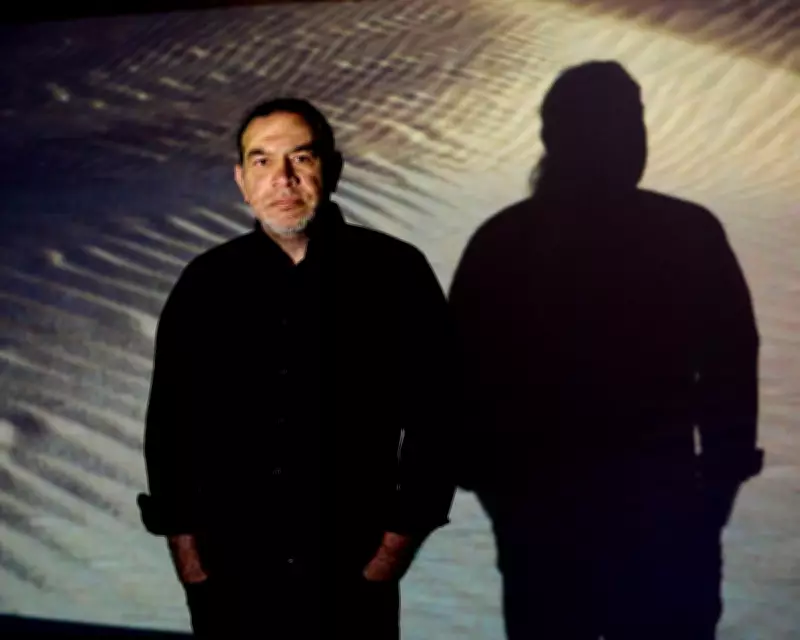
In a remarkable turn of events, Australian artist Khaled Sabsabi is set to present not one but two significant works at the prestigious Venice Biennale in May. This follows a highly controversial period where Sabsabi and curator Michael Dagostino were initially revoked and then reinstated as Australia's representatives at the international art festival.
A Nurturing Experience After Division
The Australian presentation at the Venice Biennale aims to be a "nurturing experience" designed to bring people together. This comes after what has been described as one of the most turbulent and divisive periods in Australia's 72-year history at the festival. The artist-curator team plans to use this platform to foster unity and contemplation.
In the Australia Pavilion, the country's official national outpost, Sabsabi and Dagostino will present a work titled "conference of one's self." Sabsabi describes this as a multisensory invitation for all people, regardless of faith, ethnicity, or religion, to come together and contemplate collective humanity.

Dual Presentation Strategy
In an unprecedented move for Australian artists, the pair will also present a crowdfunded version of their original Venice Biennale proposal within the Biennale's main exhibition. This secondary presentation was curated by the late artistic director Koyo Kouoh, who invited Sabsabi and Dagostino to participate after Creative Australia rescinded their initial appointment.
This marks the first time an Australian artist has presented simultaneously in both the Australia Pavilion and the main exhibition. The achievement follows Australia's recent success at the 2024 Venice Biennale, where Archie Moore won the prestigious Golden Lion for his installation "kith and kin."
Spiritual Foundations and Artistic Vision
While specific details of both Sabsabi works remain confidential, the artist has revealed they are closely connected and inspired by the 12th-century Tasawwuf allegorical poem "The Conference of the Birds," which explores the quest for spiritual enlightenment. For approximately fifteen years, Sabsabi's work has been heavily influenced by Sufism or Tasawwuf, a mystical and pluralist strand of Islam focusing on personal connection with the divine.
The two works together reflect the core Tasawwuf concept of interconnected inner and outer selves. "[They're] looking at the ideas of the inner and the outer, the zahir and batin, the seen and unseen; what we can touch [and] what we can imagine," Sabsabi explained.
The Pavilion work will feature audio and visual components, including moments that rely on light to shimmer, bounce, and refract within the space to reveal other components of the artwork.
Controversial Backstory and Reinstatement
The revelation of Australia's Venice Biennale presentation details comes just over a year after Creative Australia revoked the original commission. This decision followed criticism of Sabsabi's appointment in the Australian newspaper and debate in the senate about two of his earlier artworks. Liberal senator Claire Chandler had claimed these works promoted terrorism and antisemitism.
Creative Australia described the sacking as an attempt to avoid "divisive debate," but this move prompted resignations within the organization and triggered significant backlash from the arts community. Sabsabi told media at the time that the experience had taken a toll on his physical and emotional wellbeing, describing it as a "dismantling" of his career.
In July, following an independent review that identified "missteps" in the decision, Creative Australia reinstated Sabsabi and Dagostino. Creative Australia chair Wesley Enoch apologized to the artist and curator for the "hurt and pain" caused by the affair, acknowledging that Sabsabi's work had been "mischaracterized."
When asked if their sacking had changed their Biennale plans, Dagostino responded that it hadn't: "The original intent has not changed. The work has grown, as [all] works grow, but it hasn't changed that much. It's just evolved in a very natural way."

Personal History Informing Artistic Practice
Sabsabi moved to western Sydney from Tripoli when he was twelve years old. His traumatic experience of Lebanon's civil war and his subsequent experiences as a migrant and Muslim have profoundly informed his thirty-five-year art practice. His multimedia works reflect on the destruction of war, challenge stereotypes, and provide windows into the experiences of Muslims living in Australia.
While Sabsabi's Venice Biennale works are influenced by his own spiritual practice, he emphasizes they are "about respect and acknowledgment of all faiths, and finding commonality." He describes the exhibition as "an invitation for all people, regardless of faith, ethnic, ethnicity, religion, to come in and have these moments of reflection." Sabsabi hopes visitors will "walk away with some curiosity."
Organizational Support and Vision
Creative Australia CEO Adrian Collette, who faced criticism over the initial decision to rescind the pair's appointment, expressed pride in presenting Sabsabi at the biennale. In an official statement accompanying the announcement, Collette wrote: "Sabsabi's work offers a timely and critical opportunity to showcase an optimistic vision of Australian identity on the world stage."
The upcoming Venice Biennale presentation represents not only a significant artistic achievement but also a redemption story for an artist whose work was temporarily sidelined by political controversy before being rightfully restored to its international platform.