RSC's Henry V: A Solid Yet Cautious Take on Shakespeare's War Play
In a world rife with global conflicts and nationalist fervour, Shakespeare's Henry V remains a strikingly relevant drama, exploring themes of war, invasion, and acquisition in the name of patriotism. The Royal Shakespeare Company's latest production, staged at the Royal Shakespeare Theatre in Stratford-Upon-Avon and running until 25 April, offers a well-acted rendition that, while compelling, never fully delivers the visceral punch the play demands.
A Genial King with Ambiguous Intentions
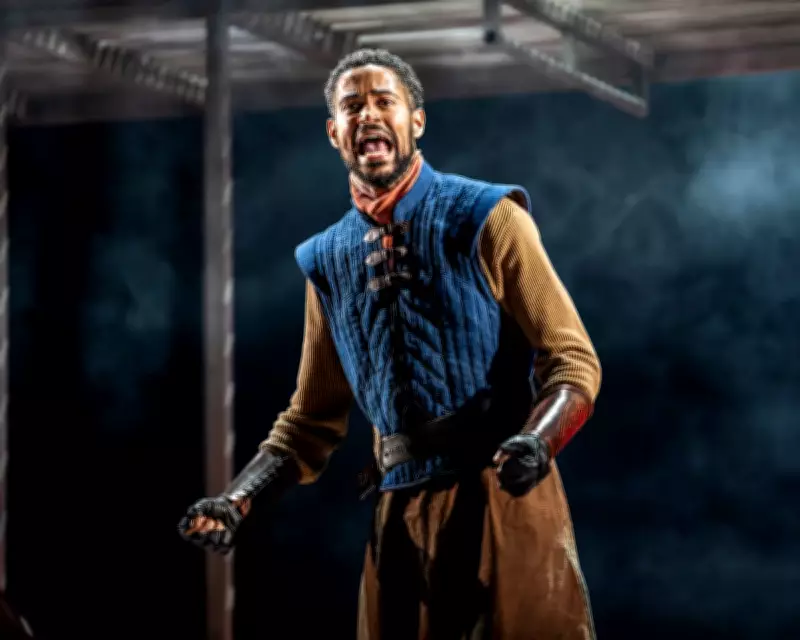
Alfred Enoch takes on the titular role, portraying a genial and youthful Henry V. His performance begins with a limber playfulness, hinting at the wildness of his past with Falstaff, before gradually transforming into a warrior king. Enoch's affable demeanour persists even in moments of ruthlessness, such as when he orders the execution of French prisoners, creating an intriguing ambiguity. Is this a celebration of Henry's nationalism or a subtle critique? The production leaves this question tantalisingly unanswered.
Staging and Design Evoke War's Rhetoric
Director Tamara Harvey, serving as co-artistic director, opens with a flashback to Henry IV, Part 2, highlighting the ambition that drives the younger Henry. Lucy Osborne's set design features a striking scaffold structure, while Annie-Lunnette Deakin-Foster's movement direction and Jamie Salisbury's compositions brilliantly evoke the chaos of the battlefield. These elements combine to create a solid production that effectively conveys the justifications and rhetoric of war, yet it often feels too restrained to fully immerse the audience in the play's most intense moments.

Missed Opportunities for Contemporary Resonance
The ensemble cast, representing both English and French armies, subtly interrogates the invasion by portraying death as a devastating leveller, suggesting that no true victory exists. However, this critique remains understated. Comic relief from characters like Pistol, played with excellent timing by Paul Hunter, adds humour but lacks the satirical sting needed to fully undermine Henry's nationalism. The production's traditional period dress and cautious approach mean it fails to draw explicit parallels with modern conflicts, such as Putin's campaign in Ukraine or Trump's actions in the Middle East, which feels like a missed opportunity.
A Final Note of Unease
As the play concludes with the victory at Agincourt and a uneasy unity between England and France, foreshadowing the Hundred Years' War, it raises poignant questions about the cost of war. Yet, these themes are handled too gently, leaving the production feeling more like a faithful history play than a powerful commentary on contemporary issues. Ultimately, while Enoch's earnest portrayal and the strong supporting cast make for an engaging watch, this Henry V struggles to bridge the gap between Shakespeare's era and our own, resulting in a production that is commendable but not groundbreaking.