PwC Cuts Ties with Sydney Biennale Following Controversial DJ Performance
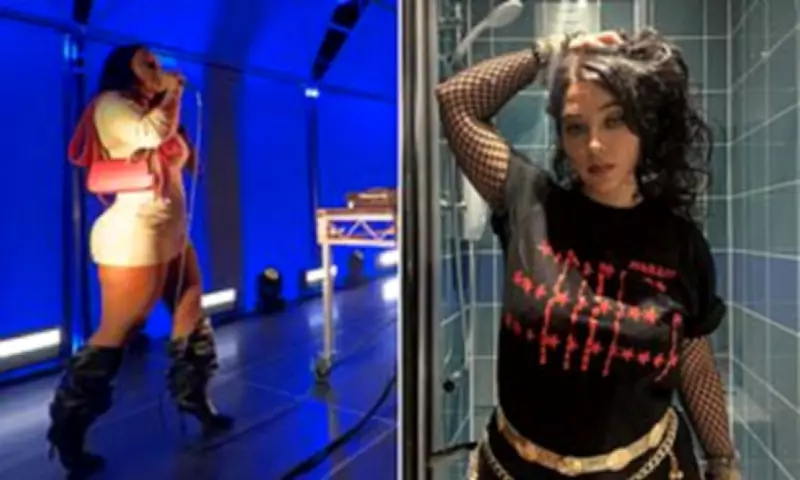
In a significant blow to Australia's premier arts festival, consulting firm PwC has abruptly terminated its sponsorship of the Biennale of Sydney. This decisive action comes directly in response to inflammatory anti-Israel remarks delivered by American electronic performer Zubeyda Muzeyyen, professionally known as DJ Haram, during the festival's opening celebrations at White Bay Power Station last Friday.
Corporate Sponsor Withdraws Amidst Growing Controversy
PwC Australia confirmed its withdrawal on Wednesday, expressing profound disappointment in a formal statement. 'We entered this partnership to support an experience and series of arts and creative culture events which would be welcoming and inclusive for everyone,' a company spokesperson explained. 'Following comments made by a performer at the opening night event, we no longer have confidence that the festival can meet our expectations. We condemn the comments made and reject anti-Semitism and all forms of hate.'
The corporate giant has taken immediate practical steps, cancelling a special client event scheduled for Thursday and initiating the removal of all PwC branding from Biennale Sydney promotional materials and venues.

Police Launch Investigation into Potential Hate Speech Violations
New South Wales Police have confirmed they are examining whether DJ Haram's performance breached racial discrimination or anti-hate speech legislation. The investigation focuses on footage capturing Muzeyyen's three-minute rant, during which she urged the audience to 'oppose the Zio-Australian-Epstein empire' and led chants of 'long live the resistance' and 'glory to all of our martyrs.' Her commentary included references to 'fascist art-washing' and 'the Zionist entity,' language that has drawn sharp criticism from community leaders.
The performer departed Australia after a subsequent engagement in Melbourne on Saturday, leaving authorities to pursue their inquiries through international channels where necessary.
Jewish Community Leaders Express Grave Concerns
David Ossip, President of the NSW Jewish Board of Deputies, has formally alerted police to the potentially dangerous implications of the DJ's rhetoric. In a detailed letter, Ossip argued that the phrase 'Zio-Australian-Epstein empire' could incite 'hatred, serious contempt or severe ridicule' toward Jewish Australians. 'The statement appears to promote a conspiratorial narrative suggesting malign influence by Jewish Australians,' Ossip wrote. 'The reference to Jeffrey Epstein, a convicted child abuser, compounds this insinuation by implicitly associating Jewish Australians with criminality and abuse.'
Political Response and Funding Implications
NSW Premier Chris Minns has denounced the comments as 'horrid rhetoric' but has stopped short of threatening to withdraw government funding from the festival, which receives over half of its financial support from public sources—including $3.19 million allocated in 2024 alone. 'Getting into a cycle where we threaten to pull arts and cultural funding has the perversely opposite effect,' Minns cautioned. 'What ends up happening is you shine a spotlight on the person who's responsible for saying it, and it draws more attention, not less.'
Nevertheless, the Premier emphasized that cultural institutions must demonstrate accountability when utilizing taxpayer funds. 'We expect cultural and arts institutions to use taxpayer funds to represent every member of our community and not be a platform for hate,' he stated firmly.
Festival Organizers Launch Internal Review
The Biennale of Sydney has initiated its own comprehensive review of the incident, stressing that the views expressed by DJ Haram were neither commissioned, approved, nor anticipated by festival management. 'The Biennale has a zero-tolerance policy for anti-Semitism, Islamophobia, racism, or any form of hate speech,' organizers declared in an official statement. 'The views expressed by the artist are entirely her own and do not represent the views of the Biennale of Sydney, our Board, or our government and corporate partners.'

Meanwhile, Zubeyda Muzeyyen appeared to address the escalating controversy through social media over the weekend, describing herself as 'kinda weak at all the zios'—a colloquial reference to Zionists—and noting she is 'just a vain musician from America.' The incident continues to reverberate through Australia's arts community, raising urgent questions about artistic freedom, corporate responsibility, and the boundaries of acceptable political commentary in cultural spaces.