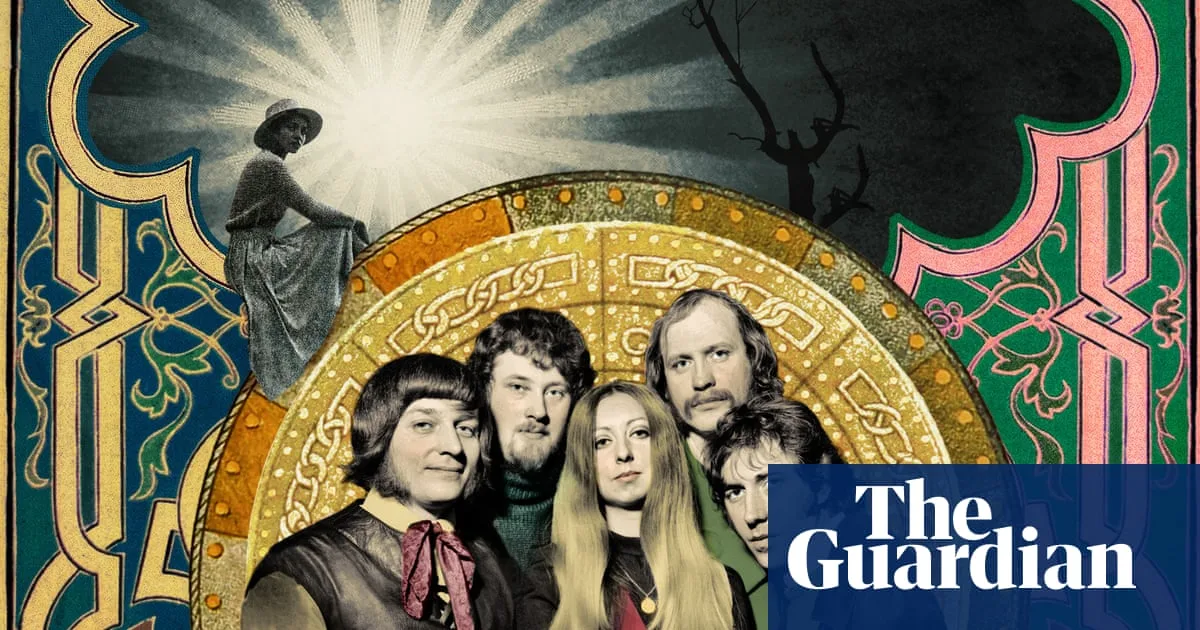
Pentangle's Folk Music Sparked My Cultural Awakening as a Person of Colour
At the age of 15, I stood on the precipice of adulthood, fumbling and awkward, desperately trying to figure out my identity and place in the world. Growing up half-white and half-black, half-British and half-Caribbean, I often felt perpetually in-between, caught on the faultline between what sometimes seemed like two worlds at war.
A Transformative Night at the Royal Festival Hall
One night in 2008, my dad dragged me along to see Pentangle perform at the Royal Festival Hall on London's South Bank. The band, which rose to fame in the late 1960s, was renowned for fusing British folk melodies with blues and jazz syncopation. I must have stood out in the crowd among the bearded men in sandals and socks, with my big hoop earrings and scraped-back hair. Although I went in reluctantly, stepping out of that concert on an auspicious summer's evening left me changed forever.
The old folk songs Pentangle performed that night felt haunting and ancient, yet somehow comforting. They spoke to an unnamed longing within me that seemed as old as time itself. I was particularly moved by their rendition of The Cuckoo, a mournful 18th-century ballad about the migratory bird whose song signals the coming of summer. As soon as I got home, I downloaded it and communed with the song in private, instantly transported back not just to the late 60s when it was recorded, but to what felt like an even more distant, enchanted British past.
Gateway to British Folklore and Identity
Pentangle's version of The Cuckoo served as a gateway drug of sorts, initiating me into the mysteries of British folk culture. It kickstarted an obsession with standing stones, ancient myths, druids, pagans, and seasonal folk customs practised in remote parts of the country—a strange preoccupation I have never quite been able to shake. I delved into wassailing, morris dancing, and mummers' plays, exploring Welsh Mari Lwyd traditions, Highland folklore, and the nation's age-old folk songs that offer an alternative history told from the ground up.
These songs, stories, and customs seemed to emanate from a very different kind of Britain than the one invoked by anthems like Rule, Britannia! or the union jack. They had little to do with monarchy, military, or empire; instead, they conjured a vision of Britain that was enchanted, subversive, and strange—a Britain where I felt I could truly belong.
Connecting Caribbean and British Traditions
For a long time, I kept my folk fixation to myself, always feeling it was a bit odd. But as I grew older, I began to recognise connections between British traditions and those I had heard about in the Caribbean. Examples include Carriacou's Shakespeare Mas, where revellers in flamboyant costumes recite Shakespearean monologues through the streets; Jamaica's maypole dancing tradition; and sea shanties that cycled back and forth between Britain and the New World along slave trade routes, absorbing call-and-response refrains along the way.
Even the Notting Hill carnival, seen by many as a distinctly Caribbean tradition, was styled in an early incarnation as an old English fayre. These fused customs spoke to a kind of meeting place within me; they were products of Britain's dark and complex colonial history, yet they expressed creativity, resistance, and exchange—new blooms risen from the ashes of empire.
Folklore's Radical Power to Unite
Over the years, I have met countless others from all walks of life who are also drawn in by folklore's radical possibilities and its power to unite us. Parading through streets in homemade costumes, gathering to tell stories passed down by elders, and rising at dawn to celebrate the cycles of the sun—these simple acts are fundamentals that connect us across cultures and time. They speak to a primal part of us that longs for story, ritual, community, and a connection to the ground beneath our feet, wherever on Earth we might stand.
Reflecting on it now, all of this was present in Pentangle's music—in their fusion of old English folk songs and syncopated jazz rhythms, which made their way to Britain via America from west Africa. Much like the cuckoo itself, which journeys each year between the two lands from which my ancestors hail, their music bridged worlds. I will forever be grateful to Pentangle for that transformative gig, which helped me find my place as a person of colour in Britain through the lens of its rich and subversive folklore.