Floyd Scholz's life was destined to reach its zenith at the 1980 Summer Olympics in Moscow. As a promising decathlete who had dedicated years to rigorous training, he anticipated that moment would define his existence. However, his aspirations were abruptly terminated when President Jimmy Carter enforced a United States boycott of the Games, a political response to tensions in Afghanistan. This decision obliterated what Scholz had envisioned as his crowning achievement.
The Devastating Aftermath of Lost Dreams
What transpired next proved even more catastrophic for the young athlete. His sporting career concluded abruptly, his engagement disintegrated, and the future he had meticulously constructed over many years vanished almost instantaneously. 'Everything kind of crashed for me,' Scholz reflected on that tumultuous summer. Faced with this profound personal collapse, he embarked on an extraordinary path that few would contemplate.
A Radical New Beginning in Vermont's Wilderness
Scholz packed his entire life into an aged Jeep, abandoning his previous existence to disappear into the mountainous terrain of Vermont. His possessions were minimal: a guitar, a banjo, and a quiet fixation that would ultimately establish him as one of the globe's most coveted wood carvers. His clientele now includes Hollywood royalty and prominent figures like Robert F. Kennedy Jr. This failed Olympic ambition compelled Floyd Scholz to reinvent himself in the forest, transforming profound personal loss into an internationally acclaimed artistic vocation.

The Unparalleled Realism of Scholz's Avian Sculptures
From his secluded woodland studio, Scholz, now aged 68, has devoted nearly six decades to perfecting a craft that few on Earth can master: carving birds with such astonishing lifelikeness that actual birds assault them. Blue jays have dive-bombed his owl carvings, while crows have organized attacks against his hawk sculptures. Collectors, spanning billionaires to A-list celebrities, have queued for years to acquire his work, with prices ranging from thousands to well over six figures for a single piece.
'I don't finish my birds,' Scholz remarked with laughter. 'I abandon them.' This statement, which he frequently reiterates, perfectly encapsulates the obsessive perfectionism underpinning his art. Currently celebrated as one of the finest living wood carvers, Scholz has secured five US national titles and a World Championship of Bird Carving. Individual sculptures regularly sell for six-figure sums, often purchased before completion.
An Improbable Artistic Journey Without Formal Training
He has authored eight instructional books on wood carving, conducts sold-out seminars nationwide, and produces works displayed in private collections and museums globally. Remarkably, Scholz never received any formal art education. 'I was never told you can't do that,' he explained. 'So I tried everything.' This creative liberty, combined with his photographic precision for anatomy, color, and motion, defines his distinctive style.
Scholz doesn't merely examine avian appearances; he investigates why birds look as they do: how falcons' dark facial markings diminish solar glare, or how a red-tailed hawk's posture exudes supreme confidence as an apex predator. 'Birds have been ruling the skies for 120 million years,' he observed. 'We've been around for a blink of that time.'
Childhood Foundations: Birds as Symbols of Freedom
Born in Connecticut during 1958, Scholz experienced a turbulent upbringing. His childhood home lacked stability and safety, prompting him to seek refuge in nearby woodlands. 'I would run out of the house and hide in the woods,' he recalled. 'That was where I felt safe.' Adjacent to his family residence was a forested area where he would vanish for hours, climbing trees, listening to birdsong, and observing hawks circling overhead.

'I'd lie in the grass looking up at the sky,' he said. 'I just wished I could fly away.' Birds evolved into both companions and emblems of liberation long before they became his professional focus. Scholz traces his artistic origins to eighth grade, when he was summoned to his school principal's office. Expecting reprimand, he was instead asked a simple question: 'Have you ever carved a bluebird?'
The First Commission That Validated His Talent
The principal sought a commissioned bluebird as a birthday present for his wife. Scholz agreed for thirty dollars. This validation, he acknowledges, provided 'wind in his sails.' 'That moment told me this could be real,' Scholz affirmed. 'That someone would actually pay for this.' He never ceased carving thereafter.
A Celebrity Following and Prestigious Commissions
Recognition of Scholz's craftsmanship spread competitively among affluent circles. 'When one person has something unique, others want one that's even better,' he noted. Over decades, his bird sculptures have quietly amassed a following extending far beyond carving enthusiasts, reaching private collections of celebrities, artists, and influential personalities who exchange recommendations like tailor referrals.
Elizabeth Taylor possessed multiple pieces and referred to him simply as 'my carver.' Glenn Close and billionaire Richard Branson have long admired Scholz's eagle carvings. Actress and conservationist Bo Derek owns several works, including a bluebird finished in 2018 and blue-footed boobies inspired by her Galápagos Islands travels. Comic legend Gary Larson collected numerous pieces and contributed a cartoon to one of Scholz's publications.
Major Commissions and Six-Figure Breakthrough
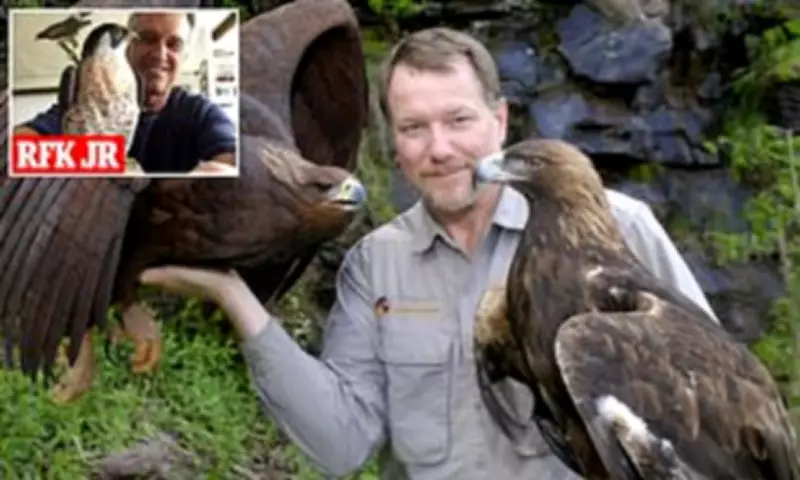
Scholz received a commission from Phillip H. Morse, co-owner of the Boston Red Sox, to create a special carving for baseball legend David Ortiz, known as 'Big Papi.' This sculpture, titled 'Life, Legacy & Love,' depicts Ortiz's journey from the Dominican Republic to Red Sox icon, incorporating intricate symbols like gold chains, a pearl heart, and the national bird. Robert F. Kennedy Jr., an avid falconer, also owns several Scholz pieces.
Scholz's inaugural six-figure sale occurred unexpectedly in the late 1980s when a man in muddy boots accompanied by his teenage son visited his studio. Initially inclined to dismiss them, Scholz instead spent minutes showcasing his work. The visitor was Richard Slayton, a Chicago asset-management executive seeking a life-size bald eagle for his corporate headquarters. Scholz quoted $125,000. 'I hung up the phone shaking,' he confessed. The eagle subsequently won a world championship. 'That was when I thought,' he smiled, 'This bird carving thing might be okay.'
Meticulous Techniques and Materials
Scholz works predominantly with Tupelo wood, a pale, stable timber harvested from Louisiana swamps. This material retains exceptional detail and resists cracking, crucial for sculptures requiring months of completion and international transportation. His methodology is systematic and architectural: roughing the form, defining feather tracts, carving individual feathers, sanding, sealing, and painting, always progressing from foundation upward.
'You paint feathers like shingles on a roof,' he elucidated. He completes the head last, positioning eyes only when all other elements are finalized. This hyper-realism yields unexpected consequences. 'I put an owl outside once to photograph it,' Scholz recounted. 'When I came back, it was being attacked by blue jays and crows.' The birds mistook it for a genuine predator invading their territory. 'I remember thinking, "Well, you must be doing something right."'
Enduring Passion and Artistic Philosophy
Despite decades of acclaim, Scholz claims he has never suffered creative burnout. He maintains multiple concurrent projects, rotating among them when encountering mental impasse. 'I always have something calling me back to the studio,' he stated. His creations, whether monumental eagles in flight or diminutive chickadees, represent deeply personal expressions rather than mere replications.
'I'm not a wooden taxidermist,' he clarified. 'I'm a sculptor. I take what nature gives and I push it just a little further.' Presently, Scholz's works routinely sell before completion. He seldom has available pieces for display, often borrowing them from collectors or museums for exhibitions. Even after fifty-eight years, he insists nothing feels truly finished. 'If I didn't have deadlines,' he concluded, 'I'd still be adjusting one feather.'