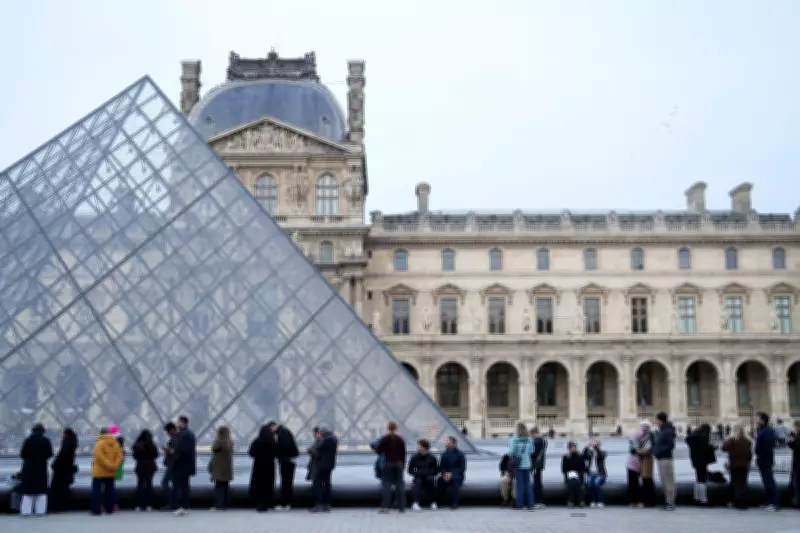
Christophe Leribault Takes Helm at Louvre Following High-Profile Crown Jewels Heist
The Louvre museum in Paris has appointed a new director to navigate a profound institutional crisis, triggered by the brazen theft of the French crown jewels last October. Veteran art historian Christophe Leribault, currently the head of the Palace of Versailles, will assume leadership of the world-renowned museum.
Government Appointment Amid Security Crisis
French government spokeswoman Maud Bregeon announced the appointment on Wednesday, confirming that Mr. Leribault will succeed outgoing director Laurence des Cars, who resigned on Tuesday. The Culture Ministry issued a statement outlining the priorities for President Emmanuel Macron's chosen candidate.
"[Mr] Leribault's priority will be to strengthen the safety and security of the building, the collections, and people, to restore a climate of trust, and to carry forward, together with all the teams, the necessary transformations for the museum," the ministry declared.

A Seasoned Leader for a Troubled Institution
Christophe Leribault, 62, is an esteemed 18th-century art historian with extensive museum leadership experience. His career includes previous roles as director of Paris' Musée d'Orsay and the Orangerie before taking charge at Versailles in 2024. He will depart his Versailles position to focus entirely on the Louvre.
Notably, Mr. Leribault possesses prior experience within the Louvre itself, having served as deputy director of the museum's department of graphic arts from 2006 to 2012. This internal knowledge is seen as crucial for addressing the institution's deep-seated issues.
The Daunting Challenges Ahead
The new director inherits a museum reeling from multiple, high-profile failures. The most shocking incident was the daylight robbery of the French crown jewels, a theft ranked among the most significant museum heists in living memory. This event exposed severe and alarming security vulnerabilities at the Paris landmark.
However, the security breach is just one facet of a broader institutional crisis. The Louvre has been plagued by a series of operational and structural problems that paint a picture of a treasured national institution spiralling out of control.
A Catalogue of Institutional Failures
The problems confronting the new leadership are extensive and complex:
- A burst pipe near the Mona Lisa, one of the museum's most iconic attractions.
- Water leaks that caused damage to priceless books and artefacts within the collection.
- Issues with ageing building infrastructure requiring urgent maintenance.
- Staff walkouts and protests over chronic problems of overcrowding and severe understaffing.
- Controversial ticket price increases imposed on most non-European visitors.
Pressure for a leadership change intensified dramatically in recent weeks. Authorities revealed a suspected decade-long ticket fraud operation linked to the museum. Investigators estimate this scheme may have cost the Louvre approximately €10 million (£8.72 million), representing a significant financial blow.
Proven Managerial Experience
At the Palace of Versailles, Mr. Leribault has been responsible for managing an annual budget of around €170 million (£148 million). This experience in overseeing a major historical site and its finances is considered vital for the Louvre role, where budgetary constraints and funding for necessary security upgrades will be paramount.
The appointment of Christophe Leribault marks a critical juncture for the Louvre. His mandate is clear: to restore security, public trust, and operational stability to one of the world's most visited and culturally significant museums following a period of unprecedented turmoil.