Mother's Memoir Chronicles Grief After Son Killed in Gaza Tunnel Captivity
Rachel Goldberg-Polin has published a profoundly moving memoir detailing her anguish following the kidnapping and subsequent death of her son, Hersh Goldberg-Polin. The young man was abducted during Hamas' devastating October 7, 2023 attack on Israel and ultimately killed in a Gaza tunnel after enduring nearly a year of captivity.
A Son's Legacy and a Mother's Pain
During his confinement in the labyrinthine tunnels beneath Gaza, fellow hostages reported that Hersh frequently quoted Holocaust survivor Viktor Frankl's powerful words: "Those who have a 'why' to live, can bear with almost any 'how.'" Family and friends clung to the hope that, much like Frankl, Hersh would eventually emerge with a message of resilience and hope. Tragically, in August 2024, after 328 days in captivity, Hersh and five other hostages were shot dead by their captors deep underground, likely as Israeli forces advanced nearby.
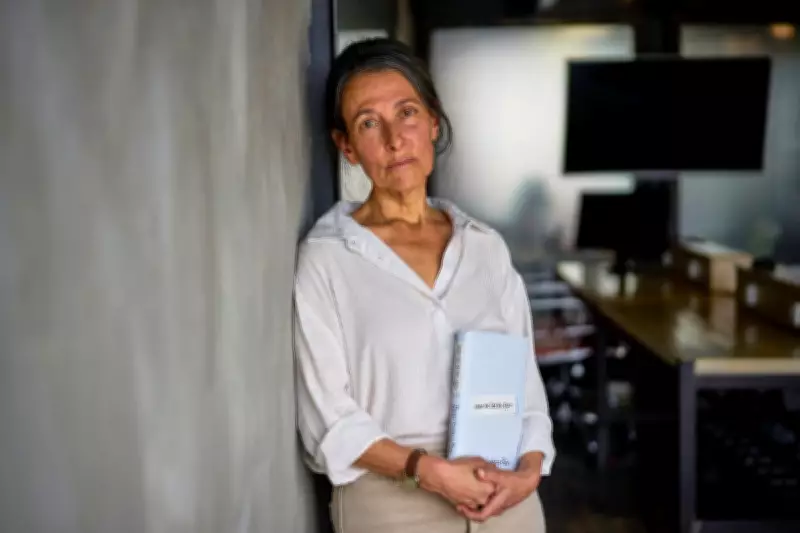
The responsibility to discover his "why" has now transferred to his grieving family, who spearheaded a highly visible international campaign for his release. Rachel Goldberg-Polin's newly released book, "When We See You Again," deliberately avoids conventional narrative structures, uplifting conclusions, or political accusations against either Hamas militants or Israeli leadership. Instead, it presents an unflinching, searing chronicle of maternal grief.

"I'm still trying to figure out with clarity what is my why, but it's clear to me that my why is not done," Goldberg-Polin explained, with a photograph of her smiling son visible behind her. "I just really wanted to tell the truth. It's very ugly." She remains uncertain whether the book constitutes an exceptionally painful love story or a love-filled narrative of pain.
The Face of a Hostage Crisis
Hersh Goldberg-Polin was among the 251 individuals seized by Hamas during its October 2023 assault. His ordeal began horrifically when a grenade blew off his hand before he was forcibly taken into Gaza and eventually into the militant group's extensive underground network. The war triggered by this attack resulted in over 70,000 Palestinian fatalities and widespread destruction across Gaza before a ceasefire agreement in October led to the release of all remaining hostages. Hersh, however, had been killed alongside five others more than a year prior.
Rachel campaigned relentlessly for her son's freedom, granting countless media interviews, meeting with then-President Joe Biden, addressing the Democratic National Convention, and participating in mass protests within Israel that criticized the government for not securing a hostage deal sooner. Hersh became one of the most recognizable hostages, with posters and graffiti bearing his name and face—often accompanied by Frankl's quote—still appearing throughout Israel.
A Human Portrait Beyond Symbolism
In her memoir, Rachel consciously resists mythologizing her son. She recalls ordinary, human details: his childhood habit of picking scabs and his inadequacy at washing dishes. "Hersh has become a symbol to many," Goldberg-Polin writes. "I don't know what to do with that. But it's OK. If people need Hersh to be something, he will be that. That is the essence of service, being what is needed."
The book shares stories from the "before time": Rachel's upbringing in Chicago, her family's relocation to Israel when Hersh was six, and cherished memories of her eldest child astonishing others with his encyclopedic knowledge of U.S. presidents and his passion for Jerusalem's local soccer team and its sister team in Bremen, Germany. She only briefly addresses the widely reported details of his capture and captivity, focusing instead on the family's desperate search for information post-attack, their protracted fight for his release, and the devastating news of his death after 328 days.
Goldberg-Polin describes the book as "very raw, peeled, oozing, throbbing pain," portraying "hundreds of sodden days dripping with anguish." She began writing as a means to manage the "tremendous weight of suffering that was causing my soul to buckle," she explained during an interview in Jerusalem. The writing emerged in spontaneous bursts without an initial plan for publication, driven purely by the question, "How do I survive the next 15 minutes?"

A Fellowship of Shared Grief
The memoir also originated from Rachel's frustration with commonplace inquiries about her wellbeing. "I think, 'Well, do you not see this dagger sticking out of my chest at my heart? How can you possibly be asking me that?'" she reflected. "But I realized they don't see it. And it's not because they're mean or insensitive. They simply don't see it."
"Someone who's born blind doesn't know what blue is, and it's very difficult to describe blue to someone who's blind. But I'm desperate for people to see my blue, and I'm yearning for people to feel my pain," she added poignantly.
She also recounts how, even during her son's shiva—the traditional Jewish week of mourning—people approached her to share their own stories of death and loss. This overwhelming experience revealed to her the "surplus of suffering" in the world. "They're not trying to comfort me, they're saying: 'Let me stand next to you and we'll be in this together,'" she observed.
Throughout the hostage release campaign, one of Rachel's mantras was "Hope is mandatory," even when hope felt utterly impossible. Now, people continually approach her and her husband, seeking fragments of their "creased and crumpled hope." She offers no simple solutions, as expressed in a letter to her deceased son near the book's conclusion.
"I will carry your why," she writes with determined resolution. "I'll do it, I'll carry your why around the world."