Michaelina Wautier Review: An Astounding Lost Artist Steps Out of Male Contemporaries' Shadows
Art history is undergoing a profound revision as it uncovers overlooked female artists, challenging the traditional white male canon. Following the resurgence of interest in Artemisia Gentileschi, whose work has often been overshadowed by personal trauma, attention now turns to her direct contemporary, Michaelina Wautier (circa 1614–1689). Born in Mons in the Spanish Netherlands, now Belgium, Wautier lived with her artist brother Charles in Brussels near the royal court, leaving scant documentary evidence beyond her powerful paintings.
The Struggle Against Misattribution and Patriarchal Barriers
Both Wautier and Gentileschi shared the fate of having their technically accomplished works automatically misattributed to male counterparts for centuries, obscuring their contributions. In Wautier's case, her paintings were often credited to her brother Charles or other Baroque painters. This misattribution was compounded by her versatility across genres, including portraits, history or religious paintings, and decorative floral works—the latter more commonly associated with female artists—which further hindered identification.
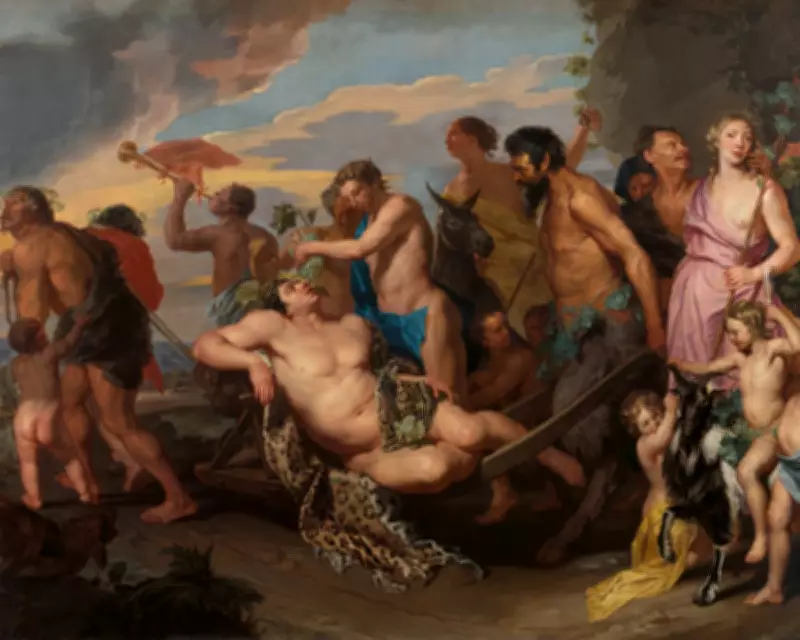
In 2009, a pivotal moment occurred when The Triumph of Bacchus, a monumental canvas, was definitively attributed to Wautier at the Kunsthistorisches Museum in Vienna. This painting, now featured at the Royal Academy, showcases her ambition and skill, with intricate nude anatomical details that generations deemed improbable for a woman. Historically, women were denied access to art classes and live models, raising the question: how did she achieve this with such effortless mastery?

Unraveling Mysteries Through Art Historical Investigation
The exhibition serves as a real-time art historical investigation, leveraging scientific analysis, scholarship, and connoisseurship to solve mysteries surrounding Wautier's work. For instance, one of only two known garland paintings includes an Antwerp mark and unusual ox skull motifs, linking it to ancient Roman urns. Additionally, her sole known drawing studies the Medici Ganymede bust from Rome, sparking debates about whether she traveled to Italy or accessed references through social connections.
Connoisseurship plays a crucial role here, relying on experts' intuitive recognition of artistic style. While auction houses often prefer scientific and scholarly methods, this exhibition highlights how connoisseurship—though unquantifiable—is essential for identifying authorship. The layout facilitates this by displaying Wautier's portraits and religious paintings alongside works by contemporaries like Rubens and Charles Wautier, followed by her "most distinctive works" for pure stylistic comparison.
Revealing a Unique Artistic Voice
The final gallery, dedicated solely to Wautier's works, is a revelation. Her paintings are not only Baroque in style but also distinctly her own, characterized by wild, loose locks, luminosity, and vivacity infused with humor. For example, her Five Senses series subverts traditions: in Smell, instead of a woman sniffing a flower, a grimacing boy recoils from a rotten egg. This unconventional approach underscores her innovative spirit.
This exhibition marks the first UK encounter with Wautier's oeuvre, grouping all known works to conjure an entirely new persona in the collective imagination. It showcases an artist of exceptional, fully formed ability and raises awareness to uncover further misattributed or lost paintings. As the story of Michaelina Wautier continues to unfold, her legacy promises more discoveries in the ongoing effort to rectify historical oversights.