Steve McQueen's Bounty: Grenada's Flora as Witnesses to Historical Trauma
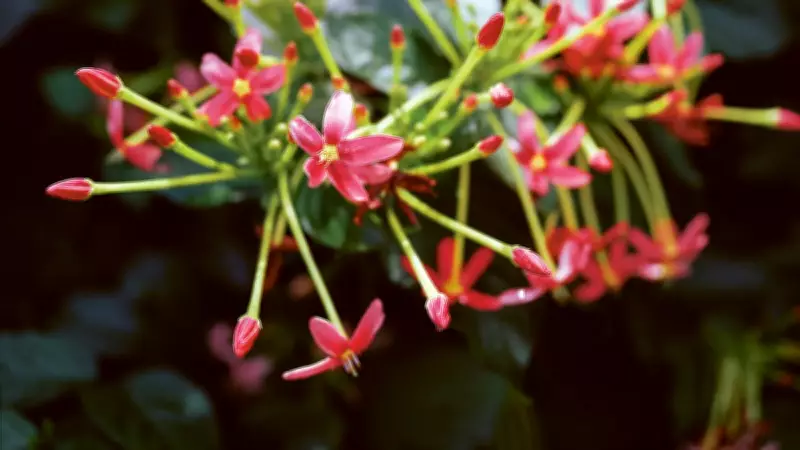
In a profound artistic endeavour, acclaimed artist and film-maker Steve McQueen spent the summer of 2024 in Grenada, creating a series of poetic images that delve into the intricate connections between the island's lush plant life and its deep-seated historical trauma. His photobook, titled Bounty, published by MACK Books, serves as a visual meditation on nature's enduring beauty amidst a landscape scarred by centuries of exploitation.
The Inspiration Behind the Project
McQueen's journey began with a visit to the Chelsea Flower Show in 2024, where he was struck by the presence of Grenadian plants in central London. "I thought at the time, seeing these vibrant plants outside of their natural habitat, how odd it was to see them in central London," McQueen recalls. "For me, they felt like camouflage to questions that should be asked in such a setting. I needed to work with these flowers to reverse the platform." This experience prompted him to travel to Grenada, accompanied only by his camera assistant, Guy Isherwood, to photograph the indigenous flora with a keen awareness of the island's turbulent past.
Exploring Resilience Through Nature
Drawing inspiration from the late Saint Lucian poet Derek Walcott's elegiac works, McQueen adopts a poetic sensibility in Bounty, focusing on the resilience of Grenada's landscape. The title itself alludes to the dual meanings of nature's generosity and the historical bounties paid to slave catchers, highlighting the perverse juxtaposition of beauty and horror. "Sometimes the most horrific things happen in the most beautiful places. That's the perversity of life," McQueen notes, emphasising that the vibrant colours of the flowers were captured without enhancement, relying solely on natural light.

Technical and Artistic Approach
McQueen's photographic process was grounded in authenticity and spontaneity. "I had a very small window where the trip was possible, so it was a case of embracing chance," he explains. Shooting primarily on film, with some digital images, he aimed to create portraits of individual flowers rather than landscapes, fostering a sense of seriality. The natural light was a key reference, inspired by his late friend, cinematographer Robby Müller, with whom he collaborated on the artwork Carib's Leap in Grenada in 2002—a piece that references the tragic story of Caribs leaping to their death rather than surrendering to French forces in 1654.
Connections to Broader Historical Context
McQueen's work in Grenada is part of a broader exploration of sites of trauma. In 2013, while filming 12 Years a Slave, he documented a lynching tree near New Orleans, a location he kept secret to protect it from destruction. "These locations are witnesses to sites of trauma where often the bodies of the victims are buried," he reflects. In Grenada, guided by local horticultural experts, McQueen contemplated the island's layered history—from the Arawaks and Caribs to European colonisers, African slaves, and migrant workers—all of whom would have gazed upon the same enduring flora.
Personal Reflections and Legacy
The project also sparked personal reflections for McQueen, particularly about his parents, who emigrated from the Caribbean to London in the 1960s. "I was thinking about them in relation to how they must have dealt with leaving the Caribbean at that time and coming to a grey industrial city like London," he shares. This connection underscores the themes of displacement and memory woven throughout Bounty, offering a poignant commentary on the intersections of nature, history, and identity.
Bounty stands as a testament to McQueen's artistic vision, inviting viewers to engage viscerally with the silent endurance of nature in the face of human atrocities. The images, courtesy of the artist, Thomas Dane Gallery, and Marian Goodman Gallery, provide a powerful lens through which to contemplate Grenada's past and the timeless beauty of its flora.