London Exhibition 'Forget Me Not' Chronicles South Lebanon's Resilience
The Forget Me Not: South Lebanon in Memory and Motion exhibition, held earlier this month at Palestine House in London, offered a poignant exploration of southern Lebanon's turbulent history and enduring spirit. As this largely rural region becomes embroiled in renewed conflict, the exhibition's archival materials and personal narratives provided a timely reflection on cycles of violence and resistance.
Archival Footage and Historical Context
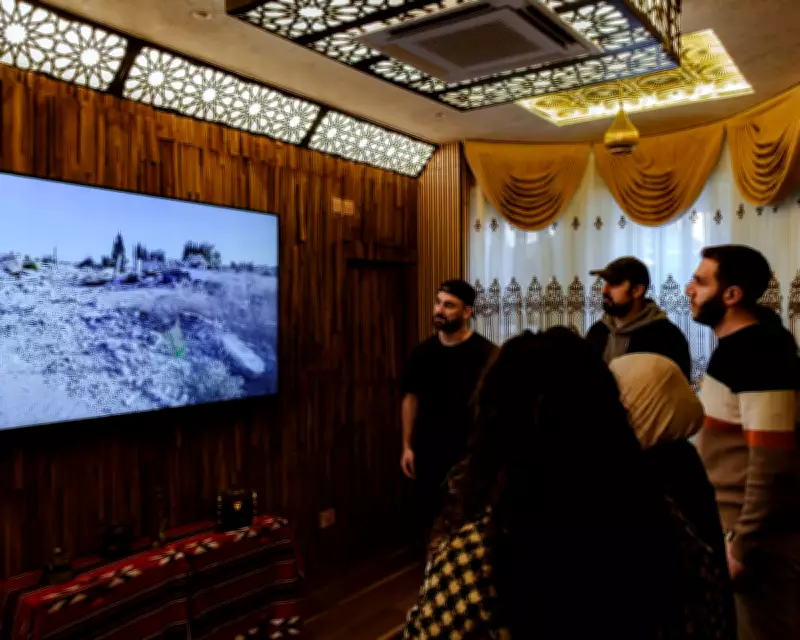
In one room, a large screen displayed looped news footage from the year 2000, depicting tanks and armoured vehicles traversing the hilly landscapes of southern Lebanon amid mortar fire. Despite its resemblance to current events, this archival video captured Israel's withdrawal after an 18-year military occupation. Adjacent displays featured broadsheet pages from newspapers of that era, including a front-page report by the Guardian's former Middle East correspondent, Suzanne Goldenberg.
The exhibition's timing coincided with southern Lebanon re-emerging as a frontline in regional tensions, with Israeli tanks reportedly advancing deeper into the country and displacing approximately one-fifth of the local population. Co-curators Rasha Kotaiche and Ali Abou Khalil, both with roots in the region, emphasized that the project aimed to retell the area's history, though it had been in development for years.

Themes of Diaspora and Cultural Memory
Kotaiche noted that the exhibition, originally planned for 2020, gained deeper significance upon its realization six years later. An initial iteration included a film exploring the impact of migration on her family, who moved from Lebanon to the UK via Kuwait, using three decades of footage. Forget Me Not expanded on this by addressing themes of diaspora, future generations, and connection to the land through photographs and audiovisual installations.
In another section, windows were adorned with drawings by Lebanese schoolchildren celebrating Independence Day, symbolizing hope and national pride. Abou Khalil explained that southern Lebanon, often referred to simply as al-Jnoub in Arabic, has long been shaped by foreign intervention, occupation, and neglect, fostering a political culture of self-reliance and resistance.
Historical Neglect and Radicalisation
This culture predates Lebanon's independence from France in 1943, when economic and political investments were concentrated in Beirut and Mount Lebanon, leaving the south underdeveloped and treated as a rural buffer zone. Agricultural traditions, undermined by state policies and Israeli raids against Palestinian guerrillas, fueled peasant revolts and support for radical groups like the Lebanese Communist Party.
Kotaiche described the exhibition's mission as "educating the community on Lebanon – its history, its beauty and its resilience – and reclaiming a mainstream narrative on south Lebanon." This was exemplified by Nor Nsralla's video testimonial, What Remains, featuring residents who experienced Israel's invasion in October 2024. One interviewee poignantly stated, "we are attached to this land just like a tree is rooted in its soil."
Photographs and Lingering Conflicts
Framed images throughout the exhibition depicted the region's landscapes, from pomegranates and oranges in Bint Jbeil to the stony interiors and coastal shores of Naqoura and Tyre. These visuals underscored the deep connection southerners maintain with their homeland, a sentiment echoed in memories of earlier Israeli invasions in the 1970s and 1980s.
Abou Khalil highlighted that Lebanese state institutions often failed to protect the south, leaving residents exposed to aggression and regional conflicts. This void contributed to radicalisation and the formation of Hezbollah in 1982. Despite a ceasefire agreement in November 2024 and the election of General Joseph Aoun as president in January, hopes for state responsibility in the south remained unfulfilled, with UN peacekeepers reporting ongoing ceasefire violations, primarily by Israeli forces.

Contemporary Relevance and Divergent Perceptions
As diplomats negotiate tentative ceasefire deals, Abou Khalil observed a shift from tension to alarm in the region. He noted a stark contrast within Lebanon, where many areas function as if the war were distant, while southerners perceive borders as literal and existential threats. This divergence underscores deeper national issues and the enduring impact of conflict on local communities.
The Forget Me Not exhibition served as a powerful reminder of southern Lebanon's resilience, offering a platform for its people's voices amidst ongoing geopolitical struggles. Through its blend of historical artifacts and personal stories, it illuminated the complex tapestry of a region continually navigating the scars of occupation and the hope for peace.