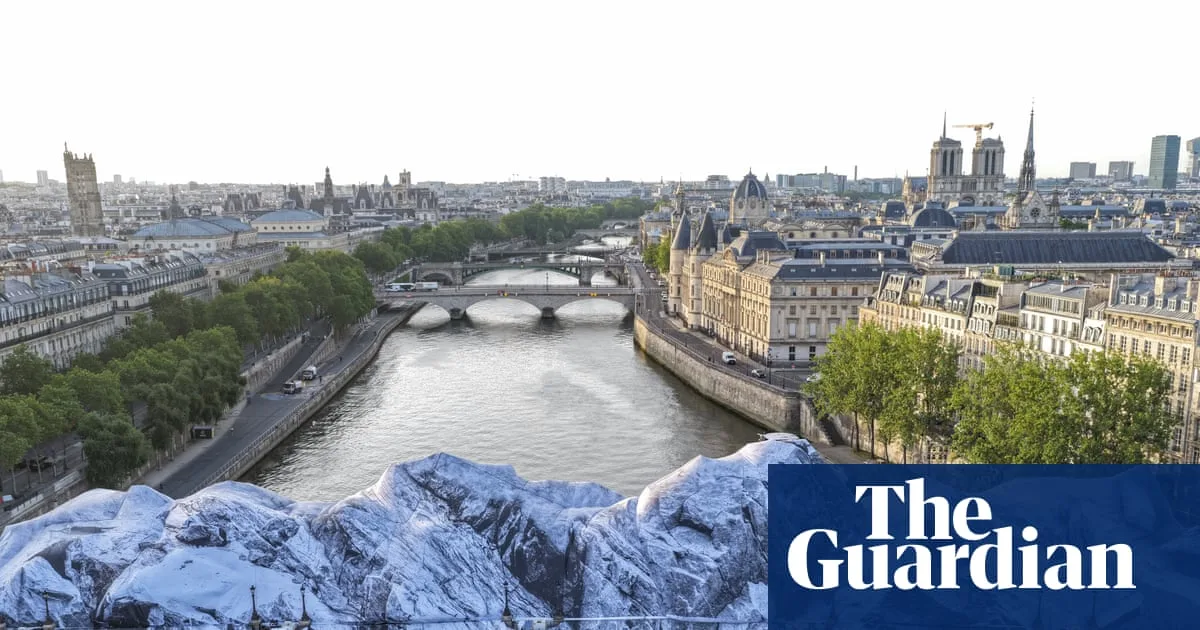
JR's Monumental Cave Installation to Transform Paris' Historic Pont Neuf Bridge
French artist JR, celebrated internationally for his expansive photographic works, graffiti, and street art projects, is preparing to deliver an extraordinary artistic intervention in the heart of Paris. In June 2026, he will temporarily convert the city's oldest bridge, Pont Neuf, into a massive walk-through cave installation, creating what he describes as potentially "the largest immersive installation ever made."
A Temporary Transformation of Historic Architecture
The project, titled Pont Neuf Cavern, will run from June 6 to June 28, 2026, spanning approximately 120 meters in length and over 17 meters in height. This ambitious temporary artwork will cover the bridge's stone arches with a rocky illusion, effectively transforming the 17th-century structure into what appears to be a prehistoric outcrop emerging from the River Seine.
"We're about to leave something pretty incredible in the middle of Paris," JR revealed during an interview at his studio in eastern Paris, where he appeared wearing his signature hat and sunglasses. The installation will be accessible around the clock throughout its three-week duration, offering what the artist calls a "totally different approach" to experiencing the historic bridge.
Homage to Artistic Predecessors
The installation serves as both tribute and artistic gamble, referencing the legendary 1985 project by artistic duo Christo and Jeanne-Claude, who famously wrapped Pont Neuf in pale golden fabric. That earlier intervention required years of negotiations with authorities and helped establish monumental public art as a significant genre in modern urban environments worldwide.
"I had the chance to meet Christo along the years," JR acknowledged. "We had big respect for each other's work." He recognizes the challenge of following such iconic predecessors but emphasizes his distinctive approach: "It's pretty hard to go after them, but I'm doing it in a very different style, in my own way."
Dual Experience: Urban Landscape and Immersive Cave
The installation offers two distinct experiences for visitors. From the exterior, the bridge will appear as though "overtaken by a prehistoric outcrop," creating what JR describes as a structure that "literally going to break the landscape" along the Seine's banks.
Inside the cave, visitors will enter a completely dark tunnel-like environment where they "will lose track of time," experiencing what the artist terms "total immersion." The installation features several innovative technological components:
- Sound design by Thomas Bangalter, former member of French electronic music duo Daft Punk, creating an auditory experience exclusive to the cave interior
- Augmented reality technology developed by Snap's AR studio in Paris, allowing visitors to use smartphones to "experience and see things that you can't see with your eyes"
- Engineering studies conducted in a hangar at Paris' Orly airport to ensure structural stability, particularly during potential power failures affecting the cave's air supply system
Security and Visitor Management
Given Pont Neuf's location in a busy tourist area during early summer, JR's team has implemented comprehensive security measures. Visitor numbers will be limited at any given time, with continuous monitoring throughout the exhibition period. The bridge will close to vehicular traffic during the installation, coinciding with both Paris Fashion Week and World Music Day celebrations.
Conceptual Depth: Beyond Visual Spectacle
While JR has gained recognition for enormous photographic portraits on architectural surfaces—inevitably drawing comparisons to British street artist Banksy—this installation represents a conceptual departure. "The theme is still human," JR explains, focusing on "gathering, connection, and what people project onto a shared space."
The project also functions as a contemporary interpretation of Plato's allegory of the cave, where prisoners mistake shadows on a wall for reality. JR draws parallels between this ancient philosophical concept and modern digital existence: "What are our caves today is our phone, because we believe that our algorithm on social media is the reality."
This ambitious fusion of historical homage, technological innovation, and philosophical commentary positions JR's Pont Neuf Cavern as a landmark moment in contemporary public art, inviting both Parisians and international visitors to reconsider their relationship with urban space, technology, and collective experience.