Joan Semmel at 93: Trailblazing Feminist Artist on Nudes and Authenticity
Joan Semmel: Feminist Pioneer on Nudes and Authenticity

Joan Semmel at 93: A Feminist Pioneer Reflects on Her Groundbreaking Nude Art

On a brilliantly sunny day in New York, light floods the SoHo studio of 93-year-old painter Joan Semmel. She has resided in this floor-through railroad apartment since 1970, working in a high-ceilinged room overlooking Spring Street, dominated by a decades-old snake plant. One side of the carpeted space holds a loft packed with canvases, while the opposite wall showcases four recent paintings from her upcoming show, Continuities, set to display at Alexander Gray Associates in New York and Xavier Hufkens in Brussels.

Embracing Authenticity and Aging in Art

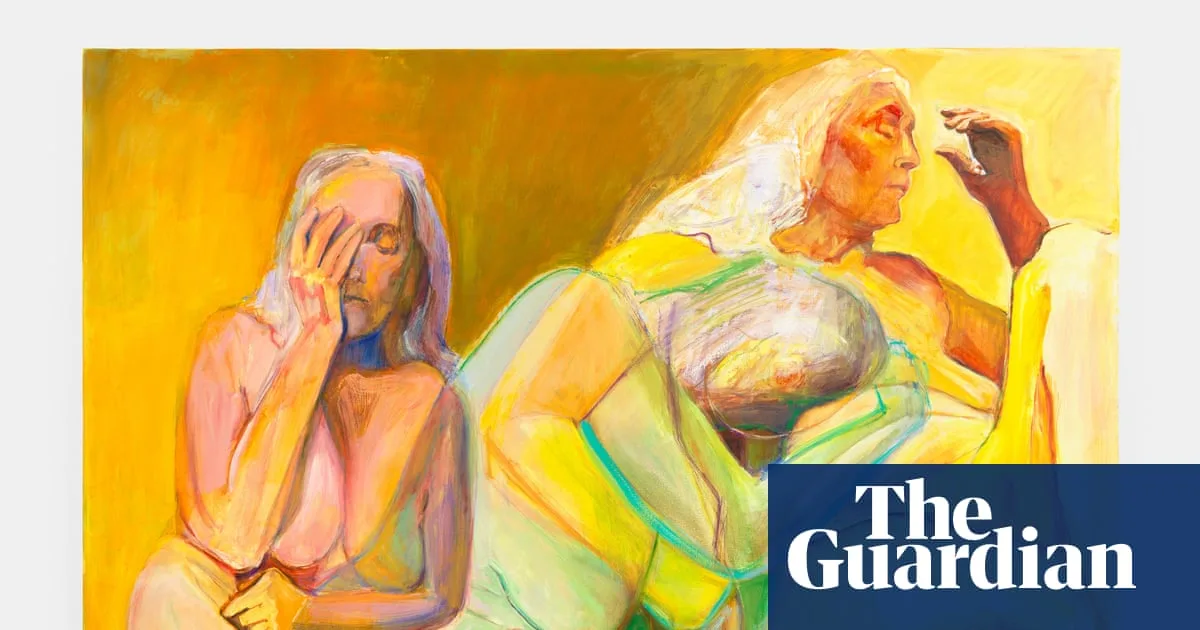
Each vibrant piece in Continuities evokes elements long central to Semmel's process—gesture, doubling, transparency, and abstraction—featuring the same model she has used for over 50 years: her own nude body. Semmel insists these are not self-portraits, and for much of her career, they lacked heads. She laughs recalling surprise when people asked how she felt about "being naked out there. I'm not, that's a painting," she says. "It's a construct, but it's not me."

The works, created during her tenth decade, depict sagging skin and flopping breasts with exuberance and unabashed honesty. "Obviously, I age," Semmel states. "If I'm going to do something authentic, it's going to show that." In Here I Am (2025), the figure sits alone in a molded-plastic Eames armchair, similar to those in Semmel's dining room, gazing into the distance, present yet detached.

Wide Pickt banner — collaborative shopping lists app for Telegram, phone mockup with grocery list

From Shock to Celebration: A Retrospective Journey

Spring marks Semmel season in New York, with a retrospective at the Jewish Museum highlighting her trailblazing career. A standout is the monumental triptych Mythologies and Me (1976), which places a work from her Self Image series between parodies of a Playboy centerfold and De Kooning's Woman. This was her response to a gallerist who doubted a nude could be political. "How was I different from either one of these images that are given to me as a way I'm supposed to be?" she says. "I painted my answer."

While galleries initially showed the painting, museums avoided it. Now, institutions clamor for contemporaneous pieces. "It's strange because they always want that work that nobody would show," Semmel notes. "While I'm glad it's still relevant for me, professionally, I had hoped we'd be in some other place, culturally." She bristles at discussions of the right's agenda to roll back gender equality, expressing frustration with the current political climate in the United States.

Feminist Activism and Artistic Evolution

Semmel grew up in the Bronx, studying painting at Cooper Union, the Art Students League, and Pratt. Her marriage took her family to Madrid in the 1960s, where she created abstract expressionist works exhibited across Spain and South America. This time abroad made her acutely aware of patriarchal restrictions on women in a conservative, Catholic culture.

Returning to New York in 1970 as a single mother of two, Semmel immersed herself in SoHo's art community, painting by day and debating issues at local bars by night. "There was a great deal of activity amongst the women," she recalls, joining artists like Anita Steckel, Judith Bernstein, and Hannah Wilke in feminist groups addressing gender and racial disparities in art.

Her political involvement coincided with a stylistic shift to figuration. "Everything in my life had shifted around, so it was a natural change," she explains. Semmel began painting large-scale oil scenes of heterosexual couples having sex, using expressive brushwork and bold, nonrepresentational colors to create an "erotic visual language" that freed nudes from academia and pornography, granting women sexual agency. "I was trying to get to a place where one could accept oneself without needing to conform to standards given to us from advertising, media, and fashion, which essentially exist to please men," Semmel says. "I wanted to create work that would be shameless."

Pickt after-article banner — collaborative shopping lists app with family illustration

Self-Representation and the Male Gaze

In 1973, with galleries hesitant to show her work, Semmel rented her own storefront on Prince Street. "I wasn't able to get anyone to take the risk, so I did it myself. It was my FU moment," she chuckles. "It was not a thing that was looked upon with favor at the time; it was an announcement that you couldn't get a dealer. But I never regretted it."

Initially using a camera for source images for her Erotic series, by 1974 Semmel turned the lens on herself. "I didn't want to objectify another woman," she says. "I wanted a real body, not an idealized form." Before the "male gaze" entered discourse, her highly realistic Self Images were foreshortened and cropped, recasting flesh into landscape as the subject observed herself.

"The Self Images started way back before selfies," Semmel notes, often incorporating cameras and mirrors into compositions. "You're looking at me while I'm looking at you," she says. "I like to play with who is viewed and who is the viewer." For the Continuities series, an assistant photographed Semmel walking along her studio wall, sometimes integrating light and shadow.

Undiminished Creativity and Future Plans

Recently, physical limitations have led Semmel to adjust her ambitious scale and preference for standing while painting. Yet her capacity to work remains undiminished, producing at least one piece monthly. She is already planning her next exhibition. "I don't really get blocked, I'm too compulsive," Semmel admits. "If I don't work, I'm not happy."

Joan Semmel: Continuities runs at Alexander Gray Associates in New York from 17 April to 30 May and at Xavier Hufkens in Brussels from 22 April to 27 June 2026.