Inside the Chelsea Hotel: Scopin's Lens on Artists, Clowns and Runaways
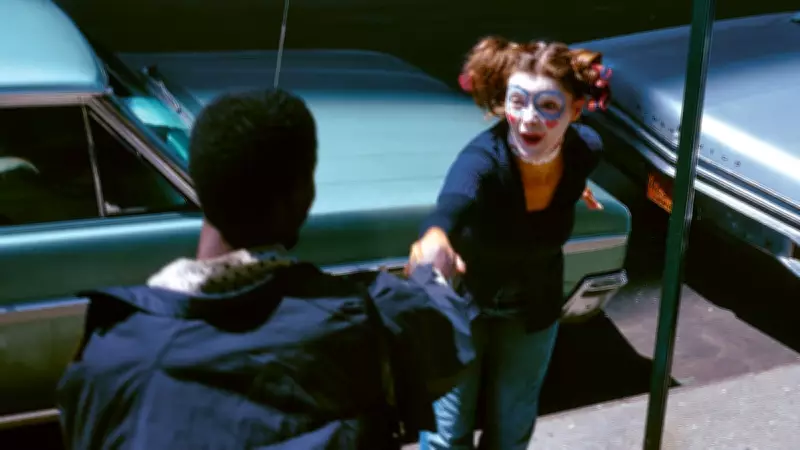
From 1969 to 1971, Albert Scopin resided at New York's iconic Chelsea Hotel, using his camera to document the everyday lives of its eclectic residents. This historic building, constructed in 1884, has long served as a living monument to a bygone era, attracting generations of artists, writers, musicians, and free spirits seeking refuge and inspiration within its timeworn walls. Scopin's work, now published in Chelsea Hotel by Albert Scopin by Kerber Verlag, offers a unique glimpse into this creative sanctuary.
The Heart of the Hotel: Stanley Bard's Legacy
For over four decades, Stanley Bard, pictured in 1971 at the reception, was the Chelsea's director and hotel manager. Starting as a plumber's assistant in 1957 under his father's co-ownership, Bard took over after his father's death in 1964. Known for his unwavering positive spirit and belief in the good in everyone, he allowed artists who couldn't pay their bills to settle with paintings. This practice cultivated a notable collection displayed in the hotel's foyer and corridors, embodying the hotel's supportive ethos.
Iconic Residents: Patti Smith and Robert Mapplethorpe
Scopin met Patti Smith and Robert Mapplethorpe at a nude photoshoot in Bill King's studio in 1969-1970. He recalls Smith as full of energy, contrasting with Mapplethorpe's visible discomfort. Smith's room, described as a state of "creative chaos," reflected her anarchic yet focused nature. Her husky voice and poetic recitals hinted at her impending fame. Mapplethorpe, meanwhile, experimented with erotic collages and Polaroid materials in his ground-floor studio, later remarking that photography could be art.

Eccentric Figures and Their Stories
George Kleinsinger, a composer known for Tubby the Tuba, lived at the Chelsea for 25 years, housing tropical birds, snakes, and even a baby hippo in his apartment. His ashes were scattered on the hotel roof after his death. Vali Myers, an Australian artist and vagabond, tattooed Smith's knee and inspired Tennessee Williams' character Carol Cutrere. Shirley Clarke, an Oscar-winning filmmaker, resided in the hotel's tower, having transitioned from dance to directing in a male-dominated field.
The Factory Connection and Transgender Activism
Richard Frederick Bernstein, a pop art pioneer, transformed the hotel's ballroom into a studio, creating 189 covers for Warhol's Interview magazine. Holly Woodlawn, a transgender activist and Warhol superstar, starred in films like Trash and was immortalized in Lou Reed's Walk on the Wild Side. Scopin's photo of Woodlawn with Shirley Clarke and Rosa von Praunheim on the hotel roof highlights this vibrant scene.
Personal Reflections and Hidden Lives
Scopin fondly remembers Stella Waitzkin, a luminary in Room 403 with works in major museums, who welcomed him for tea in her dusty, object-filled room. He also captured runaway kids in 1970, whose plight touched him deeply as they navigated New York's hazards. For Scopin, living at the Chelsea was a formative experience, where his value system collapsed and rebuilt amid acceptance, leaving him feeling "boundlessly free."
Through Scopin's lens, the Chelsea Hotel emerges not just as a building, but as a crucible of creativity, where artists like Smith and Mapplethorpe forged their paths, and where stories of resilience and eccentricity continue to resonate.