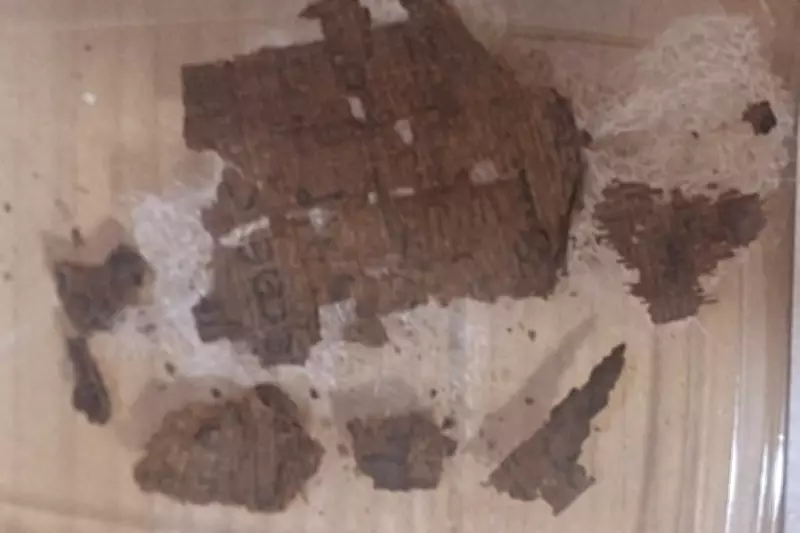
Archaeologists have made a stunning discovery, unearthing a papyrus copy of Homer's Iliad from within the gut of an ancient Egyptian mummy. This marks the very first instance that a Greek literary text has been found incorporated into the mummification process, offering profound new insights into ancient funerary practices and religious life.
Unprecedented Find in Roman-Era Tomb
The remarkable papyrus fragment was discovered in the abdomen of a mummy buried approximately 1,600 years ago in a Roman-era tomb located at Oxyrhynchus. This ancient city, known as Per-Medjed in Pharaonic times, was a major urban centre during the Greco-Roman period of Egypt. Its archaeological remains are situated in the modern town of Al Bahnasa, roughly 190 kilometres south of Cairo, adjacent to the Bahr Yussef branch of the Nile River.
Excavation and Discovery Details
Researchers from the Institute of Ancient Near East Studies at the University of Barcelona made the find during an excavation campaign conducted between November and December 2025. They noted that the mummy featured an unusual element: a papyrus deliberately placed on the abdomen as part of the embalming ritual. While Egyptian mummies from this period have previously been found with Greek-language papyri, those texts exclusively contained magical or ritualistic content.

The discovery of the Iliad papyrus is therefore a groundbreaking first, as it represents the initial identification of a Greek literary work within an embalming context. The identified text belongs to the famous catalogue of ships in Book II of the epic poem, containing the passage that lists the Greek forces assembling before the siege of Troy.
Significance and Unanswered Questions
Archaeologists express uncertainty about why this specific Greek text was selected for the mummification process. Professor Ignasi-Xavier Adiego from the Department of Classical, Romance and Semitic Languages explained the significance, stating, "This is not the first time we have found Greek papyri, bundled, sealed, and incorporated into the mummification process, but until now, their content was mainly magical."
He further emphasised the novelty, adding, "Furthermore, it is worth noting that since the late 19th century, a huge number of papyri have been discovered at Oxyrhynchus, including Greek literary texts of great importance, but the real novelty is finding a literary papyrus in a funerary context."
Historical Context of Oxyrhynchus
Excavations at Oxyrhynchus have so far revealed three limestone chambers containing Roman-era mummies and decorated wooden sarcophagi. Previous archaeological campaigns in the ancient city led to the discovery of 52 Ptolemaic-era mummies, of which over a dozen were found with "golden tongues"—a symbolic artefact believed to prepare the deceased for the afterlife.
This latest discovery not only adds a new dimension to our understanding of cultural and religious syncretism in Greco-Roman Egypt but also raises intriguing questions about the symbolic or protective value attributed to Homeric literature in ancient burial rites. The find underscores the ongoing importance of the Oxyrhynchus site as a rich repository of historical and literary treasures.